

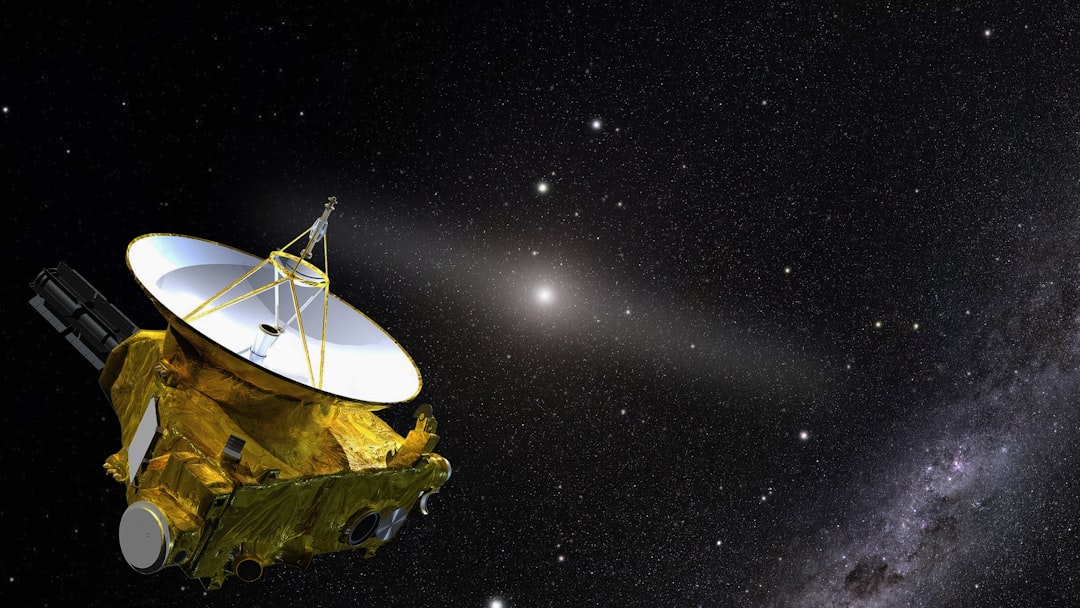
The Roman Space Telescope is Ahead of Schedule, and the Hubble is Giving it a Jump Start – Image for illustrative purposes only (Image credits: Unsplash)
NASA’s Nancy Grace Roman Space Telescope is designed to expand the search for planets that circle their stars at distances greater than Earth’s orbit around the Sun. One of its main community surveys, the Galactic Bulge Time-Domain Survey, is projected to identify more than a thousand such worlds. Astronomers are already using the Hubble Space Telescope to gather supporting observations that will help interpret the larger volume of data Roman is expected to deliver once it begins operations.
Why Distant Orbits Matter in Exoplanet Studies
Most confirmed exoplanets orbit closer to their stars than Earth does to the Sun. Planets in wider orbits remain harder to detect with many current techniques because they move more slowly and produce weaker signals. The Roman survey targets this outer region specifically, where gravitational interactions and formation processes may differ from those seen in tighter systems.
Detecting these worlds in large numbers could reveal how common or rare such configurations are across the galaxy. It may also clarify whether the architecture of our own solar system, with its outer gas giants, represents a typical outcome or an exception. The time-domain approach of the survey relies on repeated observations of the same star fields to catch subtle changes that indicate a planet’s presence.
Hubble’s Preparatory Role Before Roman Launches
Although Roman has not yet reached orbit, Hubble is already collecting data in the same sky regions the future telescope will monitor. These early observations allow researchers to test analysis methods, identify potential sources of noise, and build reference catalogs that will speed up processing once Roman data arrives. The strategy reduces the risk of delays in scientific return after launch.
Hubble’s existing instruments provide a useful bridge because they operate in overlapping wavelength ranges and can capture similar types of variability. By comparing the two datasets later, astronomers expect to refine their understanding of how instrumental differences affect measurements of faint signals from distant planets. This step-by-step preparation helps ensure that the larger Roman dataset can be turned into reliable results more quickly.
Projected Scale of the Survey and Remaining Uncertainties
The Galactic Bulge Time-Domain Survey is one of several core programs planned for Roman. Its focus on the dense star fields near the galactic center increases the chance of finding planets through gravitational microlensing events, which are particularly effective at revealing worlds in wide orbits. The target of more than one thousand detections reflects both the survey’s depth and the statistical expectations based on current models of planet occurrence rates.
Some uncertainty remains about the exact yield because occurrence rates for wide-orbit planets are still being refined with existing telescopes. Factors such as the precise sensitivity of Roman’s instruments and the final observing schedule will also influence the final count. Hubble data helps narrow these uncertainties by providing a head start on calibration and source characterization.
What matters now: Early Hubble observations are already shaping the analysis framework that will be applied to Roman’s much larger dataset, reducing the time between launch and first scientific publications.
Next Steps and Long-Term Value
Once Roman is in space, its wide-field camera will allow the survey to cover far more stars in each exposure than Hubble can manage. The preparatory work with Hubble is therefore expected to translate into faster turnaround on planet candidates and more robust statistical conclusions about outer planetary systems. Continued coordination between the two observatories will also support follow-up observations of any interesting systems Roman identifies.
Over time, the combined legacy of Hubble and Roman data could improve models of how planets form and migrate. This incremental approach, beginning with targeted Hubble observations today, positions the astronomy community to extract maximum insight from the Roman mission when it becomes operational.