

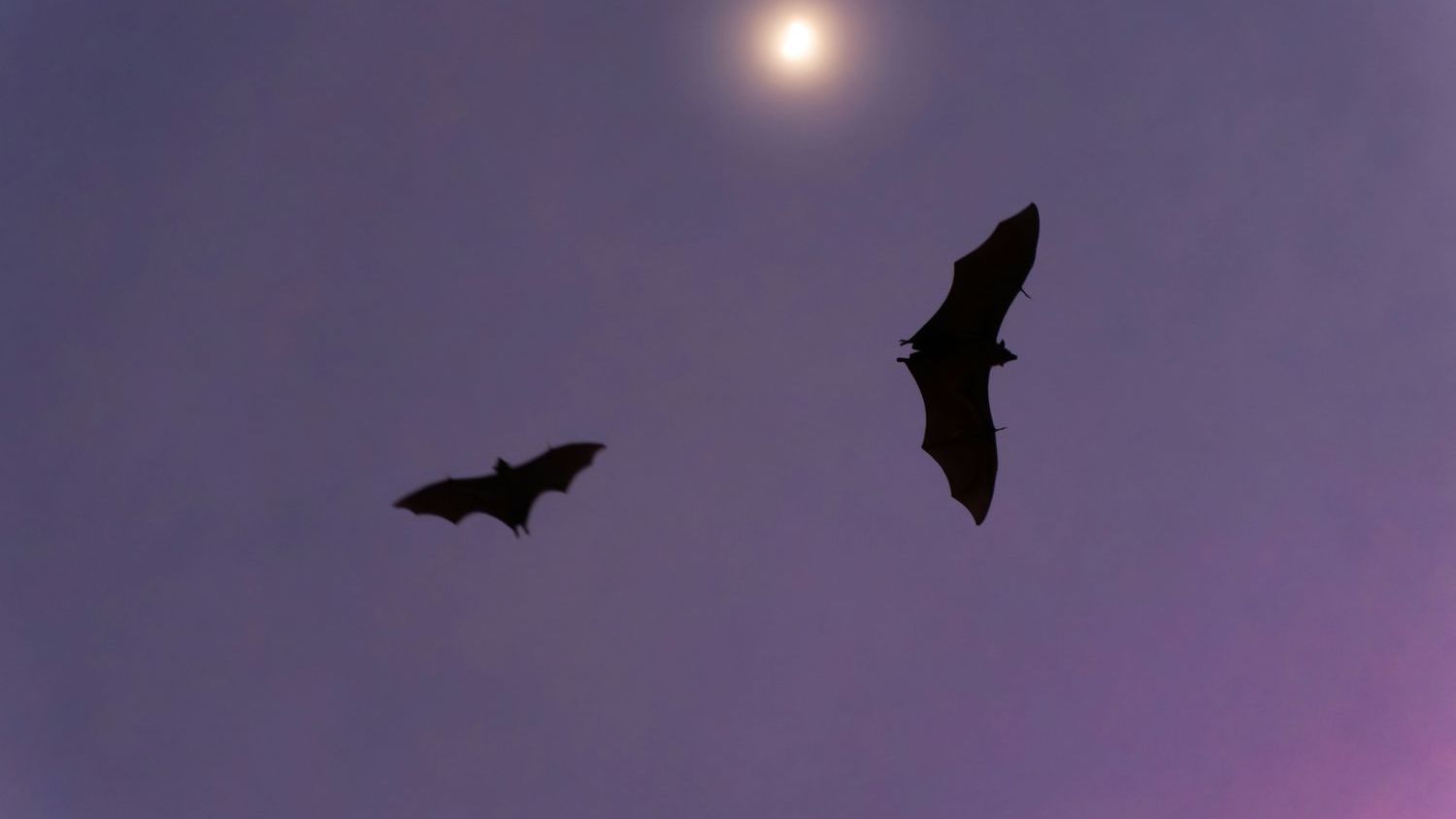
This Simple Sound Trick Enables People To ‘See’ In The Dark (M) – Image for illustrative purposes only (Image credits: Unsplash)
Blind individuals have long demonstrated an extraordinary ability to perceive their surroundings using sound echoes, much like bats hunting in the night. Recent studies reveal that sighted people can acquire similar skills through targeted training, judging distances and identifying objects in total darkness. This human echolocation taps into a simple sound technique – tongue clicks – that bounces off surfaces to create a mental map of the environment.[1][2]
Bats Inspire a Hidden Human Skill
Bats emit high-frequency calls and interpret the returning echoes to detect prey and avoid obstacles amid complete darkness. Humans mimic this process by generating their own sounds, typically sharp palatal clicks produced with the tongue against the roof of the mouth. These clicks travel outward, reflect off nearby objects, and return altered by factors such as distance, size, and material composition.
Experts in human echolocation, often blind from early childhood, refine this skill to remarkable precision. Daniel Kish, who lost his sight as a toddler, rides mountain bikes and leads hikes by listening to echo patterns that reveal trees, walls, and even foliage textures. His organization, World Access for the Blind, has trained hundreds in what he calls FlashSonar, blending clicks with cane use for enhanced mobility.[2]
How Echoes Reveal the Invisible
A single tongue click lasts mere milliseconds but carries rich information upon return. Closer objects produce quicker, louder echoes, while larger ones yield stronger reflections. Variations in echo texture allow users to differentiate metal from wood or flat walls from curved surfaces.
Scientific investigations confirm these perceptions. Researchers recorded clicks from proficient echolocators identifying distant cars, poles, or trees, then replayed the sounds during brain scans. The echoes alone sufficed for object recognition, underscoring sound’s role over other cues.[2] Trained users extend this to dynamic navigation, adjusting head position to scan spaces much as bats sweep their sonar beams.
Training Transforms Novices into Navigators
Neuroscientist Lore Thaler at Durham University led a study where sighted and blind participants trained for 10 weeks, practicing two to three hours twice weekly. They mastered tasks like assessing object size, orientation, and virtual maze navigation using simulated click echoes. Both groups improved equally, challenging assumptions that blindness confers an advantage.[1]
Thaler noted, “We weren’t sure if we would get this result in sighted people, so it was really rewarding to see it.” Follow-up reports indicated 83 percent of blind trainees experienced gains in daily independence three months later. Sighted learners similarly reported heightened spatial awareness, proving the technique’s broad accessibility.[1]
- Producing consistent mouth clicks for reliable echoes.
- Interpreting timing and amplitude for distance and size.
- Scanning with head movements to build 3D maps.
- Combining with touch aids like canes for precision.
Brain Plasticity Powers the Shift
Imaging before and after training exposed profound changes. Auditory cortex activity surged for all sounds, with denser gray matter forming in key regions. Most strikingly, echoes triggered responses in the primary visual cortex for both blind and sighted trainees, repurposing this area for spatial sound processing.[1]
This neuroplasticity echoes findings from expert echolocators, where visual brain regions light up during echo tasks but not for plain sounds. Sighted brains adapt without prior deprivation, suggesting sensory boundaries are more flexible than once thought. Such remodeling enhances overall environmental perception, extending beyond darkness.[3][2]
Pathways to Wider Adoption
Workshops now equip rehabilitation professionals to teach echolocation, integrating it with traditional tools. Programs reach hundreds annually, fostering independence for the visually impaired through low-cost, repeatable practice. Early adopters like Kish demonstrate feats such as cave exploration or sports, inspiring further research.
Challenges persist, including echo suppression in familiar settings and the need for quiet environments. Yet ongoing studies refine techniques, exploring applications for all ages and abilities. As training spreads, human echolocation stands poised to redefine navigation, proving sound alone can illuminate the dark.
This convergence of ancient animal instinct and modern neuroscience hints at untapped sensory potential in everyone. What other abilities might practice unlock?