

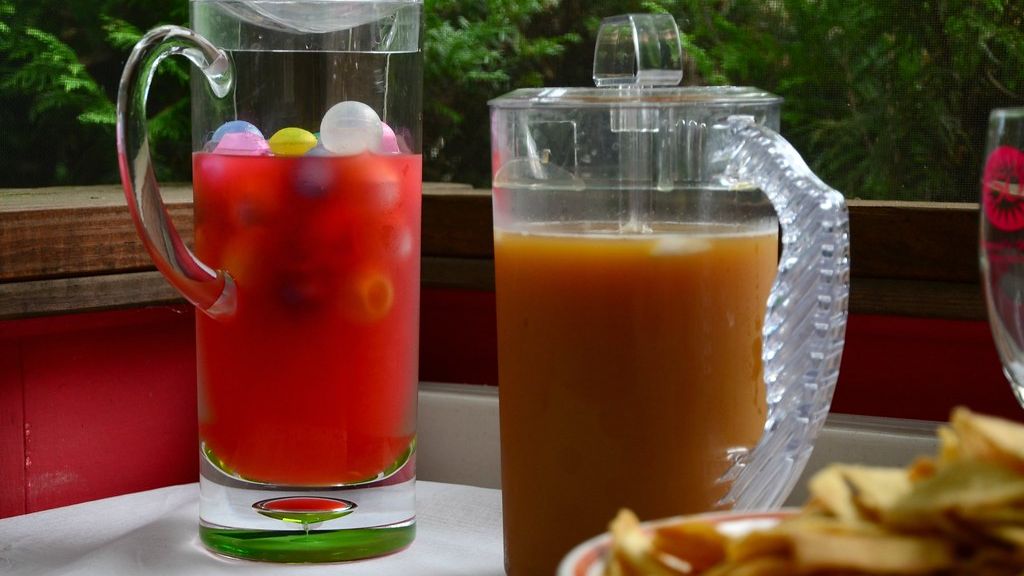
A Massive Growth Trajectory Ahead (Image Credits: Flickr)
India’s per capita consumption of non-alcoholic ready-to-drink beverages lags far behind global leaders at just 15 to 20 litres annually.[1][2] This gap underscores vast growth potential as the market prepares to double in size over the next five years. Quick commerce platforms have accelerated this trajectory by turning beverages into impulse purchases rather than planned buys.
A Massive Growth Trajectory Ahead
The non-alcoholic ready-to-drink (RTD) beverage sector in India stood at roughly $20 billion in 2025 and analysts project it will reach $40 billion by 2030.[1][2][3] This doubling reflects structural changes in consumer habits, bolstered by rapid digital adoption. Redseer Strategy Consultants highlighted this expansion in a recent report, attributing it to heightened demand for convenience.
Quick commerce channels have posted over 100 percent growth in RTD sales, outpacing traditional retail.[4] These platforms currently generate about $4 billion in packaged food and beverage gross merchandise value but could scale to $25 billion by the decade’s end.[1] The shift favors high-frequency categories like beverages, which benefit from on-demand delivery.
Per Capita Consumption Reveals Untapped Potential
India’s annual RTD consumption per person remains modest compared to international benchmarks, signaling room for significant uplift. A comparison table illustrates this disparity clearly:
| Country | Annual Per Capita Consumption (Litres) |
|---|---|
| India | 15-20 |
| United States | 100-120 |
| China | 70-80 |
| United Kingdom | 60-70 |
| Brazil | 50-60 |
This low base stems from historical reliance on fresh or home-prepared options, but evolving lifestyles are changing that dynamic. Prolonged summer seasons further amplify demand for refreshing, portable drinks.
Analysts see India leapfrogging toward higher levels through packaged innovations tailored to local tastes. Quick commerce facilitates this by enabling experimentation with new formats unavailable in neighborhood stores.[4]
Quick Commerce Reshapes Purchasing Patterns
Platforms like those in quick commerce have transformed beverages from bulk, planned acquisitions into spontaneous needs.[2] Over 100 percent year-on-year growth in this category underscores their influence, particularly for late-night or immediate cravings. These services now account for more than 20 percent of sales in segments like packaged coconut water.
The broader packaged food and beverage market, valued at over $100 billion, will expand to $150 billion or more by 2030, with quick commerce claiming an 18 percent share.[4] Beverages lead as cart fillers due to their low commitment and high repeat potential. This channel’s reach into 250 cities by 2030 will broaden access for urban and emerging consumers alike.
Consumer Shift Toward Functional Options
Buyers increasingly favor “better-for-you” products, including protein-infused drinks, functional hydration solutions, and packaged coconut water – a $900 million category where packaged variants hold 15 to 20 percent.[3] Health consciousness drives this trend, with younger demographics prioritizing nutrition alongside convenience. The RTD segment already comprises 70 percent of the $28 billion non-alcoholic beverage market as of 2024.
Mrigank Gutgutia, Partner at Redseer Strategy Consultants, observed: “What we are seeing is a fundamental shift in how consumers approach everyday consumption. Purchases are increasingly driven by immediate need rather than advance planning, and that’s where quick commerce becomes critical. Beverages are a clear beneficiary of this shift.”[1] This evolution demands innovation in formulations suited to India’s diverse climates and preferences.
Implications for Brands and the Ecosystem
Companies must adapt by refining product lines, pricing, and distribution to match micro-market demands. Quick commerce serves as a testing ground for premium and niche offerings, fostering loyalty through speed and variety. Stakeholders from manufacturers to logistics providers stand to gain as volumes rise.
The timeline points to steady compounding through 2030, with quick commerce users potentially reaching 50 million monthly transactors. This growth promises economic ripple effects, including jobs in supply chains and technology. Ultimately, India’s beverage landscape will mirror global maturity levels, quenching a rising thirst for on-the-go refreshment.