

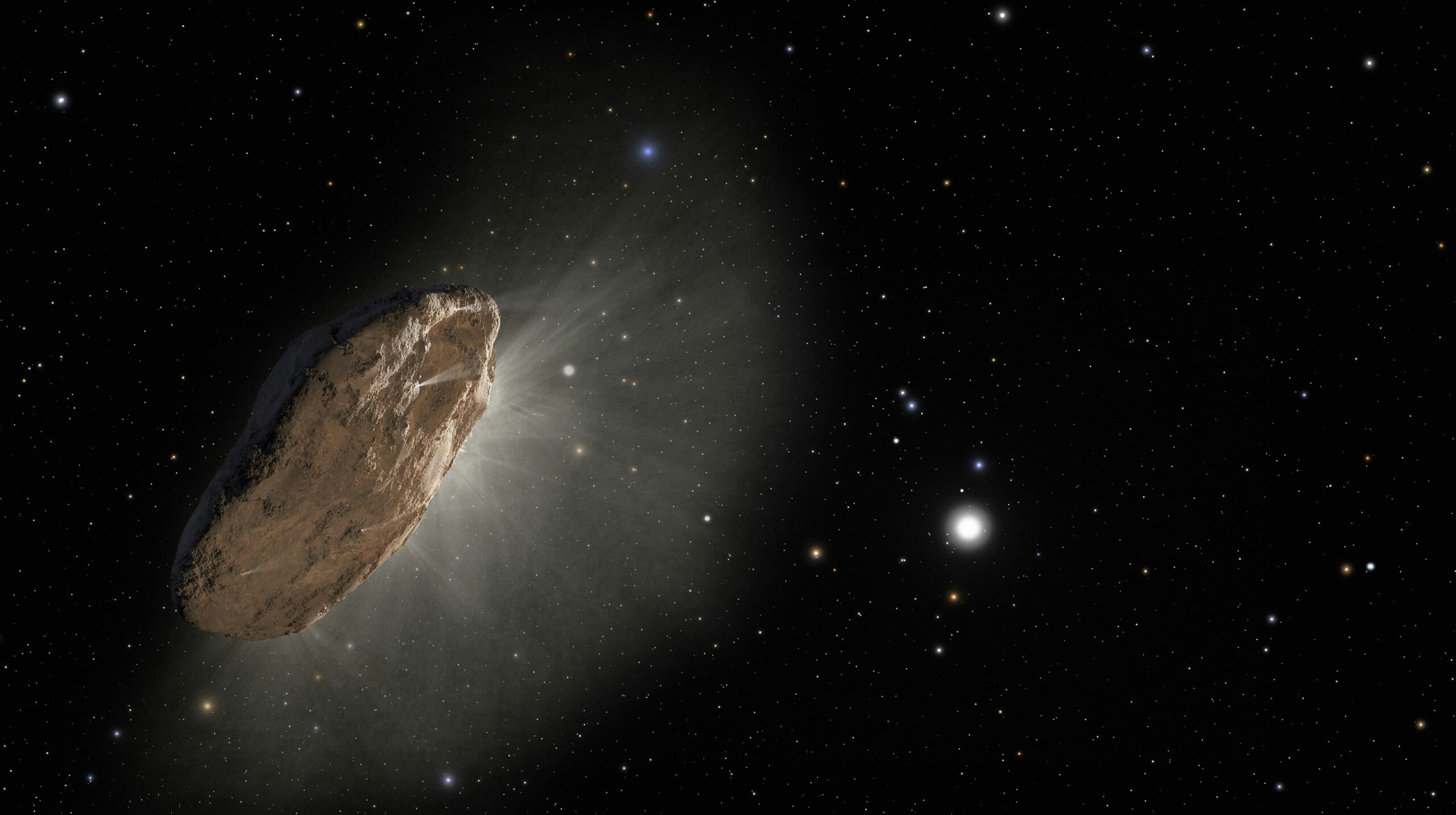
Interstellar comet 3I/ATLAS contains strange water never seen in our solar system – Image for illustrative purposes only (Image credits: Unsplash)
Astronomers tracking objects that cross into our solar system from interstellar space have identified one with a chemical signature that stands apart from anything previously recorded. The comet, known as 3I/ATLAS, shows levels of heavy water far higher than those measured in comets or planets that formed near the Sun. This finding points to an origin in an environment so cold and chemically distinct that it challenges current models of how water and other compounds assemble around distant stars.
A Visitor With an Unexpected Chemical Fingerprint
Most comets observed in our solar system contain water with a relatively low proportion of deuterium, the heavier form of hydrogen. In contrast, 3I/ATLAS displays an unusually elevated deuterium-to-hydrogen ratio. The difference is large enough that researchers describe the water as unlike any sample collected from local sources.
The comet’s trajectory confirms it entered our solar system from outside, making it only the third confirmed interstellar object after 1I/ʻOumuamua and 2I/Borisov. Its composition therefore offers a direct sample of material that condensed in another star system, potentially billions of years ago.
Why the High Deuterium Level Matters
Heavy water forms more readily in extremely cold conditions where temperatures drop low enough for certain chemical reactions to favor deuterium incorporation. The abundance seen in 3I/ATLAS suggests its parent environment reached temperatures well below those typical in the outer regions of our own solar system during its formation.
Scientists note that such conditions could exist in the outer disks of young stars or in regions shielded from stellar radiation. The comet’s makeup therefore serves as a preserved record of chemistry that occurred far from any star like our Sun.
What Remains Unknown
While the elevated heavy-water content is clear, the precise location and age of the comet’s formation are still under study. Researchers continue to analyze additional spectral data to determine whether other molecules in the comet also show unusual isotopic ratios.
Further observations during its current passage and any future returns will help refine estimates of its size, rotation, and surface activity. Each new measurement narrows the range of possible birthplaces without yet identifying a single star system as the source.
Broader Implications for Planetary Science
Discoveries like this one expand the range of chemical environments considered possible for planet formation. If heavy water is common in interstellar comets, it may influence models of how water was delivered to early Earth and other rocky worlds.
The comet also underscores the value of continued sky surveys that can catch similar visitors before they leave the inner solar system. Each new interstellar object adds a data point that helps astronomers map the diversity of material drifting between stars.
Key points from current observations:
- 3I/ATLAS shows deuterium levels exceeding those in any solar-system comet.
- The object entered from interstellar space on a hyperbolic trajectory.
- Its composition suggests formation at temperatures colder than those near our Sun.
- Additional measurements are needed to pinpoint its exact origin.
Continued monitoring of 3I/ATLAS will determine whether its unusual water is an isolated case or part of a larger pattern among interstellar visitors. For now, the comet stands as a tangible reminder that the chemistry of other star systems can differ markedly from the familiar processes that shaped our own planetary neighborhood.