

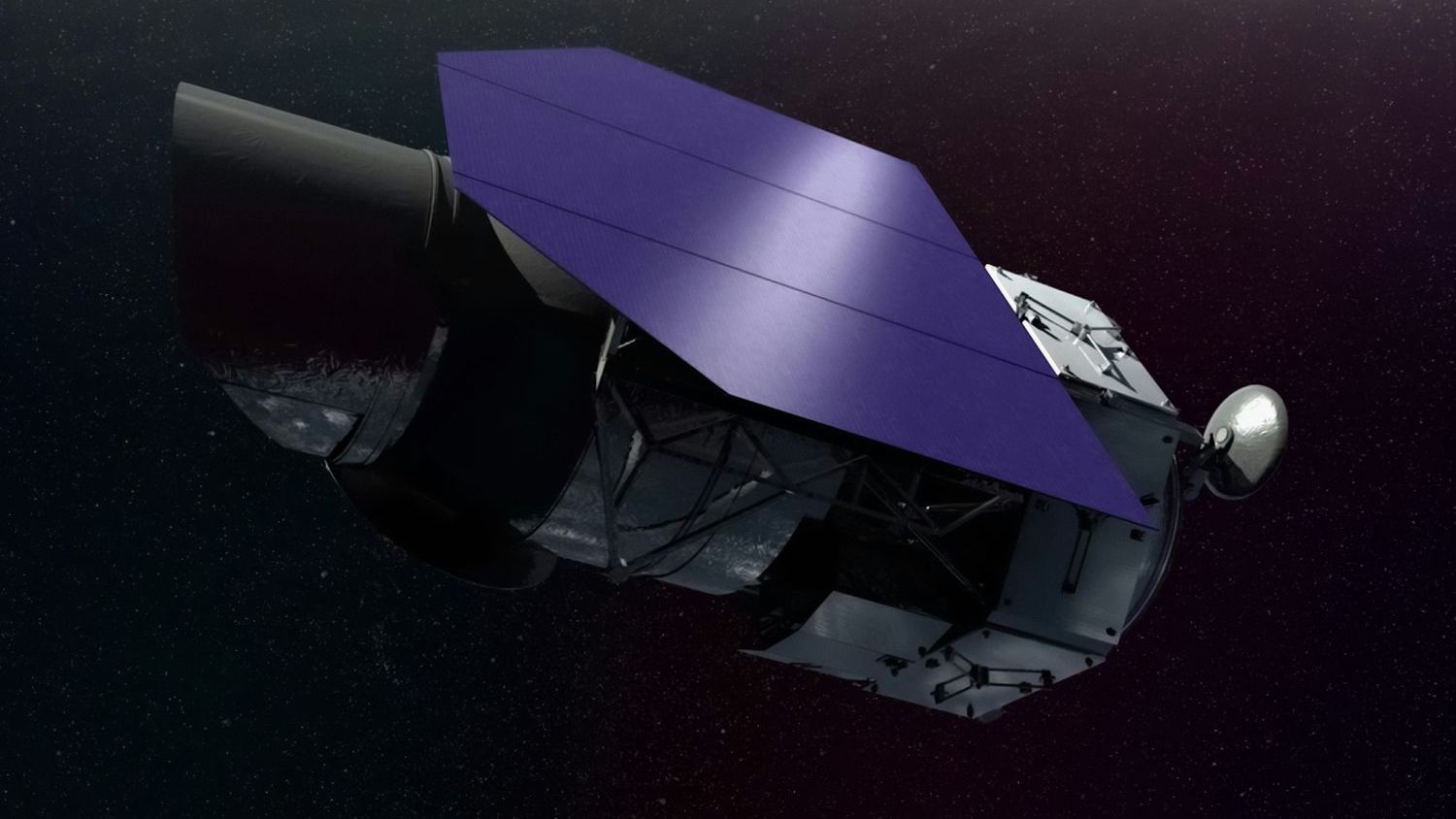
‘Truly significant’: James Webb telescope reveals largest-ever map of the universe’s hidden megastructures – Image for illustrative purposes only (Image credits: Unsplash)
Astronomers have used the James Webb Space Telescope to produce the most detailed view yet of the cosmic web, the vast network of gas and dark matter that connects galaxies across the universe. The new map captures structures on scales never charted before, revealing the hidden scaffolding that shapes how matter has evolved since the earliest epochs. This achievement marks a clear advance in efforts to understand the large-scale architecture of the cosmos.
What the Cosmic Web Actually Is
The cosmic web consists of long filaments of gas and dark matter that stretch between clusters of galaxies. These threads form a kind of three-dimensional lacework, with galaxies and galaxy groups sitting at the dense nodes where filaments intersect. Most of the ordinary matter in the universe is thought to reside in these filaments rather than inside individual galaxies.
Earlier surveys had traced parts of this network, yet they left large regions unmapped or only roughly outlined. The new observations fill in those gaps with far greater clarity, showing how the filaments twist and branch over enormous distances. Researchers note that the structures appear consistent with predictions from computer simulations, though some details still require further study.
How the Telescope Produced the Map
The James Webb Space Telescope observed selected patches of sky in infrared light, which penetrates dust and reveals faint emissions from distant gas. By combining multiple pointings into a single mosaic, the team assembled a continuous picture that spans a volume large enough to contain many typical galaxy clusters. The resulting dataset shows both the bright cores of galaxies and the much fainter glow of the connecting filaments.
Processing the raw images required careful removal of foreground stars and instrumental artifacts. Once cleaned, the data revealed extended structures whose total length exceeds anything previously recorded in a single survey. Scientists emphasize that the map remains incomplete in some directions, limited by the telescope’s field of view and the time allocated to the observations.
Why the Result Matters
The new map supplies direct evidence for how matter has been pulled into filaments over billions of years. It also offers a fresh way to test models of dark matter and dark energy, because the observed pattern of filaments depends on the properties of both. Early analysis already shows that the largest structures align with expectations, yet smaller-scale features may hold clues to processes that are not yet fully understood.
Future observations with the same telescope and with upcoming ground-based instruments are expected to extend the map into additional regions. Each new patch will help determine whether the current picture is typical or whether some areas contain unusual concentrations or voids. The work therefore sets a benchmark against which later surveys will be measured.
Key points so far:
- Largest continuous map of the cosmic web obtained to date
- Reveals previously unseen filamentary connections between galaxies
- Consistent with simulations but leaves room for refinement
- Opens path for deeper studies of dark matter distribution
Next Steps for Researchers
Teams are now comparing the observed filaments with the latest computer models to identify any systematic differences. They also plan to measure the temperature and density of the gas within the structures, which will require additional telescope time. These measurements could clarify how much ordinary matter remains undetected in the web.
Longer-term projects aim to combine the James Webb data with radio and X-ray observations. Such multi-wavelength views would provide a more complete census of both the visible gas and the invisible dark matter that holds the web together. Progress on these fronts will depend on continued access to large telescopes and on advances in data-analysis techniques.