

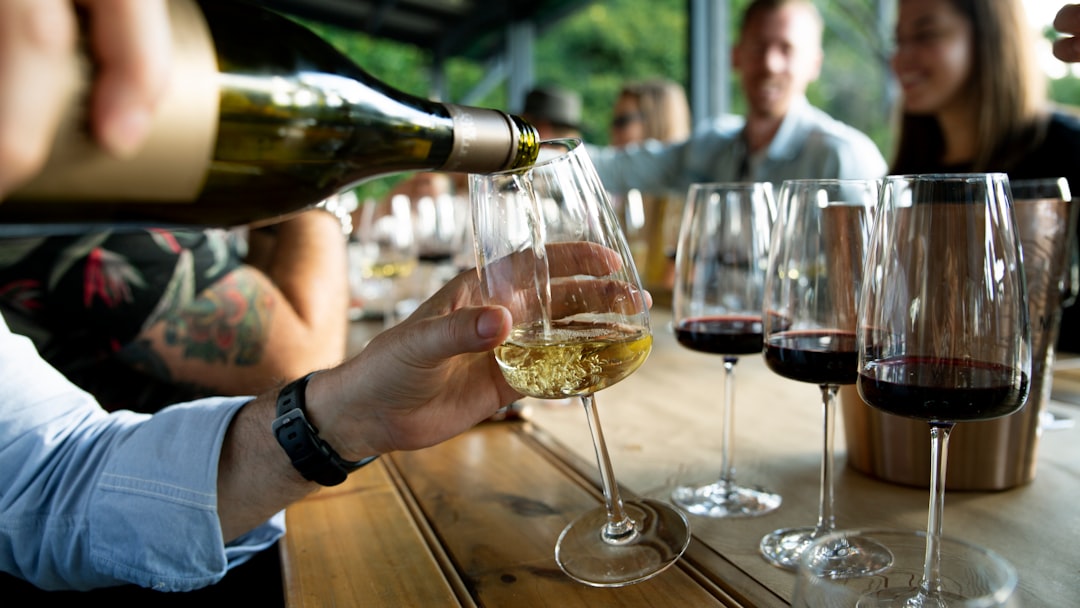
50 Years After the Judgment Of Paris, California Wine Understands Its Worth – Image for illustrative purposes only (Image credits: Unsplash)
Fifty years after a blind tasting in Paris upended long-held assumptions about wine quality, California producers continue to mark the moment that placed their wines on equal footing with the world’s most established regions. The 1976 event, known as the Judgment of Paris, pitted top California chardonnays and cabernets against premier French selections before an all-French panel of judges. The results, revealed through an American journalist’s report, sent ripples through the industry that persist today.
The Tasting That Redefined Expectations
British wine merchant Steven Spurrier organized the competition in May 1976 as a way to introduce California wines to European audiences. French judges sampled the entries without knowing their origins and ultimately awarded top honors to two California bottles: Chateau Montelena’s 1973 Chardonnay and Stag’s Leap Wine Cellars’ 1973 S.L.V. Estate Cabernet Sauvignon. The outcome surprised even the tasters, who had assumed they were evaluating French wines when they praised the American entries. The story reached American readers through Time magazine correspondent George Taber, whose account noted that the winning U.S. wines were little known yet priced around six dollars. Within months, demand for those bottles surged, and the broader message took hold: New World regions could produce wines of comparable excellence to Old World benchmarks.
Grgich Hills Estate Carries Forward a Personal Legacy
Miljenko “Mike” Grgich, the Croatian-American winemaker behind the winning Chateau Montelena Chardonnay, opened Grgich Hills Estate in Rutherford shortly after the tasting. He remained at the winery until retiring at age 95 in 2018 and passed away in 2023 at 100. His nephew Ivo Jeramaz, who now serves as winemaker and vice president of vineyards and production, credits the Paris result with giving Grgich the confidence to start his own label. Jeramaz recalls that his uncle viewed the victory as a combination of luck and decades of experience. “It was 40 years of experience, diligence, passion and dedication that created quality,” Jeramaz has said. The estate continues to emphasize regenerative farming practices that Grgich championed, methods Jeramaz believes allow their wines, including a favored Old Vine Zinfandel, to express distinct character.
Stag’s Leap and Chalone Extend the Reach Beyond Napa
Stag’s Leap Wine Cellars, whose 1973 cabernet took first place in the red category, hosted anniversary tastings this year at the Pebble Beach Food & Wine festival. Winemaker Luis Contreras, who has spent his entire career at the property, notes that the event affirmed the quality of Napa Valley grapes and helped establish the Stags Leap District as a distinct American Viticultural Area in 1989. The winery’s estate cabernets, including the Fay and S.L.V. bottlings, remain central to its identity. Further south, Chalone Vineyard’s 1974 Chardonnay placed third among whites and helped put Monterey County on the map. Current winemaker Mari Wells Coyle, who oversees production for the Foley Family Wines & Spirits-owned property, points out that the tasting demonstrated the potential of the region’s limestone soils and high-elevation sites near Pinnacles National Park. The Chalone AVA was designated in 1982, and the winery continues to focus on minimal-intervention winemaking that lets the vineyard speak for itself.
Enduring Principles in a Changing Industry
Today’s California wine sector faces economic pressures, yet the estates tied to the 1976 tasting maintain a focus on careful grape growing and site-specific expression. Jeramaz emphasizes that sustainable practices allow producers to adapt without sacrificing quality. Contreras and Coyle echo the view that the Judgment of Paris removed artificial limits on where great wine could be made. The anniversary gatherings underscore a shared commitment: respect for the land and the fruit remains the foundation, regardless of market conditions. Five decades later, the principles that emerged from that single afternoon in Paris continue to guide the next generation of California winemakers.