

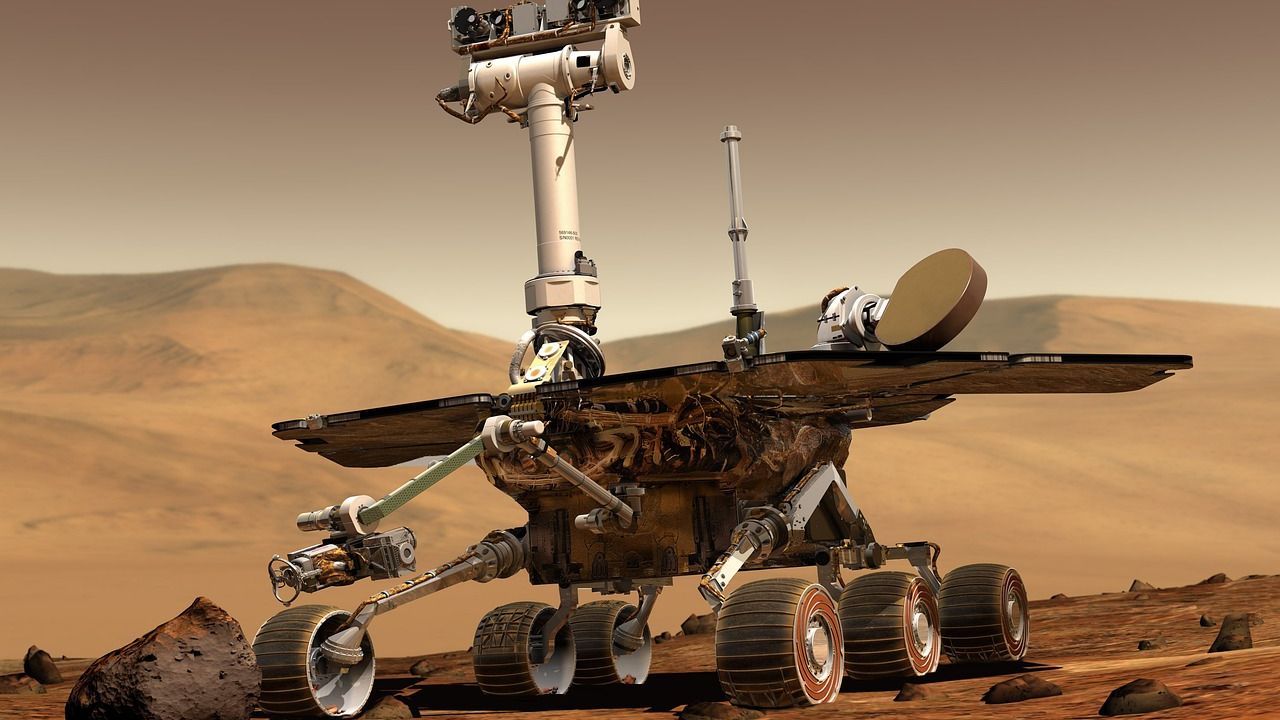
Here’s what 6 years of driving on Mars did to the wheels on NASA’s Curiosity rover (video) – Image for illustrative purposes only (Image credits: Pixabay)
Pasadena, California – A newly released video from NASA’s Jet Propulsion Laboratory captures the steady progress of the Curiosity rover’s wheels over more than six years of travel on the Martian surface. The footage, compiled from navigation camera images, spans from early 2020 through March 2026 and offers a rare ground-level view of the rover in motion. Mission teams use such sequences to monitor hardware performance while the vehicle continues its scientific exploration of Gale Crater.
Details Behind the Timelapse Sequence
The animation draws on still images taken by Curiosity’s right navigation camera between January 2, 2020, and March 8, 2026. Those dates correspond to the 2,633rd and 4,830th Martian days, or sols, of the mission. Each frame shows the rover’s wheels rolling forward as the vehicle advances across varied terrain.
Engineers selected the images to create a smooth two-minute sequence that compresses years of driving into a concise visual record. The result highlights the consistent operation of the six-wheeled mobility system even after more than a decade on Mars.
How the Video Supports Ongoing Operations
Regular imaging of the wheels helps the team track any gradual changes in their condition. Although the timelapse itself focuses on motion rather than close-up inspection, it forms part of a broader set of observations that inform driving strategies and maintenance decisions.
Curiosity has already covered tens of kilometers since landing in 2012. The new footage underscores the rover’s continued ability to reach new science targets despite the harsh Martian environment.
Context Within the Mission’s Longer Record
Curiosity’s wheels have faced repeated contact with sharp rocks and abrasive soil throughout the mission. Periodic close-up photographs taken by the rover’s robotic arm have documented cracks and tread wear on several wheels, prompting adjustments to route planning and speed limits in rough areas.
The six-year timelapse adds a dynamic perspective to those static assessments. It shows the wheels functioning in real time across changing landscapes, reinforcing that the mobility system remains functional for continued exploration.
Next Steps for Curiosity and Future Rovers
With the video now public, mission planners continue to review wheel performance data alongside new images returned from the surface. The information helps refine guidelines for safe driving distances and terrain selection.
Lessons from Curiosity’s wheels also inform designs for the Perseverance rover and planned future missions. Engineers study wear patterns to improve durability on upcoming vehicles that will operate in similar conditions.