

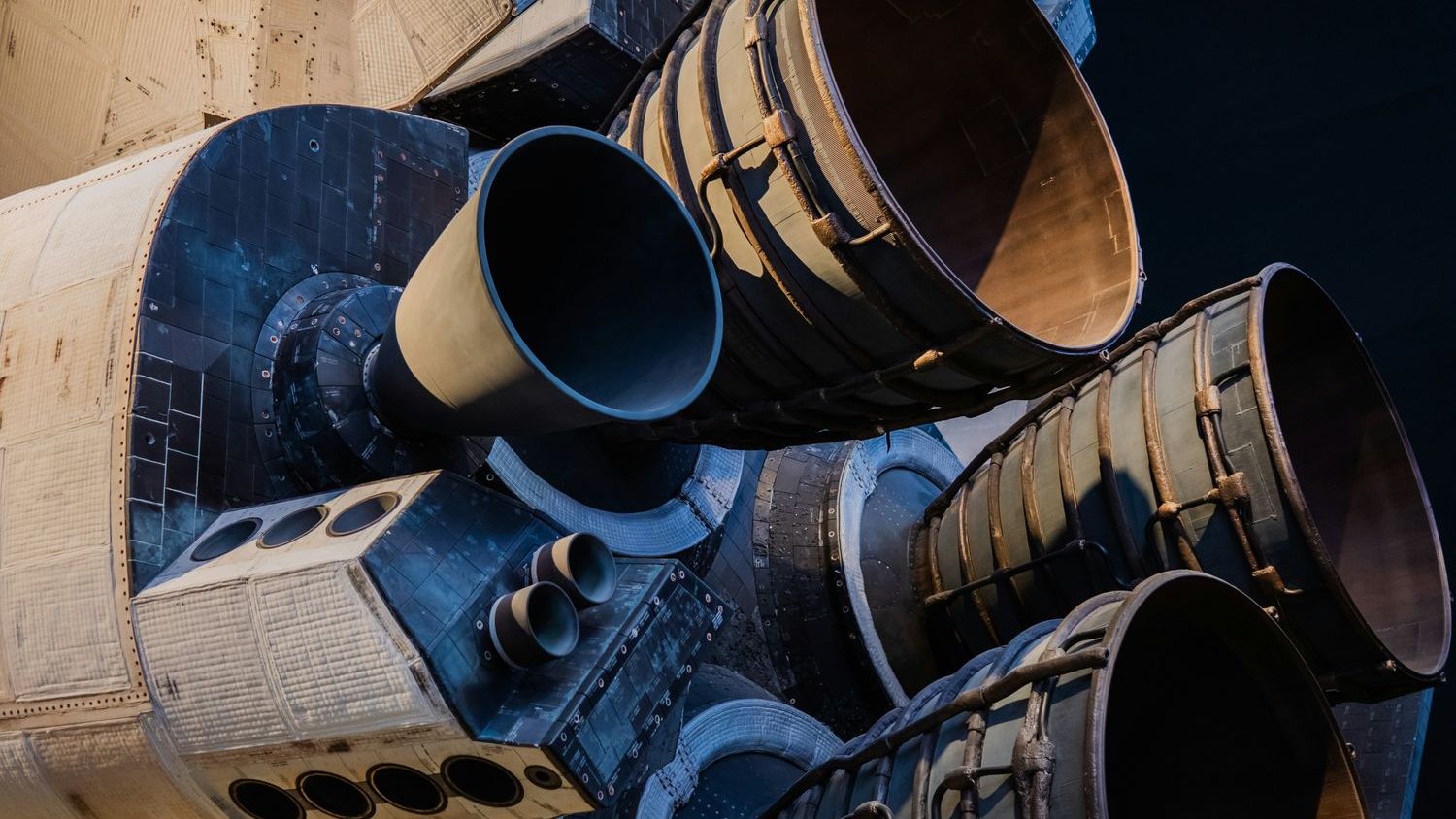
NASA just tested a powerful new thruster that could send humans to Mars – Image for illustrative purposes only (Image credits: Unsplash)
Astronauts bound for Mars could one day rely on more efficient propulsion to shorten their journey and reduce exposure to deep-space radiation. Engineers at NASA’s Jet Propulsion Laboratory recently demonstrated this potential by successfully operating a prototype electromagnetic thruster at unprecedented power levels.[1] The test marked a significant milestone in developing systems capable of supporting human missions to the Red Planet.
The Thruster Comes Alive
On February 24, 2026, a team at JPL’s Electric Propulsion Laboratory ignited the lithium-fed magnetoplasmadynamic thruster for the first time in years at such high power.[1] Inside the 26-foot-long condensable metal propellant vacuum chamber, known as CoMeT, the device underwent five ignitions. A central tungsten electrode glowed bright white at temperatures exceeding 5,000 degrees Fahrenheit, while the nozzle-shaped outer electrode produced a vibrant red plume.
This specialized water-cooled facility allowed safe testing of metal-vapor propellants at levels up to megawatts. The achievement represented the highest power for any electric propulsion system tested in the United States, reaching 120 kilowatts.[2] JPL senior research scientist James Polk, who led the effort, described the moment as pivotal after 2½ years of development.
How Electromagnetic Acceleration Works Here
The thruster operates by vaporizing lithium metal into plasma, which intense electric currents and magnetic fields then accelerate electromagnetically. This magnetoplasmadynamic design, researched since the 1960s, has never flown in space but promises advantages over traditional systems. Unlike chemical rockets, electric propulsion consumes up to 90% less propellant, enabling steady, efficient thrust over long durations.[1]
Lithium’s properties make it particularly suitable, as the CoMeT chamber condenses and recovers the vapor to prevent contamination during repeated firings. Collaborators from Princeton University and NASA’s Glenn Research Center contributed to refining the prototype. The test provided critical data on performance, validating the setup for future experiments.
Power Leap Compared to Today’s Spacecraft
The new thruster’s output dwarfed existing NASA technology. For context, the Psyche spacecraft, en route to a metal asteroid since its 2023 launch, employs the highest-power electric thrusters currently flying at NASA’s missions – about 4.8 kilowatts each.[3] The JPL prototype delivered more than 25 times that level.
| Thruster System | Power Level | Propellant | Status |
|---|---|---|---|
| Psyche Mission | ~4.8 kW | Xenon gas | Operational in space |
| Lithium MPD Prototype | 120 kW | Lithium vapor | Ground test (Feb 2026) |
| Future Goal | 500 kW–1 MW per unit | Lithium vapor | In development |
This comparison underscores the potential shift toward higher-thrust electric systems, building on successes like Deep Space 1 and Dawn, NASA’s early electric propulsion demonstrations.[1]
Toward Nuclear-Powered Mars Journeys
The project falls under NASA’s Space Nuclear Propulsion initiative, funded through the Marshall Space Flight Center since 2020. When paired with a nuclear reactor, multiple MPD thrusters could generate 2 to 4 megawatts total – essential for crewed Mars voyages. Such systems might cut transit times, easing the physical and psychological toll on astronauts.[2]
NASA Administrator Jared Isaacman highlighted the progress: “The successful performance of our thruster in this test demonstrates real progress toward sending an American astronaut to set foot on the Red Planet.”[1] Polk added, “We not only showed the thruster works, but we also hit the power levels we were targeting.”[2] Upcoming tests will push toward 500 kilowatts to 1 megawatt per thruster.
Enduring the Heat of High-Power Operations
Several hurdles remain before flight readiness. Components must endure extreme heat for thousands of hours – over 23,000 for a Mars round trip. Scaling to megawatt-class power while maintaining efficiency poses engineering demands that the CoMeT facility now helps address.[3]
Key next steps include:
- Extended-duration firings to test material durability.
- Integration with nuclear power simulations.
- Optimization for multi-thruster arrays.
- Refinement based on current data for higher power thresholds.
These efforts, detailed in JPL’s announcement, bring sustainable deep-space travel closer for the next generation of explorers.[1]
While challenges persist, the February test affirmed a viable path forward. For astronauts, it means Mars may feel less distant, with propulsion technology evolving to match humanity’s ambitions.