

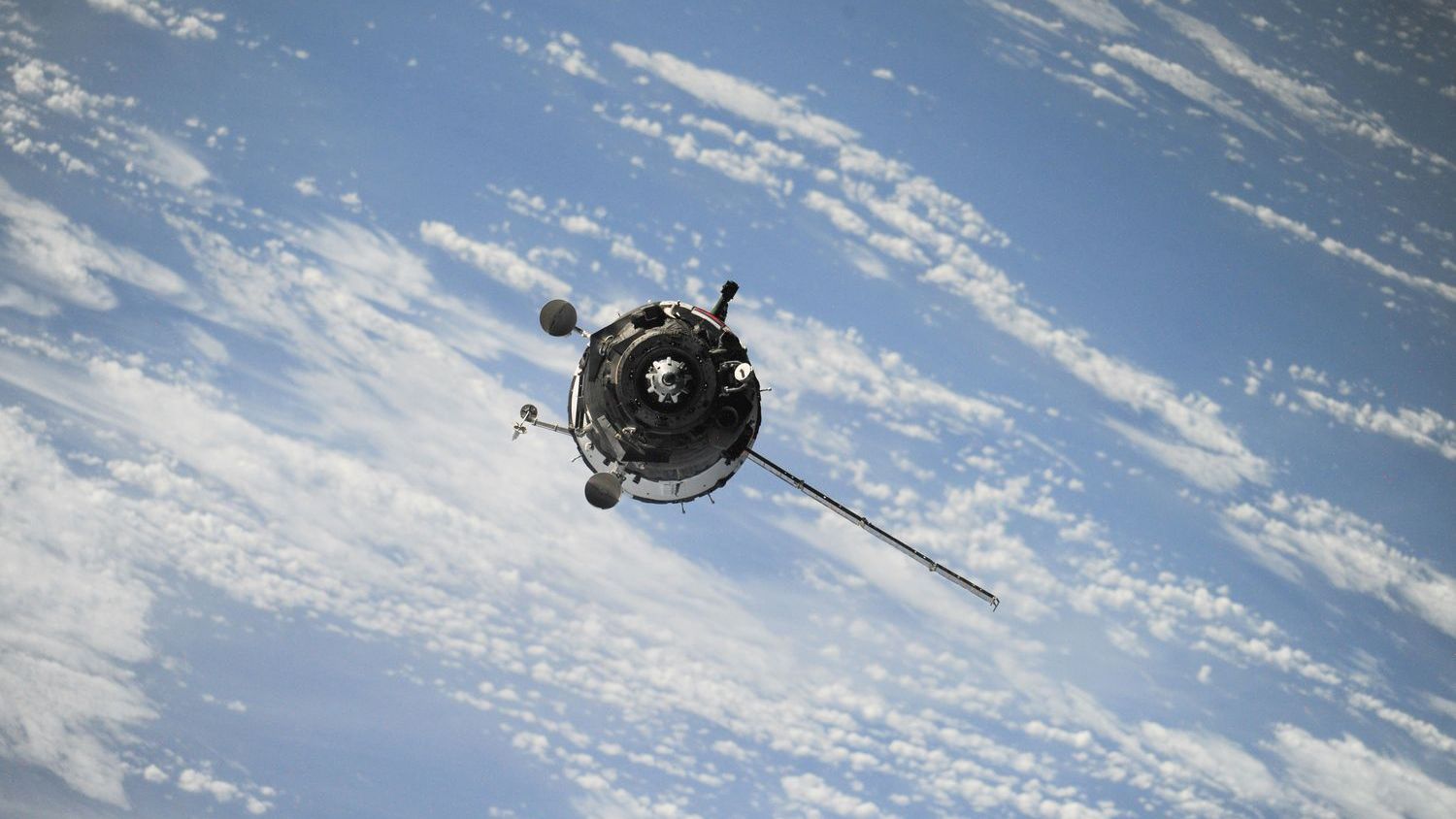
A Nuclear Ship For Mars: Making Sense of Space Reactor Freedom – Image for illustrative purposes only (Image credits: Unsplash)
Space travelers have long dreamed of slashing the months-long haul to Mars, but NASA’s Space Reactor Freedom could turn that vision into reality. Officials at the agency envision a nuclear-powered spacecraft reaching the Red Planet by the end of 2028, carrying small helicopters to scout its surface. This demonstration mission addresses a core challenge in deep-space exploration: reliable, abundant power that chemical rockets simply cannot match. By pairing a fission reactor with advanced electric thrusters, NASA aims to prove a technology that could transform missions across the Solar System.
A Game-Changer for Interplanetary Journeys
Chemical rockets dominate spaceflight because they deliver quick bursts of thrust, but their efficiency drops sharply for long hauls. Heavy fuel loads create a mass penalty that spirals out of control, forcing missions to rely on time-consuming gravitational slingshots around planets. Nuclear propulsion sidesteps this trap by generating vast energy from tiny amounts of fuel, enabling direct paths and heavier payloads.
Engineers calculate that a nuclear system could shrink Mars transit times to as little as 12 weeks with a megawatt reactor, compared to the typical six to nine months. On arrival, the reactor supplies nonstop electricity for instruments, rovers, or habitats – critical for shadowed craters on the Moon or the dim realms beyond Jupiter. This capability opens doors to sustained operations that solar power cannot sustain far from the Sun.
Lessons from Decades of Nuclear Setbacks
The United States attempted a nuclear reactor launch in 1965, but the device failed after six weeks in Earth orbit and later broke apart, leaving radioactive remnants circling indefinitely. Soviet engineers launched over two dozen reactors from the 1960s to 1990s, mostly for short orbital tests boosted to high altitudes for safe decay. Those efforts stayed in near-Earth space, never venturing deeper.
A stark reminder came in 1977 when Kosmos 954 malfunctioned and scattered radioactive debris across Canada’s Northwest Territories after re-entering uncontrolled. Such incidents highlighted risks: uncontrolled failures could endanger Earth. NASA officials acknowledge these histories, stressing that Space Reactor Freedom draws on matured designs to prioritize safety and integration over untested innovations.
Nuclear Electric Propulsion: Power Meets Precision
At its core, the mission fuses a 20-kilowatt fission reactor – described by NASA administrator Jared Isaacman as “mostly built” – with an electric propulsion module repurposed from the paused Gateway lunar station project. The reactor splits uranium atoms in a controlled chain reaction, producing heat converted to electricity. That electricity accelerates charged particles, like ionized xenon, out the back for steady, efficient thrust lasting months.
This approach dwarfs solar-powered ion engines, which top out at a few kilowatts. A 200-kilowatt system could propel a 20-ton craft to Jupiter in under five years; scaled up, it handles cargo to distant moons. Past missions like Cassini and New Horizons used simpler radioisotope generators for power, but those rely on decay heat, not active fission for propulsion.
| Propulsion Type | Energy Source | Mars Trip Time | Key Advantage |
|---|---|---|---|
| Chemical Rockets | Hydrogen-Oxygen | 6-9 months | High initial thrust |
| Solar Electric | Sunlight | 4-6 months | Proven, low fuel |
| Nuclear Electric | Fission Reactor | 12 weeks (projected) | High power, direct route |
Racing Toward a 2028 Launch
Plans call for bolting the reactor to the propulsion module, adding Ingenuity-style helicopters as payload for Mars data collection. The science takes a backseat to validation: success would pave the way for larger nuclear craft, what Isaacman calls the “transcontinental railroad of the Solar System.” NASA presented these ideas in March, emphasizing off-the-shelf components to hit the aggressive timeline.
Regulatory scrutiny looms large, demanding rigorous safety proofs to prevent accidents. Integration tests and fuel sourcing remain underway, but proponents argue the tech’s readiness justifies the push. A successful flight, even delayed to the early 2030s, would signal a shift from tentative probes to robust explorers.
What Success Means for Humanity’s Reach
Beyond Mars, nuclear freedom enables detailed surveys of Saturn, Neptune, and Kuiper Belt objects – worlds too remote for fuel-hungry chemical drives. Rovers on Mars or bases on Titan gain reliable power, sustaining human outposts. While risks persist, the payoff reshapes exploration’s limits.
Space Reactor Freedom stands at a pivotal moment. If it launches and performs, agencies worldwide may follow, accelerating humanity’s expansion into the cosmos. The outer Solar System, once a distant prospect, draws nearer with every step forward.