

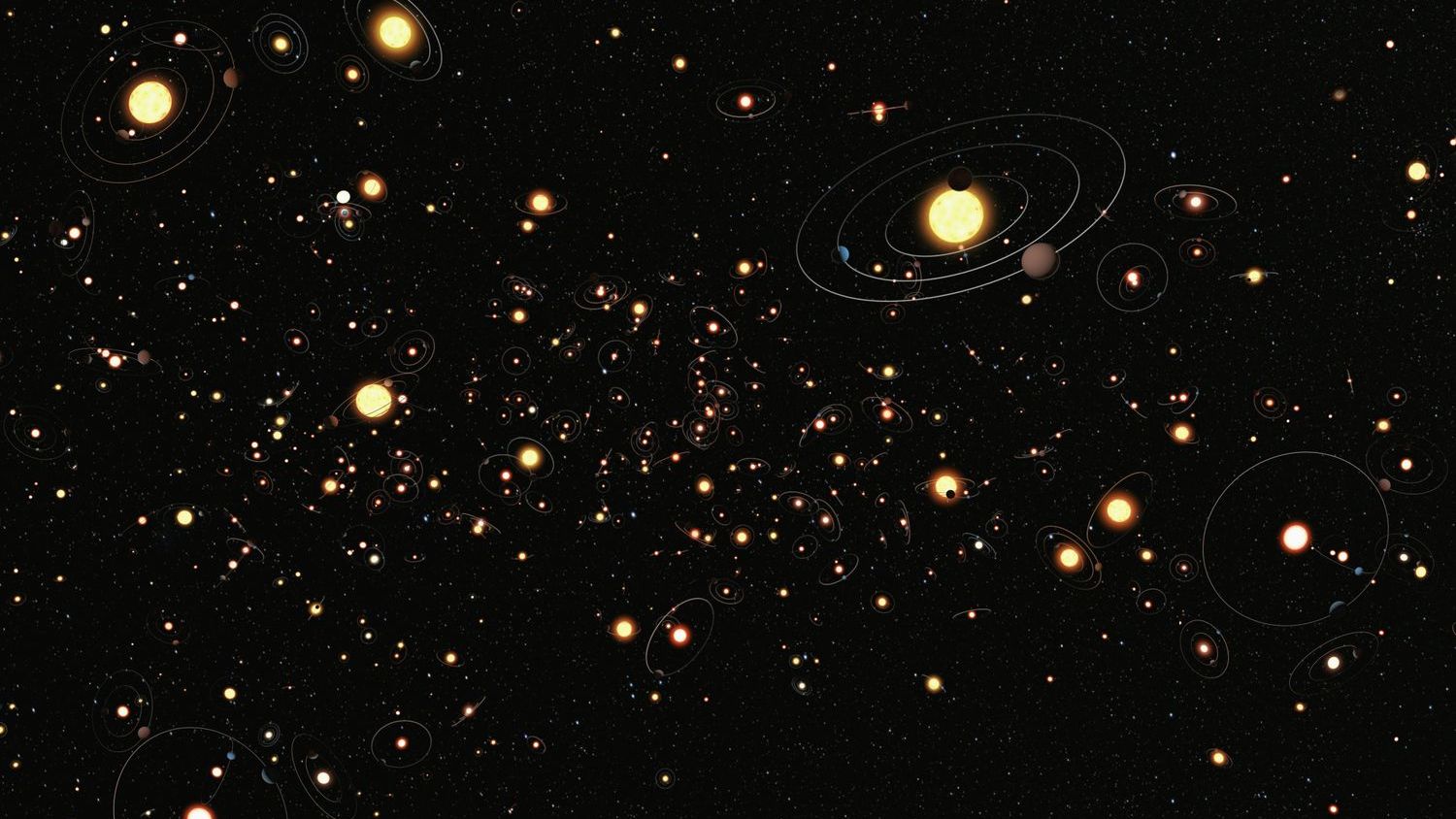
Over 10,000 new exoplanet candidates revealed! – Image for illustrative purposes only (Image credits: Unsplash)
This latest breakthrough from NASA’s Transiting Exoplanet Survey Satellite promises to reshape how astronomers catalog distant worlds. Researchers sifting through years-old data have identified 10,091 previously unknown candidates, pushing the boundaries of what a single analysis can achieve. The findings highlight a shift toward studying vast populations of planets rather than isolated systems, offering fresh insights into the galaxy’s planetary diversity.
A Record-Breaking Scan of Faint Stars
A team led by Princeton University graduate researcher Joshua Roth conducted the T16 survey, targeting light curves from more than 80 million stars observed by TESS during its first year of operations in 2018. Unlike prior searches that prioritized brighter stars, this effort delved into fainter ones, uncovering 11,554 candidates in total. The peer-reviewed paper detailing the results appeared in The Astrophysical Journal on April 28, 2026.
That first-year data covered roughly half the sky, yet it yielded an astonishing volume of potential planets. Roth explained to IFLScience that expanding to fainter stars simply enlarged the search pool dramatically. This approach marks a departure from traditional methods, enabling detection of planets around less prominent hosts.
Machine Learning Transforms Data Analysis
The sheer scale of the dataset demanded innovative tools. Researchers deployed a semi-automated pipeline incorporating machine learning algorithms, a subset of artificial intelligence trained to recognize transit patterns in stellar brightness dips. These tools efficiently processed the massive archive, flagging signals that might indicate orbiting planets.
Machine learning excels at identifying subtle patterns in noisy data, much like how it aids other fields from medicine to climate modeling. In this case, it accelerated the vetting process across millions of light curves. Roth noted that the pipeline’s design allowed for rapid handling of “tons of this data,” a feat unattainable through manual review alone.
One Candidate Steps into the Spotlight
While most candidates await further scrutiny, follow-up observations confirmed at least one as a genuine planet. Telescopes at the Magellan Observatory in Chile observed TIC 183374187, revealing a gas giant comparable in mass to Jupiter. Dubbed a hot Jupiter, it circles its star at a tight orbit, resulting in extreme temperatures.
Such validations build confidence in the survey’s overall reliability. Historically, the majority of TESS candidates have proven real upon checking, though false positives persist due to phenomena like eclipsing binary stars. This confirmed world exemplifies the haul’s potential, providing a tangible example amid the sea of prospects.
Future Surveys and Broader Implications
The team now turns to TESS’s second-year data, which could potentially double the candidate count. Roth indicated a refined approach for this phase, promising even richer results. As TESS continues its extended mission – launched in 2018 and primary objectives met by 2020 – such efforts will fuel demographic studies of exoplanets.
With 6,278 confirmed exoplanets cataloged in NASA’s Exoplanet Archive prior to this announcement, the influx underscores accelerating discovery rates. Larger samples enable statisticians to probe questions about planetary formation, migration, and habitability across stellar types.
- Analyze year-two data for additional candidates, possibly exceeding 20,000 total.
- Conduct radial velocity and direct imaging follow-ups on high-priority targets.
- Refine machine learning models to minimize false positives in fainter fields.
- Integrate findings with data from upcoming telescopes like the Nancy Grace Roman Space Telescope.
These steps will illuminate underrepresented planetary regimes, from compact multi-world systems to wide-orbit giants. For humanity, the expansion hints at countless environments ripe for deeper exploration, inching closer to understanding our place in a crowded cosmos.