

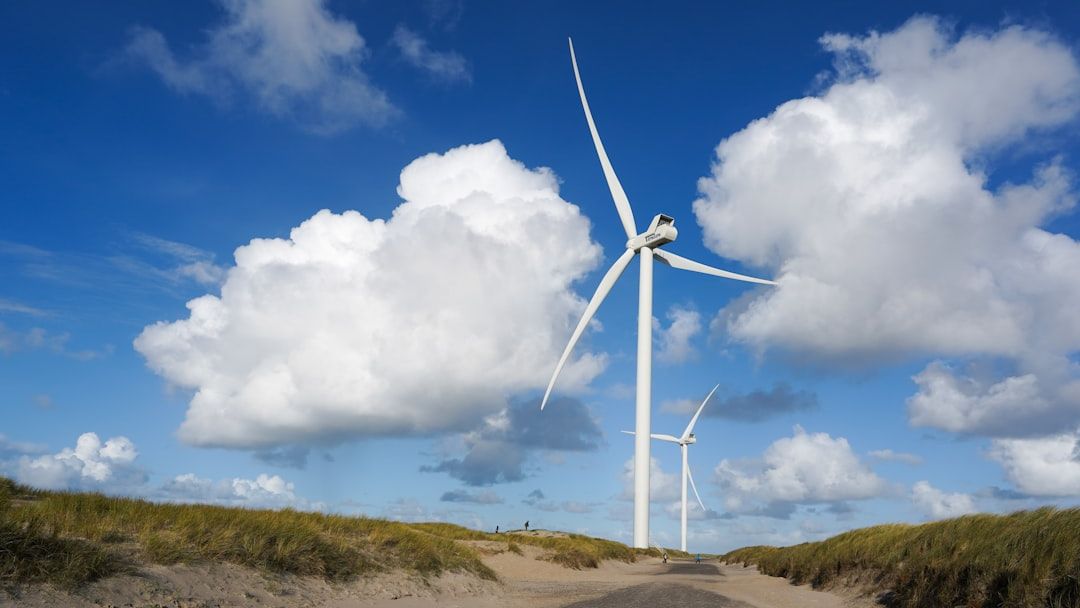
250+ onshore wind projects stalled as Pentagon freezes permitting – Image for illustrative purposes only (Image credits: Unsplash)
The Department of Defense has suspended its long-standing reviews of proposed onshore wind farms on private land, bringing a once-predictable permitting step to a halt. For 15 years, developers relied on the Military Aviation and Installation Assurance Siting Clearinghouse to assess potential conflicts with military operations, such as radar interference or airspace use. That process has now stopped, with no mitigation agreements completed since last August and formal letters sent to developers in April signaling a broader reevaluation. The result is a de facto pause affecting projects across the country at a time when electricity demand from data centers, manufacturing, and electrification continues to climb.
Why the Reviews Matter for Project Timelines
Developers have long treated the clearinghouse step as a manageable checkpoint rather than a major obstacle. Most applications received quick determinations, often within days, followed by straightforward mitigation agreements when needed. Those agreements typically involved adjustments like turbine placement or radar upgrades to protect military interests without derailing construction. The current suspension eliminates that pathway entirely. Projects already deep in negotiations, including at least 60 that had reached formal stages, now have no clear route forward. Developers must continue paying for land leases and grid interconnection studies while facing uncertainty over whether their applications will ever receive a decision. This added holding pattern raises carrying costs and compresses the window for securing federal tax credits under recently enacted legislation.
The Scale of Projects Now on Hold
Industry data compiled by the American Clean Power Association shows more than 250 onshore wind projects nationwide are affected by the review freeze. Those projects represent roughly 30 gigawatts of potential generating capacity, enough to power millions of homes once completed. The stalled list includes proposals at every stage: some awaiting final sign-off, others still negotiating mitigation terms, and a few that historically would have received rapid “no hazard” determinations. Because the clearinghouse process applies uniformly to all wind developments regardless of location or size, the pause reaches projects in states far from military installations as well as those near sensitive radar sites.
Context Within Shifting Federal Priorities
The Defense Department’s action follows a pattern of heightened scrutiny on wind energy under the current administration. Officials have cited national security concerns, though the clearinghouse itself operated without major disruption through previous administrations, including the first Trump term. At the same time, the broader energy landscape shows growing needs for new generation. Data centers and industrial facilities are driving record electricity demand forecasts, and onshore wind remains one of the fastest and lowest-cost resources available for new supply. The review suspension arrives just as developers had begun accelerating projects to meet those needs and to qualify for time-limited incentives.
What the Pause Means Going Forward
Without a resumption of reviews, many projects risk missing critical deadlines for financing and interconnection. Developers report canceled meetings and a lack of communication from the Pentagon, leaving them unable to adjust plans or explore alternative mitigation strategies. The situation also highlights the vulnerability of even private-land projects to federal processes that were once considered routine. As power demand rises and clean-energy targets remain in place at the state level, the extended delay could shift investment toward other technologies or delay new capacity additions by years. Industry groups continue to seek clarity on when, or whether, the clearinghouse will resume its prior role.