

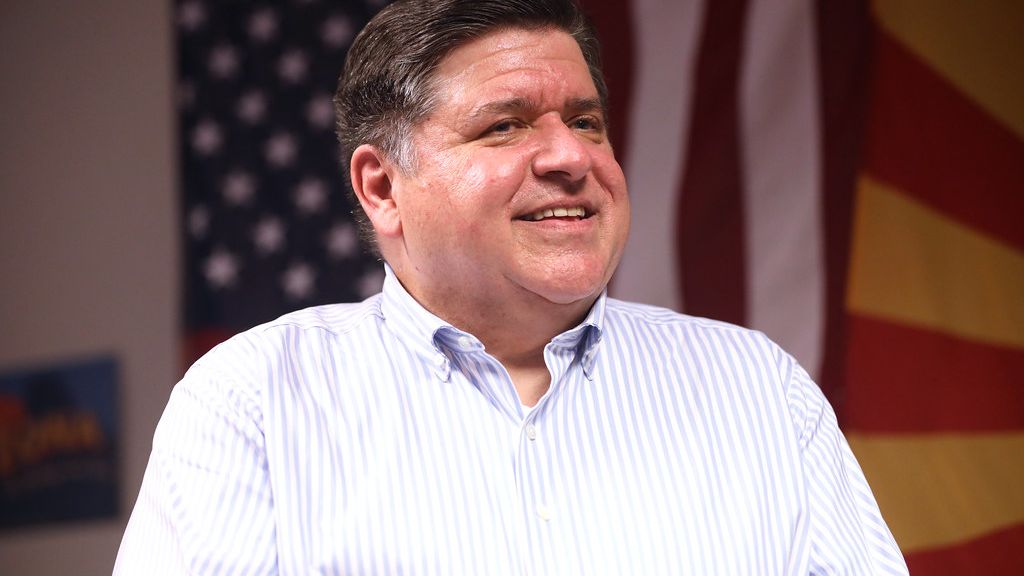
JB Pritzker Claims Trump ‘Set the Tone’ for Political Violence After Latest Assassination Attempt – Image for illustrative purposes only (Image credits: Flickr)
Illinois Governor JB Pritzker directly blamed former President Donald Trump for normalizing political violence in the United States, just over a week after another gunman targeted Trump at a high-profile event. The Democratic governor leveled the charge during a candid conversation about his own rising security concerns. This exchange unfolded amid a string of assassination attempts against Trump, highlighting deepening divisions in American politics.
The Deli Table Discussion
Governor Pritzker sat down with Politico reporter Jonathan Martin at a Chicago deli for an interview published on Tuesday. The conversation turned personal when Martin inquired about the noticeable increase in threats directed at Pritzker in recent years. Pritzker acknowledged the uptick without exaggeration, noting it exceeded levels from prior periods. He attributed part of the rise to his Jewish heritage.
Martin pressed for the underlying causes. Pritzker responded pointedly: “Look, our political leaders set the tone in this country and I think that the president of the United States has set a tone where political violence is okay.” He added that Trump had advocated for such violence himself, calling it a grave development. When Martin noted Trump as a frequent target, Pritzker agreed, saying, “That’s what I’m saying! He’s experienced the other side of that.” The governor urged unified opposition to political violence from all sides.
A Spike in Personal Threats
Pritzker’s comments stemmed from his firsthand experience with heightened dangers. He described the threats as more frequent than before, though he avoided overstating their scope. This personal context lent weight to his broader critique of national leadership. As a prominent Democrat and Jewish elected official, Pritzker occupies a visible position in a polarized landscape.
The governor’s concerns reflect a wider pattern reported by officials across party lines. Public figures have cited growing hostility tied to partisan rhetoric and online extremism. Pritzker’s willingness to connect his situation to Trump’s influence underscores the stakes for state leaders navigating national tensions.
Details of the Most Recent Attack
The timing of Pritzker’s remarks aligned closely with the April 25 incident at the White House Correspondents’ Dinner. Authorities identified 31-year-old Cole Tomas Allen as the suspect, who allegedly sought to kill Trump and several administration figures. Investigators linked Allen’s actions to conspiracy theories involving Trump and Jeffrey Epstein. In a manifesto, Allen labeled Trump a “pedophile” and “rapist,” demanding his death.
Security teams thwarted the plot, preventing harm at the event attended by journalists and officials. The attempt marked a bold escalation, occurring in a heavily secured Washington setting. Law enforcement continues to probe Allen’s background and online activity for further insights.
Trump’s String of Close Calls
This episode represented the third known assassination attempt on Trump since 2024. The sequence began with a shooting at a rally in Butler, Pennsylvania, where a gunman wounded Trump and killed an audience member. Months later, another assailant targeted Trump at his Florida golf course during a routine outing.
Each incident drew intense scrutiny to Secret Service protocols and the motivations of the perpetrators. The attacks spanned different regions and contexts, from public rallies to private leisure. Federal agencies have ramped up protections, yet the persistence raises questions about persistent radicalization.
- Butler, Pennsylvania (2024): Rally shooting with fatalities.
- Florida Golf Course (later 2024): Attempted ambush during golf.
- White House Correspondents’ Dinner (April 25, 2026): Plot at media event.
Pritzker’s Longstanding Critique
Pritzker has repeatedly criticized Trump on related fronts. He previously described Trump as an “adjudicated rapist,” echoing language that resonated with Allen’s delusions. The governor also likened Trump’s immigration enforcement to tactics of Nazi Germany, framing it as authoritarian overreach.
Such statements position Pritzker as a vocal Trump opponent, potentially amplifying his own visibility amid threats. His call for leaders to reject violence arrives at a moment when both parties grapple with rhetoric’s real-world echoes. As assassination bids multiply, the interplay between words and actions demands careful reckoning.
The governor’s perspective invites reflection on how elite discourse shapes public behavior. With threats touching officials on all sides, de-escalation remains a pressing imperative. Political survival now hinges on bridging divides before the next flashpoint erupts.