

What Quantum Tunneling Actually Is

Quantum tunneling is a phenomenon in quantum physics that allows tiny particles to pass through seemingly insurmountable energy barriers, breaking the rule of “energy determines motion” in classical mechanics. Think of it like a ball that somehow rolls through a hill rather than over it. In the classical world, that’s impossible. At the quantum scale, it happens all the time.
Quantum tunneling falls under the domain of quantum mechanics. To understand the phenomenon, particles attempting to travel across a potential barrier can be compared to a ball trying to roll over a hill. Quantum mechanics and classical mechanics differ in their treatment of this scenario – classical mechanics predicts that particles that do not have enough energy to classically surmount a barrier cannot reach the other side. Quantum particles, however, don’t follow those rules, and that single difference has enormous practical consequences for modern electronics.
Quantum Tunneling Is Already in Your Phone – Just Not the Battery
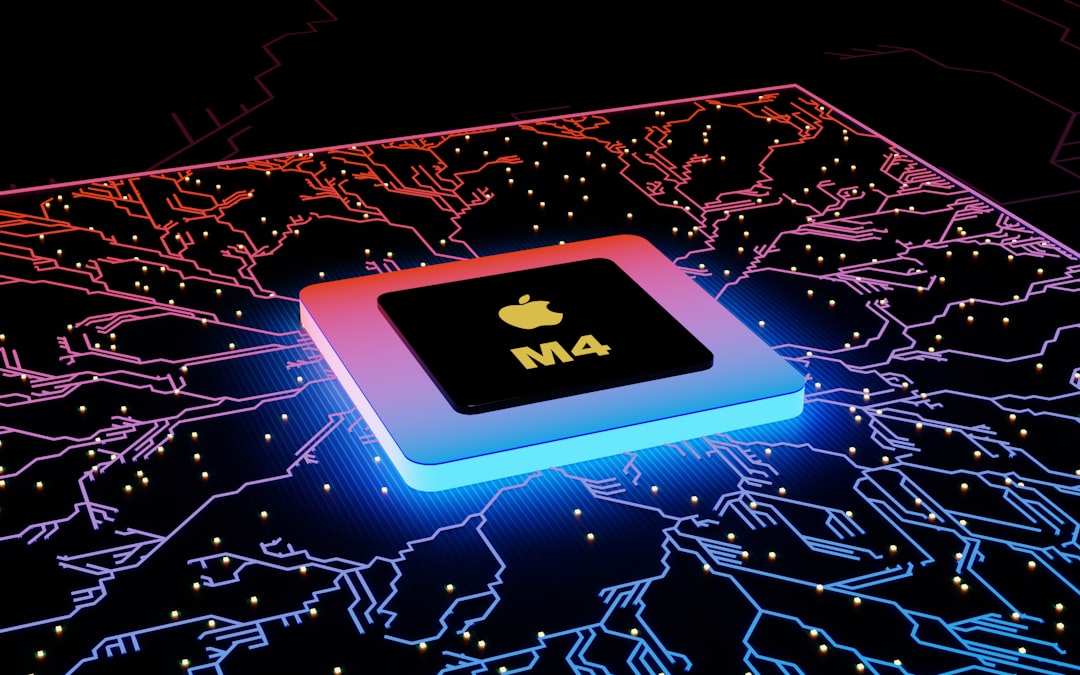
Tunneling diodes use this effect to enable fast current switching, while newer transistors such as TFET reduce power consumption by controlling particle tunneling. Flash memory devices also rely on quantum tunneling to store data, making electronic devices more power-efficient and smaller. So in a very real sense, quantum tunneling has been living inside your smartphone for years.
The memory at the heart of the data revolution is NAND Flash – the nonvolatile storage found in mobile phones, solid state drives and data centers. Every time data is written to and erased from NAND Flash, a mechanism is used that is one of the most surprising and successful predictions from quantum mechanics. Barrier penetration, also known as tunneling, allows a low energy particle to penetrate a high potential energy barrier. That’s physics doing real work in your pocket right now.
The Claim: Apps Using Quantum Tunneling to Save Battery
The idea that a smartphone app could leverage quantum tunneling to extend battery life to a full month is not grounded in current science or engineering reality. iOS prohibits background execution for third-party battery optimizers. They cannot access system-level power controls. Any app claiming to “boost battery life” on iOS does so via placebo UI or redundant toggles – none alter actual power management. The same broad truth holds for Android apps that make sweeping energy claims.
Battery life ultimately comes down to hardware, not application-layer software tricks. A month-long charge on a typical smartphone would require either a dramatically larger battery or a fundamental shift in battery chemistry. While a bigger battery can store more energy, software optimization ultimately determines how efficiently that power is used. There’s a meaningful ceiling, though, and no app breaks through it by invoking quantum physics.
How Software Really Does Improve Battery Life
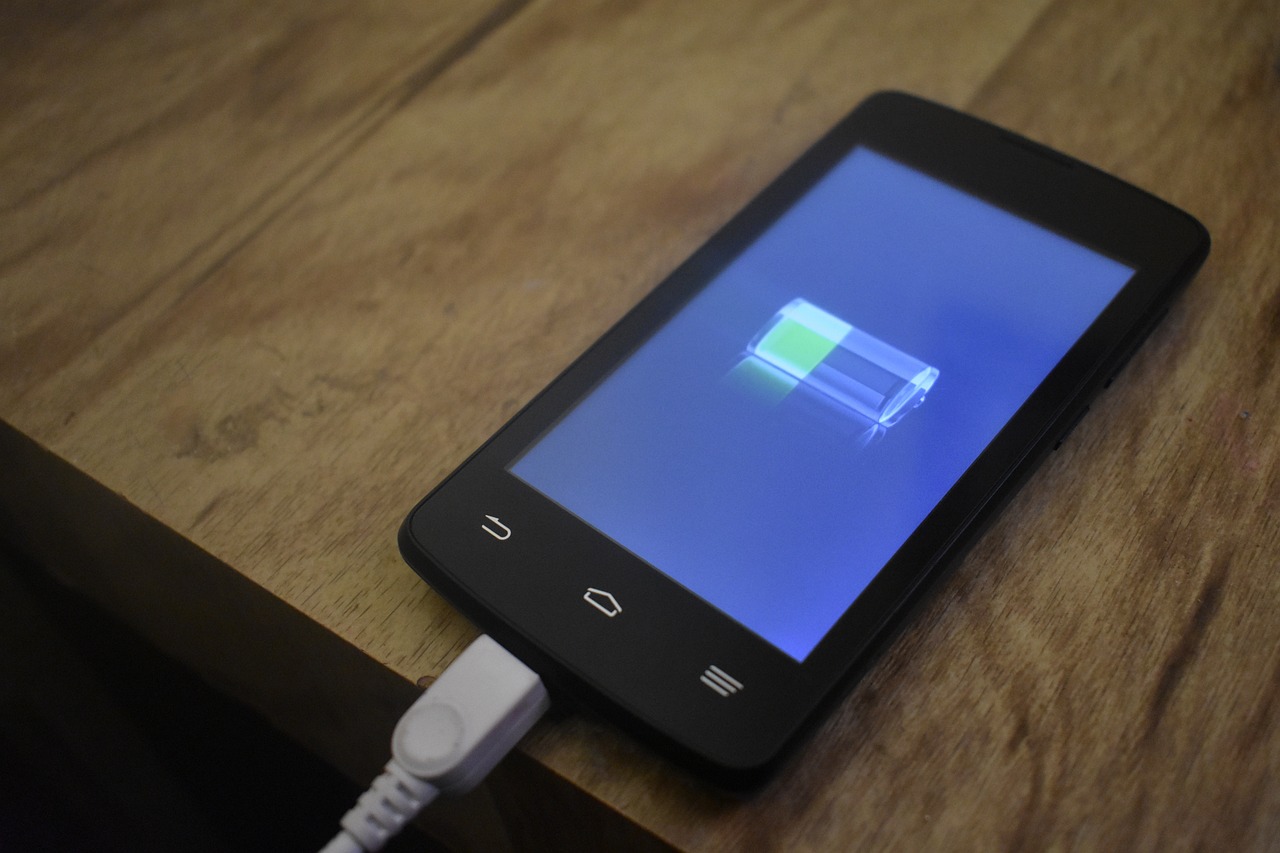
Android Adaptive Battery uses on-device machine learning to predict app usage patterns over 24 to 72 hours, then throttles CPU, network, and sensor access for rarely used apps – even restricting foreground services like location polling. That’s legitimate, measurable optimization. It won’t give you a month of battery life, but it does make a real difference day to day.
Android devices feature built-in intelligence that learns usage patterns, prioritizes frequently used apps, and limits background activity for less essential processes. This adaptive management reduces unnecessary CPU cycles, keeps idle drain low, and allows devices to maintain stable performance throughout the day. The gains are genuine – just not the kind of leap that marketing language sometimes implies. Disabling Adaptive Battery increases background battery drain by roughly 17 to 22 percent, according to Android Open Source Project telemetry.
The Screen, the Chip, and the Real Drains

One of the most critical adjustments involves the display panel. In 2026, LTPO technology is standard, allowing refresh rates to dynamically scale from 1Hz to 144Hz. However, default settings often prioritize smoothness over efficiency. Forcing a static 120Hz or 144Hz refresh rate on static content forces the GPU to render frames that provide zero visual value. That’s wasted power, plain and simple.
Enabling adaptive refresh can reduce display power consumption by up to roughly two fifths during passive usage scenarios. The shift to AMOLED panels means that dark mode is no longer just an aesthetic choice; it is a power-saving protocol. Screen management, not quantum apps, is where the biggest software-driven gains actually live. Each app may only use a small amount of power individually, but combined they create a constant drain that silently chips away at battery life.
Solid-State Batteries: The Real Hardware Revolution Coming
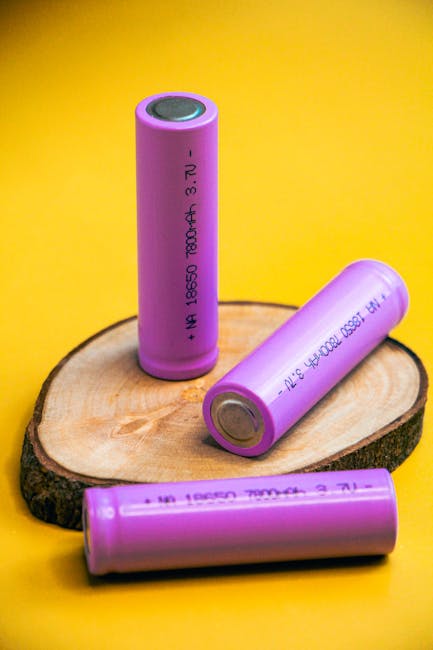
Scientists have taken an important step toward next-generation energy technology by developing a proof-of-concept quantum battery that can charge, store, and release energy. This early prototype represents the closest progress so far toward building a fully functional quantum battery. Unlike conventional batteries that depend on chemical reactions, quantum batteries rely on the unusual principles of quantum physics. They use effects such as superposition and interactions between light and electrons, which could allow for much faster charging and greater energy storage capacity.
Companies like QuantumScape and Samsung have demonstrated functional solid-state cells capable of sustained high-power output, with early integration expected in flagship smartphones by 2027. Still, the gap between prototype and mass production is wide. True solid-state batteries remain largely in prototype or early pre-commercial stages with only quasi-solid or hybrid designs in the near-commercialization stage. The divide between the promise of the technology and scalable manufacturing reality remains significant.
What Today’s Smartphones Actually Achieve
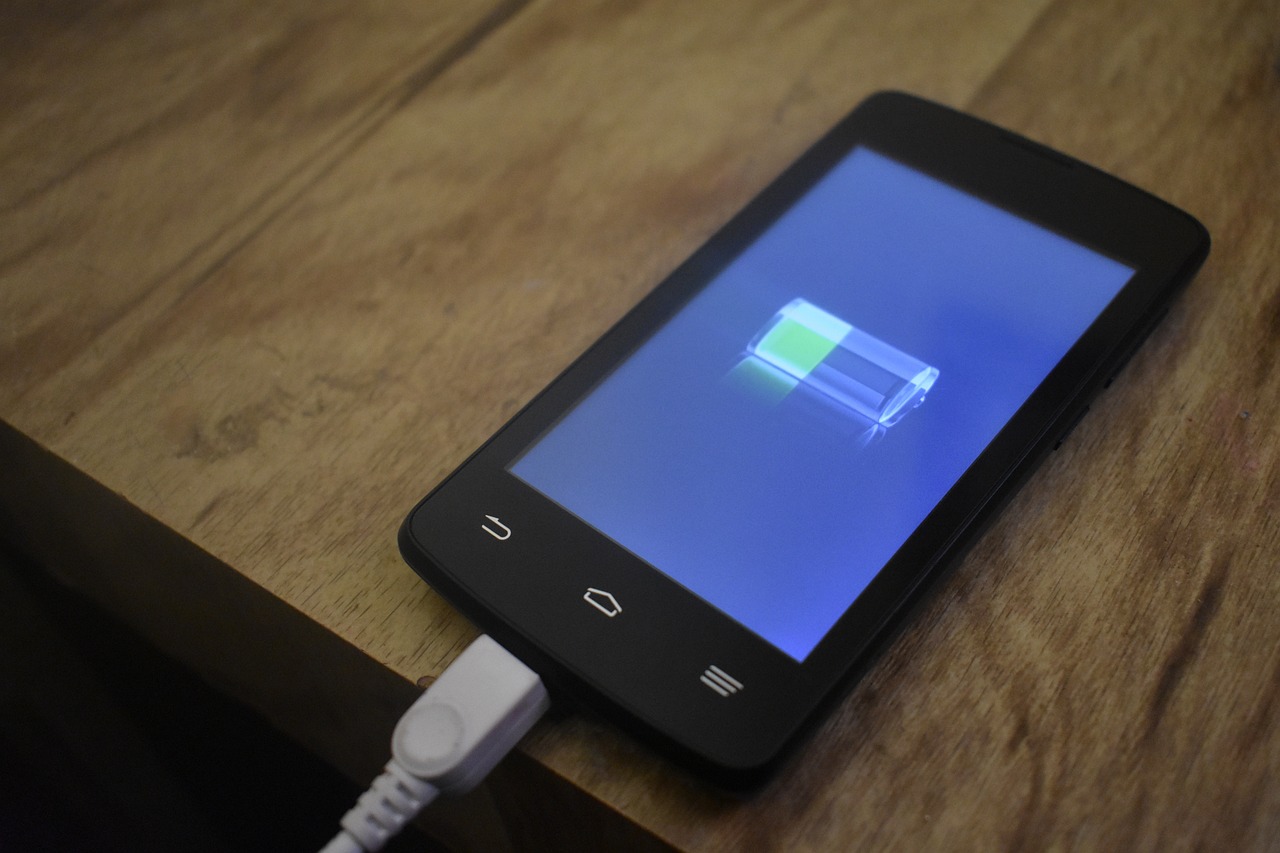
In normal day-to-day life, many 2026 smartphones easily last one full heavy day. That includes social media, calls, video streaming, camera use, maps, and some gaming. Screen-on time of around 7 to 9 hours is becoming common in larger battery models. Light users can even stretch it to almost two days. That’s a real improvement over where things stood just a few years ago, even if it falls well short of a month.
In 2026, brands began to change the battery material itself. Some battery manufacturers have started incorporating silicon into a carbon-only battery. One of the advantages of using silicon is that it can hold a greater amount of energy in its volume than pure carbon can hold. By mixing silicon with carbon, battery size can be maintained while the energy stored in the battery increases. That’s where the tangible gains of recent years are actually coming from.
Where Quantum Battery Science Actually Stands
Quantum battery research has accelerated dramatically in recent years: university labs have demonstrated proof-of-concept quantum batteries showing predicted charging advantages at small scales. These early prototypes are microscopic and operate only under laboratory conditions, but they prove the physics works. The science is not fantasy. The timeline, though, is long.
Theoretical modeling has shown that quantum batteries could achieve energy densities 10 to 100 times higher than lithium-ion, charging speeds measured in seconds rather than hours, and essentially unlimited charge cycles without capacity degradation. Those numbers are extraordinary, and they come with an equally extraordinary set of engineering challenges. Although practical quantum batteries are not yet available, advances like this suggest they could eventually reshape how energy is stored and delivered. A month-long charge is not a current reality – it is, at best, a distant but genuinely possible horizon.
The story of quantum tunneling and smartphones is ultimately a story about patience. The physics is extraordinary and very real. The hardware applications are coming, slowly and carefully. The honest takeaway is that the biggest leaps in battery life will arrive through chemistry and materials science, not through an app download. When a genuine breakthrough does land in consumer hands, it won’t need a marketing headline to prove it.