

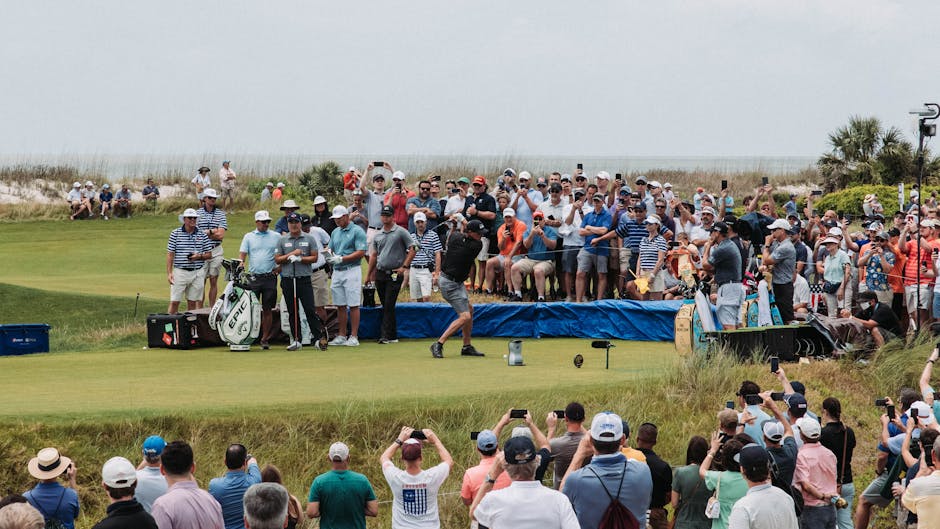
Jon Rahm resolves his dispute with European tour as LIV Golf faces loss of Saudi funding – Image for illustrative purposes only (Image credits: Pexels)
Sterling, Va. – Jon Rahm emerged from a tense standoff with the European Tour, reaching an agreement that clears his way to compete in key events, including the 2027 Ryder Cup. The two-time major winner spoke at LIV Golf Virginia, where uncertainty loomed over the league’s future without its primary Saudi backer. Players like Rahm now face questions about contracts and purses even as they commit to multi-year deals.
A Hard-Won Agreement Clears the Air
Rahm detailed the resolution during a press session alongside Tyrell Hatton, following remarks from LIV CEO Scott O’Neil. The dispute stemmed from Rahm’s refusal to pay fines for participating in conflicting LIV events, which had jeopardized his Ryder Cup spot at Adare Manor in Ireland. Both sides made concessions, with the tour extending an olive branch.
“There is no longer a standoff. We were able to reach an agreement. There were some concessions on both sides, and I offered some, they extended an olive branch,” Rahm said. This settlement removes a major stressor, allowing him to focus on upcoming competitions. He plans to return to European Tour events this fall, such as the Spanish Open, barring family obligations. Rahm and his wife Kelley await their fourth child, adding a personal layer to his scheduling decisions.
Since joining LIV in late 2023, Rahm had limited his European Tour appearances to just six events. The new arrangement opens doors to more, including the Scottish Open – the week before the British Open – which carries co-sanctioning from the PGA Tour.
LIV Golf’s Saudi Funding Era Draws to a Close
Saudi Arabia’s Public Investment Fund, which poured $5 billion into LIV over five years, will end its role as the chief financial supporter at the season’s close. The investment covered $1 billion in player contracts alone, fueling $30 million purses at each LIV stop. Profitability eluded the league despite the massive outlay.
O’Neil addressed the shift head-on, dodging direct questions about contract guarantees beyond 2026. Players, including Rahm, emphasized their long-term commitments. “As of right now I have several years on my contract left, and I’m pretty sure they did a pretty good job when they drafted that, so I don’t see many ways out,” Rahm noted.
The PGA Tour maintains its ban on dual participation, but the European Tour has reintegrated LIV players after fines. Rahm’s path now aligns him for potential crossover play without penalties.
O’Neil Pitches LIV’s Appeal to Prospective Backers
In a 45-minute session at Trump National Golf Club, O’Neil highlighted LIV’s strengths to reporters. A backdrop screen listed six sponsors, four tied to the PIF: Maaden, Riyadh Air, Roshn Group, and Aramco. He touted rising sponsorships, ticket sales, television deals, and the league’s international reach.
The CEO outlined a strategy to market 13 franchises, complete with locked-in players. “The way the process will typically work is that we’re going to create a business plan, we’re going to lock arms with the players, we will go to market and raise money on a top level, and then we will get investors in teams in that order,” O’Neil explained. This top-down funding approach aims to stabilize the league before team-level investments.
- Sponsorship growth and brand partnerships
- Strong ticket sales at events
- Television contracts expanding viewership
- Global events building a worldwide footprint
Player Sacrifices and the Road Ahead
Rahm acknowledged the realities facing athletes. He suggested players might accept reduced compensation to sustain the league. “I do believe that for the business plan to change, whatever they’re coming up with, there will need to be some concessions on (players’) part, yeah,” he said.
Speaking in Spanish, Rahm reflected on the risks of joining LIV, likening it to a soccer team facing a coaching change. He expressed surprise at PIF governor Yasir Al-Rumayyan’s departure as LIV chairman, despite the strong support provided. Both Rahm and Hatton avoided speculation on personal futures, focusing instead on current obligations.
The agreement bolsters Rahm’s position amid LIV’s transition. It ensures access to majors and team events like the Ryder Cup, where European loyalty runs deep. For the league, securing investors remains paramount, with purses potentially shrinking without fresh capital.
As LIV navigates this pivot, Rahm’s reconciliation signals adaptability in a fractured golf landscape. Players balance family, contracts, and competition, while the sport watches for signs of unity or further division. The coming seasons will test whether LIV can thrive independently or reshape alliances across tours.