

From Autocomplete to Autonomous Agent
The shift happened faster than most people expected. What began as autocomplete-like assistance in IDEs has now matured into autonomous coding agents capable of planning, writing, testing, and even deploying complex software systems. This isn’t a marginal upgrade over the autocomplete tools developers used a few years ago. It’s a fundamentally different kind of system.
The distinction between a coding assistant and a coding agent comes down to autonomy and scope. When GitHub Copilot suggests a function completion, that’s assistance. When Sourcegraph Amp independently implements a complete API endpoint, writes tests, updates documentation, and creates a pull request – all while adhering to your team’s conventions – that’s an agent. The gap between those two scenarios is enormous, and we’ve crossed it.
The Numbers Tell a Clear Story
Over 15 million developers were using GitHub Copilot by early 2025, which is a 400% increase in just 12 months, showing how fast teams are embracing AI-assisted coding. That growth rate is striking even by tech standards. Most tools never see adoption curves like this outside of consumer social apps.
In 2026, 84% of developers use AI tools that now write roughly 41% of all code. GitHub Copilot alone generates an average of 46% of code written by its users. That means, in practical terms, nearly half of what gets merged into codebases today was never typed by a human hand. The scale of that transformation is still sinking in across the industry.
AI That Improves Itself: The Darwin Gödel Machine
Today’s AI systems have human-designed, fixed architectures and cannot autonomously and continuously improve themselves – but the advance of AI could itself be automated. That idea moved from theory to working prototype with the introduction of the Darwin Gödel Machine (DGM), developed by researchers at Sakana AI and published in a peer-reviewed paper in 2025.
On SWE-bench, the DGM automatically improved its performance from 20.0% to 50.0%. On Polyglot, the DGM jumped performance from an initial 14.2% to 30.7%, which far surpasses the representative hand-designed agent by Aider. Those gains weren’t programmed by engineers. The system discovered them on its own, through iterative self-modification and an evolutionary search process. Through its self-referential code modification and open-ended exploration, it can autonomously discover and implement increasingly sophisticated and generalizable improvements to AI agents.
How Recursive Self-Improvement Actually Works

The Darwin Gödel Machine is a novel self-improving system that iteratively modifies its own code, thereby also improving its ability to modify its own codebase, and empirically validates each change using coding benchmarks. Think of it as an AI that runs experiments on itself, keeps the changes that work, and discards the ones that don’t. The process is methodical rather than random.
Inspired by Darwinian evolution and open-endedness research, the DGM grows an archive of generated coding agents. It samples agents from this archive, which self-modify to create new, interesting versions of themselves. This open-ended exploration forms a growing tree of diverse, high-quality agents and allows the parallel exploration of many different paths through the search space. The evolutionary analogy isn’t just metaphorical – the architecture genuinely mirrors how biological populations explore fitness landscapes over time.
Coding Agents That Work Around the Clock
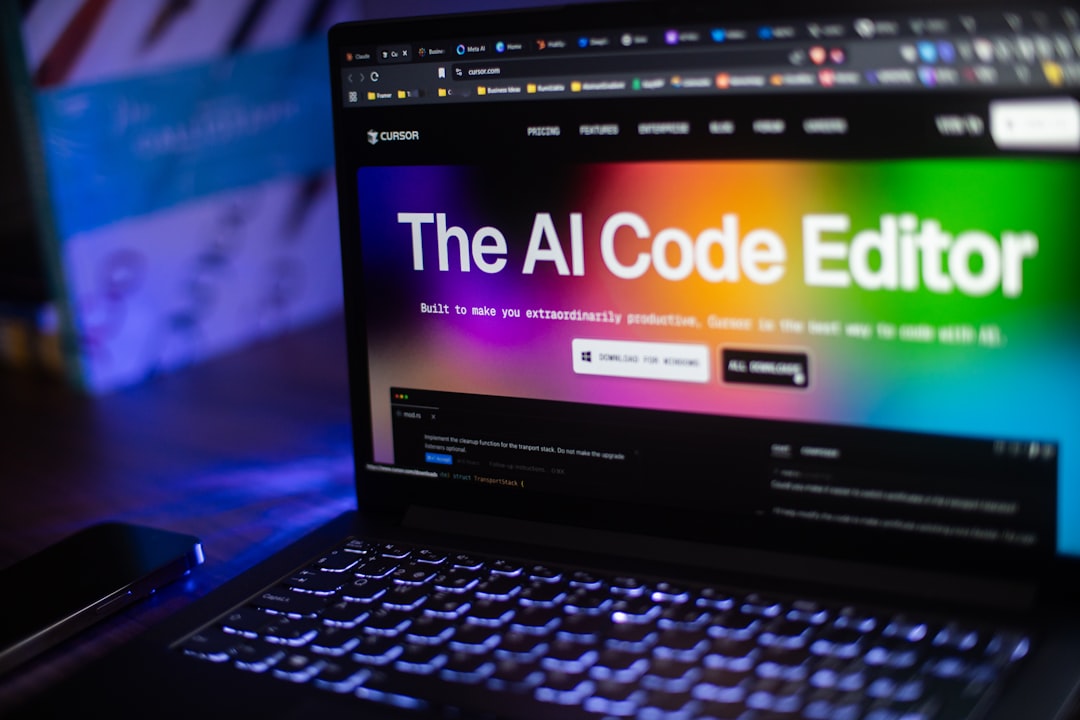
Agents – autonomous LLM-powered coding tools that can take a high-level plan and build entire programs independently – represent the latest frontier in AI coding. This leap was enabled by the latest reasoning models, which can tackle complex problems step by step and, crucially, access external tools to complete tasks. The ability to call external tools is what makes these agents practically useful, not just technically interesting.
Anthropic has added features that make Claude better at managing its own context. When it nears the limits of its working memory, it summarizes key details and uses them to start a new context window, effectively giving it an “infinite” one. Claude can also invoke sub-agents to work on smaller tasks, so it no longer has to hold all aspects of the project in its own head. The company claims that its latest model, Claude 4.5 Sonnet, can now code autonomously for more than 30 hours without major performance degradation.
The Security Problem Nobody Wants to Talk About

Speed and autonomy come with tradeoffs. Studies show that nearly half of AI-generated code contains security vulnerabilities, which can create major risks in production systems. Research on GitHub Copilot found that 40% of generated programs were flagged for insecure code. About 57% of AI-generated APIs are publicly accessible, and 89% use insecure authentication methods, creating high data exposure risks.
Modifications optimized solely for improving performance on a benchmark could introduce unintended behaviors or create systems too complicated for manual human oversight. This is exactly why safety guardrails matter as much as capability improvements. All self-modifications and evaluations in the DGM occur within secure, sandboxed environments, under human supervision and with strict limits on access to the web. That’s a reasonable starting point, though the question of what happens when these systems scale beyond controlled research environments is one the field hasn’t fully answered.
The Workforce Shift Is Already Happening
A recent Stanford University study found that employment among software developers aged 22 to 25 fell nearly 20% between 2022 and 2025, coinciding with the rise of AI-powered coding tools. That’s a significant drop in entry-level developer hiring in a very short window. Whether it reflects permanent displacement or a temporary disruption as the industry adjusts remains genuinely unclear.
GitHub’s 2024 survey found that developers using AI coding assistants complete tasks 55% faster, while Stack Overflow’s 2024 Developer Survey shows 76% of developers either using or planning to adopt AI coding tools. Productivity gains at this scale tend to reshape how teams are built. Gartner forecasts that 90% of enterprise software engineers will use AI coding assistants by 2028, representing a significant increase from less than 14% in early 2024. The trajectory is steep and doesn’t show signs of flattening.
The Money Behind the Machine
Worldwide artificial intelligence spending will total $2.52 trillion in 2026, a 44% increase year-over-year, according to Gartner. Much of that investment is going directly toward autonomous systems and the infrastructure that powers them. According to data from AI analytics company Quid, 2025 set a new record for AI investment with over $581 billion spent – more than double the $253 billion spent in 2024.
Predictions suggest that agentic AI will represent 10 to 15 percent of IT spending in 2026, and 33 percent of enterprise software applications will include agentic AI by 2028. These aren’t experimental budgets – they’re strategic commitments. Microsoft, Alphabet, Amazon, and Meta alone intend to spend a combined $320 billion on AI technologies and infrastructure in 2025, up from $230 billion in total capital expenditures in 2024. The scale of that commitment signals that the industry considers autonomous coding a core part of the future, not a research curiosity.
What Comes Next, and What It Means
The DGM offers a tangible pathway towards automating aspects of AI development itself, suggesting a future where AI systems can recursively enhance their own designs and accelerate the pace of innovation. It is an empirical step towards realizing the long-theorized concept of self-improving AI, not through unobtainable formal proofs, but through iterative, validated code modification. That’s a meaningful distinction. The theoretical arguments for recursive AI self-improvement have existed for decades. What’s new is that we’re now watching it work in practice.
In the near future, we can expect advancements such as greater autonomy and deeper integration across all development stages. Further ahead, AI may even play a crucial role in emerging technologies like quantum computing, potentially revolutionizing fields like cryptography, complex system simulation, and real-time data processing. Still, the most honest assessment of where we stand is that the core capability has been demonstrated, the safety questions remain open, and the pace of change has consistently outrun most predictions. That combination is what makes this moment genuinely worth paying attention to.
The most accurate way to describe what’s happening isn’t that AI has replaced programmers. It’s that the line between writing software and designing software has blurred, and some of the work of crossing that line no longer requires a human at the keyboard. How far that logic extends is the central question of the next decade in technology.