

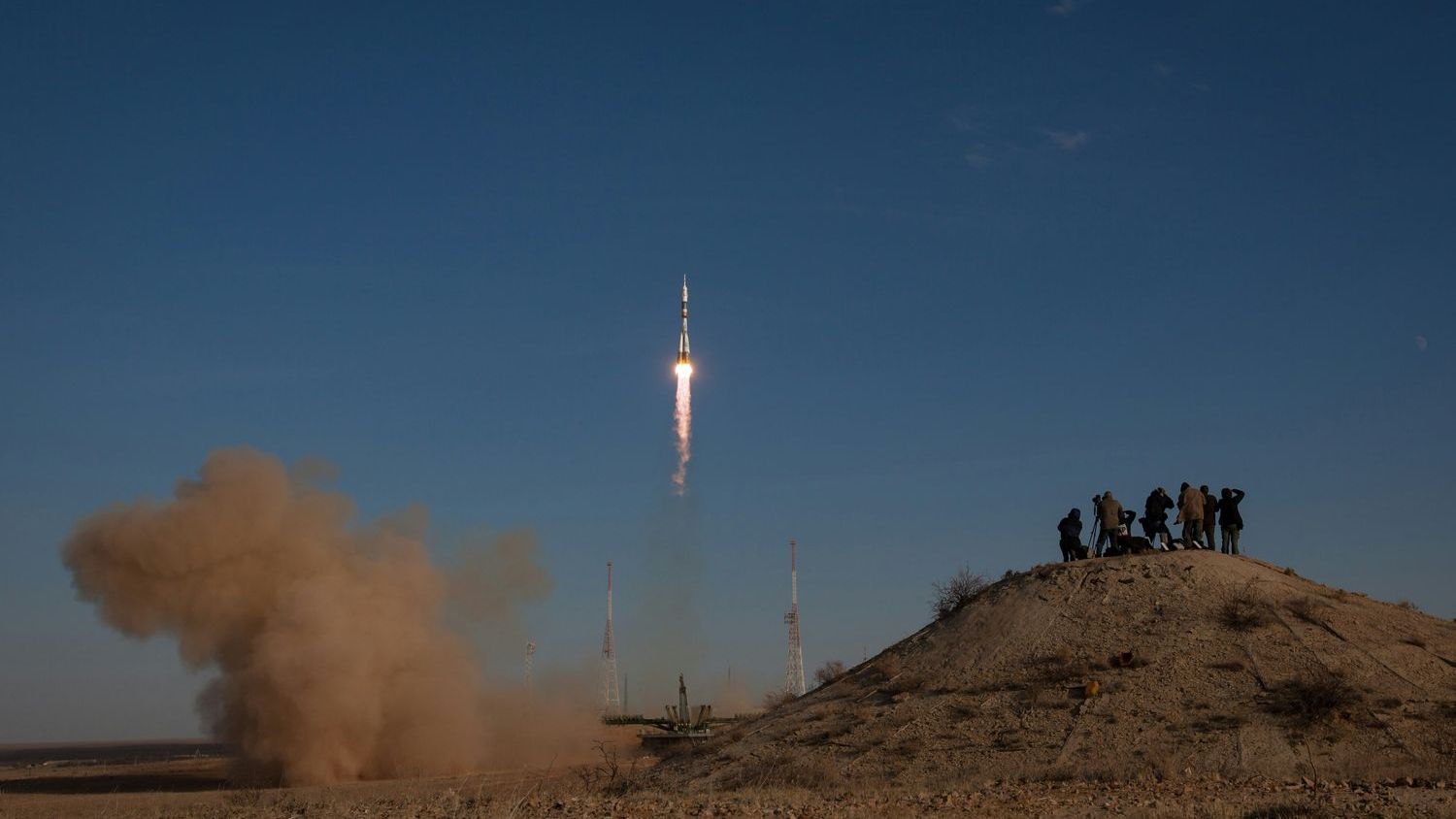
Russia’s new homegrown Soyuz 5 rocket aces debut launch – Image for illustrative purposes only (Image credits: Unsplash)
Baikonur Cosmodrome, Kazakhstan – The successful debut of Russia’s Soyuz-5 rocket on April 30 marked a pivotal step toward greater independence in its space launch sector. Liftoff occurred at 21:00 Moscow time from Site 45, carrying a mass simulator on a suborbital trajectory that concluded with a planned reentry in the Pacific Ocean.[1][2] Roscosmos confirmed the mission’s flawless execution, highlighting the reliable performance of both stages after years of development challenges.[3]) This achievement arrives at a time when Russia seeks to replace foreign-dependent hardware and sustain operations at the historic Baikonur facility.
Overcoming Delays to Reach the Pad
The path to this launch tested the resilience of the Russian space industry. Development of the Soyuz-5 began in 2017 as a response to disruptions in supplies of Ukrainian-built Zenit rockets, exacerbated by geopolitical tensions since 2014.[1] Multiple postponements plagued preparations, shifting the maiden flight from an initial 2024 target to 2026.
Key milestones included the rocket’s arrival at Baikonur in November 2025, followed by fit checks and rollouts. A scrub on April 29 added to the tension, but teams pressed forward.
- March 2026: NOTAMs issued for late March to early April window.
- March 31: Rollout to pad for planned April 3-4 attempt.
- April 7: Reinstallation at pad targeting April 13-14.
- April 16: Slip to April 26-30.
- April 30: Successful ignition at 21:00 Moscow time.[2]
The first stage, powered by the RD-171MV engine, burned for nearly three minutes before separation over Russia’s Sverdlovsk Region. The second stage, using the RD-0124MS, reached engine cutoff at about 570 seconds, simulating payload deployment before descent.[2]
Core Design and Capabilities
The Soyuz-5 stands as a medium-lift workhorse, measuring 61.9 meters tall with a 4.1-meter diameter and a liftoff mass of 530 tons. It relies on kerosene and liquid oxygen propellants, an environmentally friendlier choice compared to older hypergolic fuels.[3]) Payload capacity reaches 18 tons to low Earth orbit in uncrewed configuration, positioning it as a competitor to vehicles like SpaceX’s Falcon 9, though fully expendable.[1]
Engineers at RKTs Progress integrated proven components, including the high-thrust RD-171MV on the first stage – billed by Roscosmos CEO Dmitry Bakanov as featuring the world’s most powerful liquid rocket engine for precise low-Earth orbit insertions.[4] An optional third stage, such as Blok DM-03, would extend reach to geostationary transfer orbits with up to 5 tons.
This flight validated the core two-stage stack, with fairing jettison and stage separation unfolding on schedule. Roscosmos noted via Telegram: “The first test launch of the new Soyuz 5 rocket was a success!”[1]
Baiterek Partnership Drives Renewal
The Soyuz-5 emerges from the Baiterek joint venture between Roscosmos and Kazakhstan’s KazCosmos, repurposing Site 45 – formerly a Zenit pad – into a modern launch complex. This collaboration ensures Baikonur’s viability while phasing out toxic Proton fuels to meet Kazakh environmental standards.[3])
Stakeholders gain clear benefits: Russia secures domestic production free from Ukrainian supply chains, Kazakhstan bolsters its space infrastructure, and commercial operator International Launch Services eyes medium-lift markets. The project, financed under Russia’s 2016-2025 space plan, cost 61.2 billion rubles.
Practical consequences extend to sustained access for crewed Soyuz flights and cargo to the International Space Station, alongside potential for satellite constellations. Three more test flights remain before full operational status.
What Matters Now
This debut reaffirms Russia’s technical prowess amid sanctions and lost partnerships. It paves the way for super-heavy variants like Yenisei and revives Baikonur as a hub for medium-lift missions. Commercial viability hinges on reliability in upcoming orbital tests.
The Soyuz-5’s smooth suborbital hop, culminating in Pacific splashdown, sets a measured foundation. Roscosmos emphasized: “The first and second stages of Soyuz 5 performed as planned.”[1] As global competitors accelerate reusable technologies, Russia focuses on proven expendable reliability to reclaim market share. The coming tests will determine if this rocket truly reshapes Moscow’s orbital ambitions.