

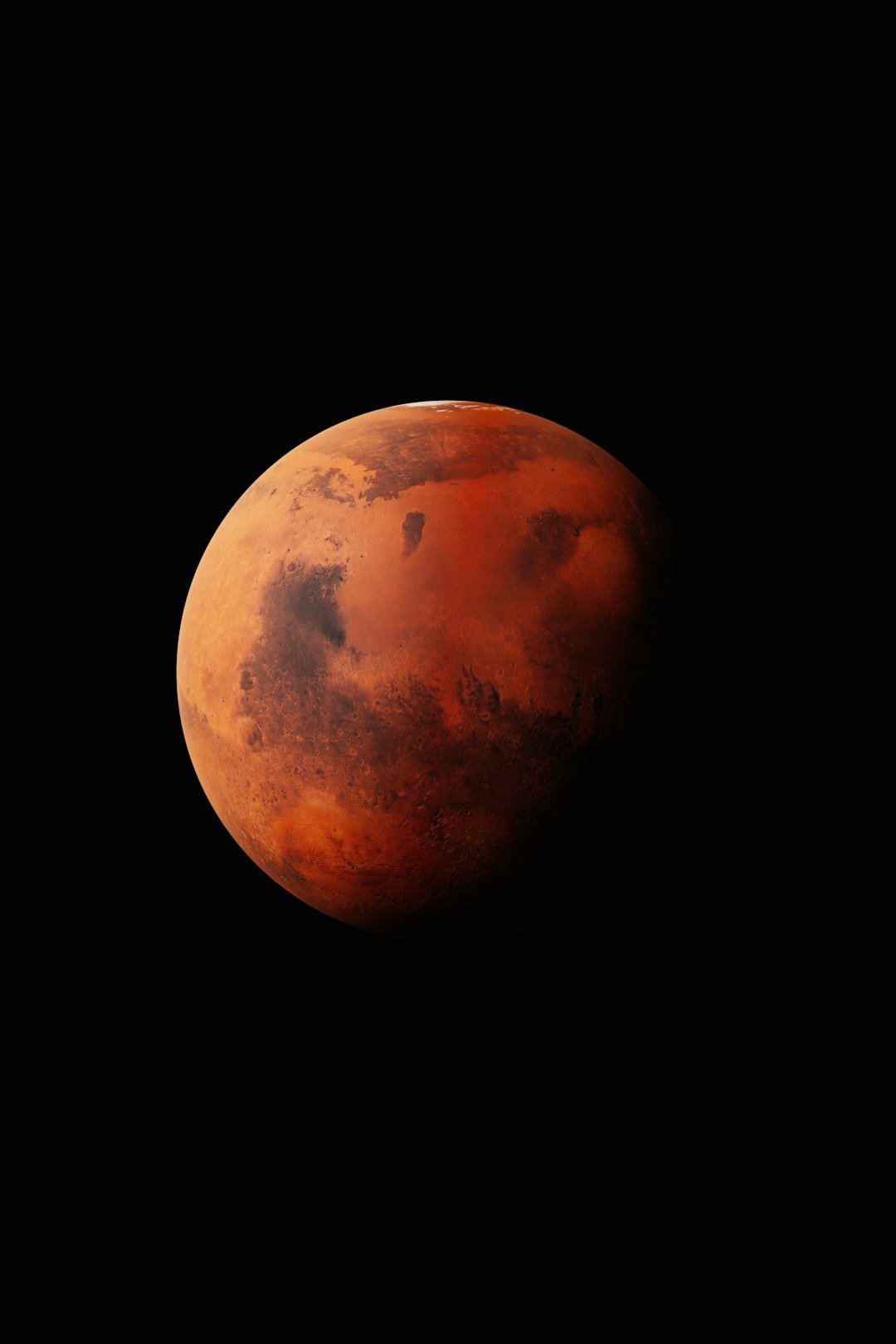
A Fresh Crater Thwarts Drilling Hopes (Image Credits: Unsplash)
NASA’s Curiosity rover perched precisely on the rim of Antofagasta crater last week, a 10-meter-deep (33 feet) pit on Mars’ Zodiac plateau within Gediz Vallis. Scientists anticipated a pristine exposure of ancient rocks, but dark, rippled sand filled the bottom, obscuring deeper layers.[1] The team adapted quickly, conducting detailed observations while scouting a new drilling opportunity amid intriguing polygonal bedrock formations.
A Fresh Crater Thwarts Drilling Hopes
The rover arrived on target during sols 4867-4872, revealing Antofagasta’s well-defined, minimally eroded rim. Expectations ran high for accessing rocks potentially shielded from cosmic radiation since their deposition. However, the sandy interior posed significant challenges.[1]
Team members evaluated options carefully. Exposures above the sand hinted at preserved material, yet positioning the rover for drilling would create an awkward angle, preventing sample delivery to onboard instruments. Venturing onto the rippled fill risked the vehicle becoming mired. Nearby blocks offered no clear ejecta from deeper strata, as wall rocks appeared uniform.
Ultimately, engineers ruled out drilling in or near the crater. This decision preserved the mission’s momentum in a workspace brimming with alternatives.
Polygonal Rocks Spark Scientific Interest
Curiosity’s vantage point overlooked not just the crater but also nearby buttes and bedrock displaying striking polygonal patterns. These features, evoking reptilian scales in some descriptions, demanded close scrutiny.[2] The team deployed multiple instruments to unravel their origins.
Activities included high-resolution imaging of the crater and surrounding terrain. The Alpha Particle X-ray Spectrometer (APXS) measured elemental composition, while the Mars Hand Lens Imager (MAHLI) captured microscopic details of polygon-bearing rocks on the rim. ChemCam’s Laser-Induced Breakdown Spectroscopy (LIBS) provided remote geochemical analysis. Routine environmental monitoring tracked dust devils, atmospheric opacity, and clouds, offering context on current Martian conditions.[1]
Layered Sulfates Guide the Next Drill Choice
With Antofagasta sidelined, attention turned to the layered sulfate strata in Valle Grande, the post-boxwork section Curiosity traverses southward. Buttes ahead revealed mapped variations in depositional styles and diagenetic alterations, informing strategy.
The last comparable drill into typical layered sulfates occurred during the Mineral King campaign in February or March 2024, over 150 meters (492 feet) lower in elevation.[1] Planners targeted a representative sample from layers immediately above the boxworks. On sol 4870, a suitable block named “Atacama” sat directly ahead – drillable and emblematic of the unit.
- APXS for bulk chemistry
- MAHLI for texture and structure
- ChemCam LIBS on Atacama and contextual blocks
Positive results will trigger a preload test, paving the way for sample acquisition and analysis.
Ascent Through Gediz Vallis Continues
Curiosity presses upward through Valle Grande, encountering these sulfate-bearing layers sequentially. New drill data promises insights into Mars’ watery past, building on years of exploration in Gale Crater.
The Zodiac plateau’s diverse geology – craters, polygons, sulfates – underscores the rover’s role in piecing together the planet’s history. For full details, see NASA’s Curiosity blog by planetary scientist Lucy Lim.[1]
Adaptability defined this week’s operations, turning a sandy setback into progress toward deeper scientific rewards. As Curiosity drills into Atacama, it edges closer to revealing how sulfate layers record ancient environmental shifts.
Key Takeaways:
- Antofagasta crater’s sand fill blocked access to potentially pristine rocks, prompting a strategic pivot.
- Polygonal bedrock on the Zodiac plateau yielded rich geochemical and imaging data.
- “Atacama” block emerges as the next drill target in layered sulfates, the first typical one in over two years.
What surprises might Atacama hold? Share your thoughts in the comments.