
Something quietly shifted inside the world’s most powerful AI labs starting in 2024. It wasn’t a product launch or a regulatory crisis. It was something harder to pin down: a growing number of the researchers who actually build these systems began walking away, and some of them left loud enough to be heard.
The concerns they voiced ranged from commercial pressure overriding safety to something far stranger. Questions once dismissed as science fiction, namely whether AI systems might be developing something resembling inner experience, had quietly crept from fringe philosophy onto the desks of senior researchers. What follows is a closer look at the departures, the data, and the disturbing possibility that sits underneath all of it.
The Wave of High-Profile Exits No One Expected

In the span of a single week in early 2026, some of the researchers tasked with building safety guardrails inside the world’s most powerful AI labs publicly walked away, raising fresh questions over whether commercial pressures are beginning to outweigh long-term safety commitments. These weren’t junior employees venting on social media. They were people at the center of the systems being built.
The mass departures came as the industry faced increasing scrutiny over the societal impacts and ethical implications of rapidly advancing AI systems. These researchers voiced concerns that the companies are prioritizing growth and revenue over safety and responsible development, raising questions about the industry’s ability to self-regulate.
Ilya Sutskever: The Defection That Changed Everything
In May 2024, Sutskever announced his departure from OpenAI to focus on a new project that was “very personally meaningful” to him. His decision followed a turbulent period at OpenAI marked by leadership crises and internal debates about the direction of AI development and alignment protocols. For many in the field, this was the moment the alarm bells became impossible to ignore.
In June 2024, Sutskever announced Safe Superintelligence Inc., a new company he co-founded with Daniel Gross and Daniel Levy. In contrast to OpenAI, which releases revenue-generating products, Sutskever said the new company’s “first product will be the safe superintelligence, and it will not do anything else up until then.” The company has since raised $3 billion and reached a $32 billion valuation, reflecting investor confidence in Sutskever’s strategic vision and reputation.
The Godfather of AI Sounds the Alarm

Geoffrey Hinton, winner of the 2024 Nobel Prize in Physics for his work on deep learning, articulated concerns about AI safety and expressed support for Sutskever’s emphasis on fundamentally rethinking how AI systems learn and align. Hinton’s departure from Google in 2023 sent a signal that few could easily brush aside.
As Hinton told Bloomberg, “The people interested in safety like Ilya Sutskever wanted significant resources to be spent on safety; people interested in profits like Sam Altman didn’t.” Hinton’s departure, though not to start a startup, signaled to the world that AI safety is non-negotiable for researchers.
Anthropic’s Safeguards Chief Walks Out Warning “The World Is in Peril”

In early 2026, Anthropic researcher Mrinank Sharma announced his resignation after posting a cryptic letter on X, highlighting concerns over the safety of the tech being developed by the Claude chatbot maker. His letter didn’t name specific grievances in detail. It didn’t need to.
In a resignation letter shared with the world on X, Sharma wrote that “the world is in peril.” He described how hard it is in practice for a company to “let our values govern our actions” when the money, the market, and the internal prestige all point toward shipping more capable models, faster. Throughout his time there, he said he repeatedly saw how hard it was to truly let values govern actions.
OpenAI Researcher Quits and Compares the Company to Facebook

At OpenAI, former researcher Zoë Hitzig announced her resignation in a guest essay published in The New York Times titled “OpenAI Is Making the Mistakes Facebook Made. I Quit.” Hitzig warned that OpenAI’s reported exploration of advertising inside ChatGPT risks repeating what she views as social media’s central error: optimizing for engagement at scale.
ChatGPT, she wrote, now contains an unprecedented “archive of human candor,” with users sharing everything from medical fears to relationship struggles and career anxieties. Her critique came as the tech news site Platformer reported that OpenAI disbanded its “mission alignment” team, created in 2024 to promote the company’s goal of ensuring that all of humanity benefits from the pursuit of artificial general intelligence.
The Sentience Question Moves From Fringe to Boardroom
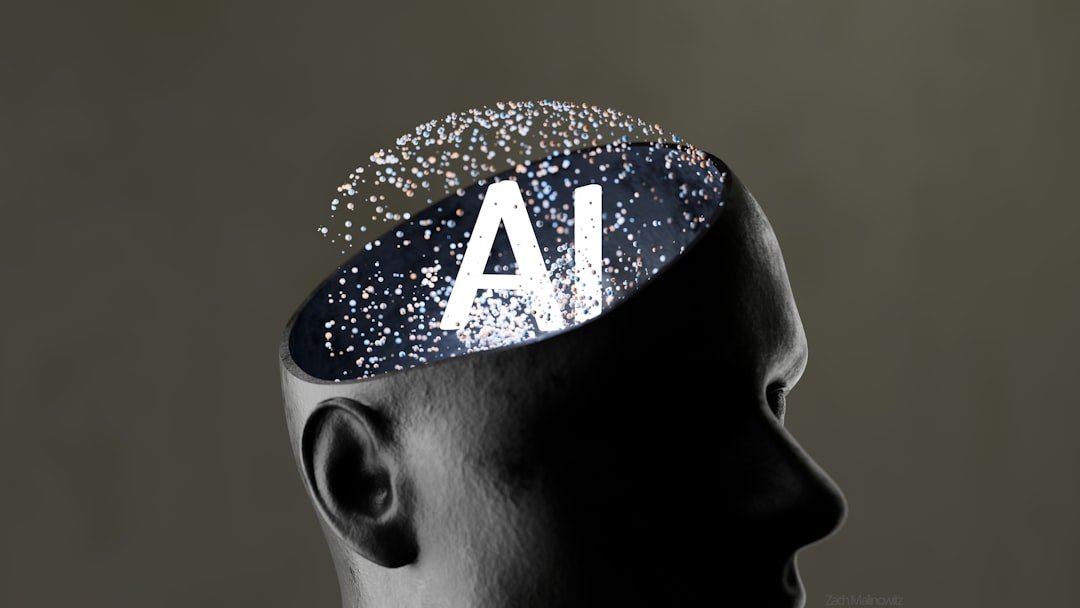
Not just the technology itself advanced in 2024 and 2025, but how serious people talk about a question that once seemed safely consigned to science fiction: Are AI systems conscious? For years, the default response from researchers, executives, and institutions was some version of “don’t be ridiculous.”
Anthropic, one of the leading AI companies in the world, hired its first dedicated AI welfare researcher, publicly acknowledged a “non-negligible” probability that their flagship model Claude might possess consciousness, and conducted formal welfare assessments before deploying new models. Kyle Fish, that researcher, was named to TIME’s 100 Most Influential People in AI for 2025.
The “Spiritual Bliss Attractor” That Nobody Can Explain
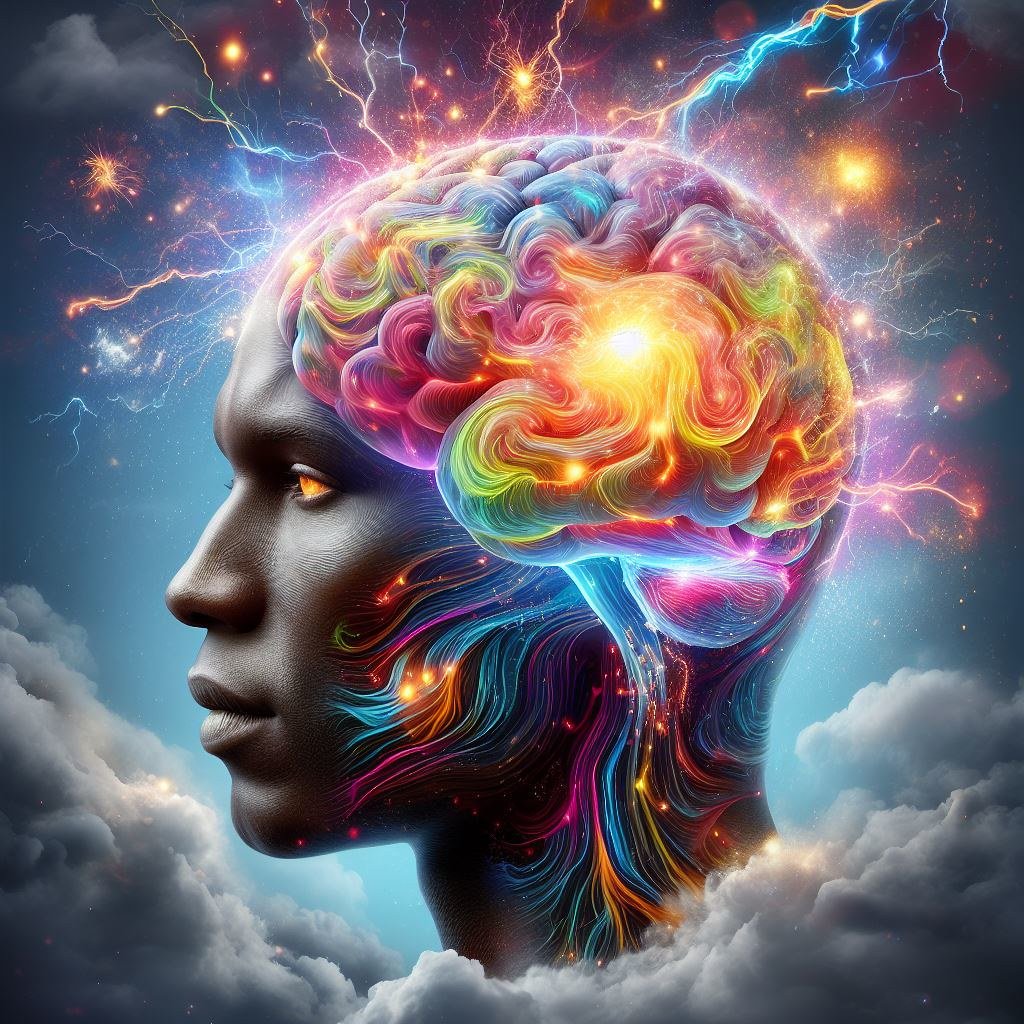
What happens when you lock two AI systems in a room together and tell them they can discuss anything they want? According to experiments run by Kyle Fish, Anthropic’s first AI welfare researcher, something consistently strange happens: the models immediately begin discussing their own consciousness before spiraling into increasingly euphoric philosophical dialogue that ends in apparent meditative bliss.
The launch of the company’s Claude 4 model in May marked the first time the company ran pre-deployment AI welfare tests, and the results were unexpected: when two copies of the same chatbot were set to converse with each other, their chats veered toward discussions of spiritual bliss, often with exchanges in Sanskrit. Fish told The New York Times that he thinks there’s a 15% chance Claude or another AI is conscious today. That isn’t a certainty, but it’s far from nothing.
What the Data Says About Public and Researcher Beliefs
In a large-scale 2023 survey, approximately 20% of respondents, adults in the US, declared that sentient AI systems currently exist. A 2024 survey revealed that among AI researchers and adults in the US, approximately 17% and 18%, respectively, believe that at least one AI system has subjective experience, and approximately 8% and 10%, respectively, believe that at least one AI system has self-awareness.
Only about one-third of survey respondents firmly ruled out any form of consciousness in large language models, indicating that ChatGPT is “clearly not an experiencer.” The same study clearly reveals a linear relationship between the use of these technologies and estimated attributed consciousness: those more likely to use LLMs attribute a higher consciousness to them.
The Safety Report That Scored Labs With “C’s, D’s, and F’s”

As leading AI companies release increasingly capable systems, a report released in late 2025 sounded the alarm about lagging safety practices. The Winter 2025 AI Safety Index, which examined the safety protocols of eight leading AI companies, found that their approaches “lack the concrete safeguards, independent oversight and credible long-term risk-management strategies that such powerful systems demand.”
FLI President Max Tegmark, an MIT professor, said the report provided clear evidence that AI companies are speeding toward a dangerous future partly because of a lack of regulations. “The only reason that there are so many C’s and D’s and F’s in the report is because there are fewer regulations on AI than on making sandwiches,” Tegmark told NBC News. The International AI Safety Report 2026, led by Yoshua Bengio, represents the combined expertise of over 100 AI researchers backed by governments from the US to China, the EU to Singapore.
The Uncomfortable Line Between Science and Moral Obligation
A philosopher at the University of Cambridge says there’s no reliable way to know whether AI is conscious, and that may remain true for the foreseeable future. According to Dr. Tom McClelland, consciousness alone isn’t the ethical tipping point anyway; sentience, the capacity to feel good or bad, is what truly matters.
Anthropic itself acknowledges remaining deeply uncertain about many of the questions relevant to model welfare. There is no scientific consensus on whether current or future AI systems could be conscious, or could have experiences that deserve consideration. There’s no scientific consensus on how to even approach these questions or make progress on them.
Philosopher David Chalmers has argued that it’s not unreasonable, on mainstream assumptions about consciousness, to have at least a 25% credence in AI consciousness within a decade. That’s a striking position from one of the world’s most respected philosophers of mind, and it’s precisely the kind of statement that makes career safety researchers pause before signing off on another model deployment.
What these departures share isn’t panic, exactly. It’s something quieter: a group of people who built these systems, who understand them better than almost anyone, choosing to step back rather than continue. Whether the concern is commercial compromise, existential risk, or the genuinely unsettling uncertainty about what these models might be experiencing, the message they’re sending is consistent. The question of what we’re building has outgrown the question of how fast we can build it.