

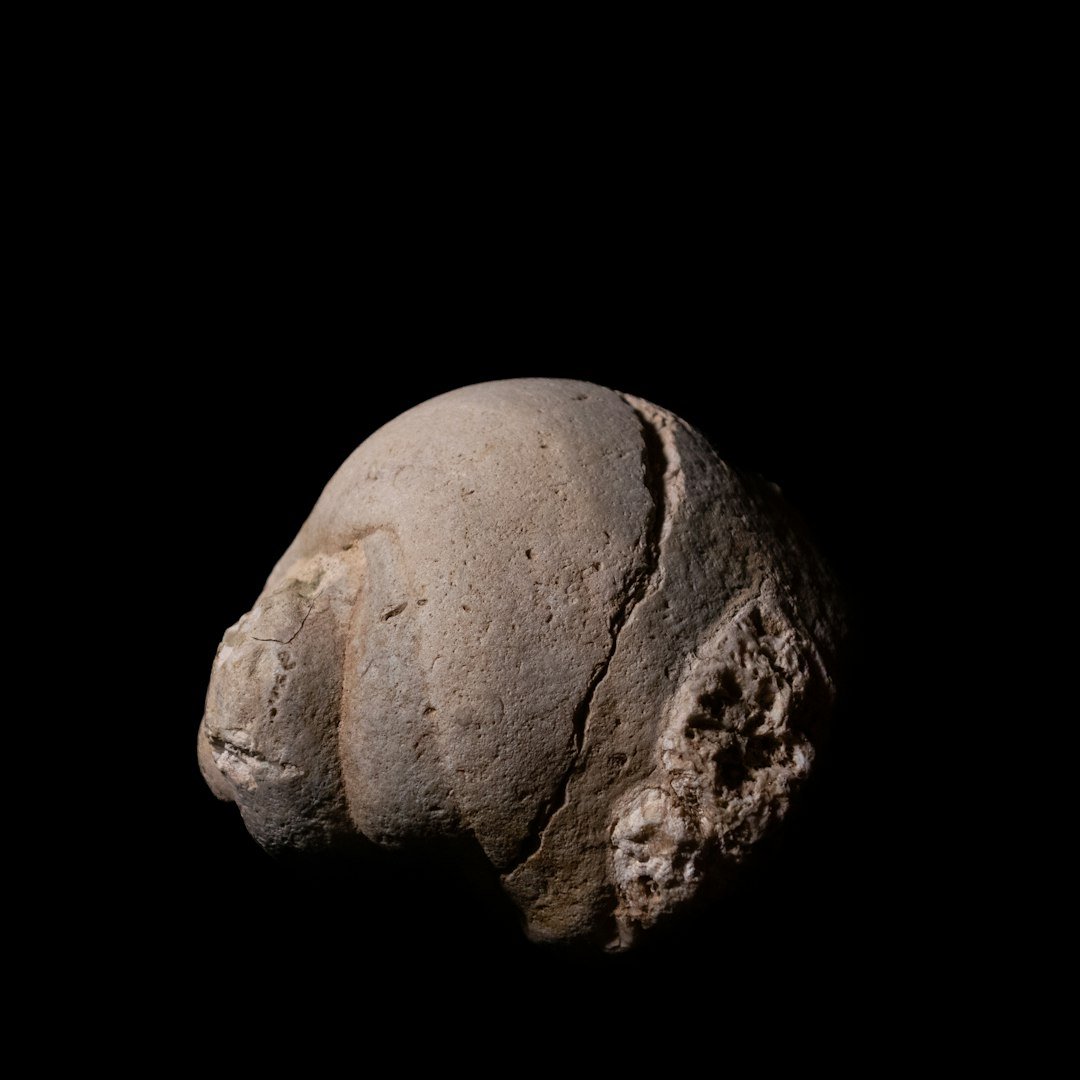
A Serendipitous Find Turns into Scientific Milestone (Image Credits: Unsplash)
South Africa – Paleontologists have uncovered compelling evidence from a 250-million-year-old fossil that reshapes our understanding of early mammal reproduction. The discovery, detailed in a recent study, captures an embryo of the synapsid Lystrosaurus preserved within its egg, marking the first direct proof that mammal forebears laid eggs.[1][2] Found in the Karoo Basin, this find resolves a longstanding debate and highlights adaptive strategies that helped these creatures endure one of Earth’s greatest extinctions.
A Serendipitous Find Turns into Scientific Milestone
In 2008, during a field expedition in South Africa’s Eastern Cape near Oviston, preparator John Nyaphuli spotted a small rock nodule with faint bone flecks. Led by Jennifer Botha of the University of the Witwatersrand, the team carefully prepared the specimen. What emerged was a tiny, curled-up skeleton of a Lystrosaurus hatchling. Initial suspicions pointed to an embryo that perished inside an egg, but technology at the time fell short of confirmation.[1]
Years later, advanced synchrotron X-ray CT scanning at The European Synchrotron in France unlocked the nodule’s secrets. Lead author Julien Benoit identified critical embryonic traits, such as an unfused mandibular symphysis in the lower jaw. This feature indicated the young Lystrosaurus could not yet feed independently. The scans produced a detailed 3D reconstruction, color-coding bones like ribs in blue and the skull in light red.[2]
Decoding the Embryo’s Delicate Features
The fossilized embryo measured just 1.4 inches in skull length, curled in a posture typical of late-stage development within a soft-shelled egg. Researchers estimated the egg at about 3 inches long and 2 inches wide, weighing roughly 4 ounces. Such dimensions suggest a relatively large egg for the animal’s size, packed with yolk to nurture a precocial hatchling ready to move and forage soon after birth.[1]
Weak limbs and an immature pelvis further confirmed the specimen’s vulnerability outside the egg. Unlike modern mammals that nurse their young, Lystrosaurus parents offered no milk. Benoit noted the excitement of spotting the incomplete jaw fusion: “The fact that this fusion had not yet occurred shows that the individual would have been incapable of feeding itself.”[1]
- Unfused mandible halves, preventing self-feeding.
- Curled posture indicative of confinement in an egg.
- Color-coded CT scan revealing ribs, vertebrae, limbs, and skull.
- Estimated egg size supporting yolk-rich development.
- Immature pelvic structure unfit for independent survival.
Bridging the Reproductive Gap in Evolution
Lystrosaurus, a pig-sized herbivore with a beak-like mouth and tusks, roamed Pangea from 259 to 247 million years ago. This dicynodont synapsid represented a basal mammal ancestor, predating the shift to live birth in most mammals. The fossil provides concrete evidence against live birth hypotheses, affirming egg-laying as the ancestral mode.[2]
Modern monotremes like the platypus and echidna retain this trait, laying leathery eggs in Australia and New Guinea. The discovery links these outliers to ancient lineages. Botha reflected on the 2008 find: “I suspected even then that it had died within the egg, but at the time, we simply didn’t have the technology to confirm it.”[1]
Survival Edge in a Time of Crisis
The Permian-Triassic extinction around 252 million years ago killed over 90% of species amid volcanism, heat, and drought. Lystrosaurus not only survived but dominated Early Triassic landscapes across Antarctica, India, China, and beyond. Large, yolk-laden eggs likely resisted desiccation better than smaller ones, aiding endurance in harsh conditions.[3]
Precocial young emerged more developed, reducing parental investment in a volatile world. Vincent Fernandez, who performed the scans, emphasized: “Understanding reproduction in mammal ancestors has been a long-lasting enigma and this fossil provides a key piece to this puzzle.”[1]
Key Takeaways from the Discovery
- First direct fossil evidence of egg-laying in non-mammalian synapsids like Lystrosaurus.
- Confirms ancestral reproduction mode, connecting to modern monotremes.
- Highlights adaptive egg size for post-extinction survival.
The study appeared in PLOS One on April 9, 2026, cementing this as a pivotal moment in paleontology.[2] This window into prehistoric life prompts fresh questions about evolutionary pressures on reproduction. What survival strategies might define our own lineage’s future? Share your thoughts in the comments.