

Persistent Threats Redefine Space Warfare (Image Credits: Unsplash)
The U.S. Space Force has outlined a transformative vision for its future operations, releasing two comprehensive documents that signal a departure from traditional satellite strategies. Gen. Chance Saltzman, Chief of Space Operations, unveiled the 68-page Future Operating Environment 2040 and the 104-page Objective Force 2040 during the Space Symposium in Colorado Springs.[1][2] These papers address a contested space domain where adversaries like China and Russia pose persistent threats through non-kinetic means. The strategy emphasizes resilience and integration with commercial capabilities to maintain superiority through 2040.
Persistent Threats Redefine Space Warfare
Gen. Saltzman described the future battlespace as one demanding constant vigilance against subtle disruptions rather than outright destruction. Adversaries will employ cyberattacks, electronic warfare, spoofing, and electromagnetic interference to degrade U.S. assets below the threshold of open conflict.[1] China emerges as the primary pacing challenge, expanding its BeiDou navigation system and developing tools to target GPS, communications, and missile warning networks. Russia follows as a secondary threat, sharing satellite data for strikes and advancing anti-satellite weapons, including potential nuclear options.[2]
The documents project explosive growth in orbital assets, with tens of thousands more satellites by 2040, intensifying congestion and complicating domain awareness. This environment will feature AI-accelerated decisions and operations extending into cislunar space. Saltzman noted that “the Space Force we have today is not the Space Force we need to secure the future domain.”[1] Such projections underscore the urgency for adaptation.
Distributed Architectures as the Core Shift
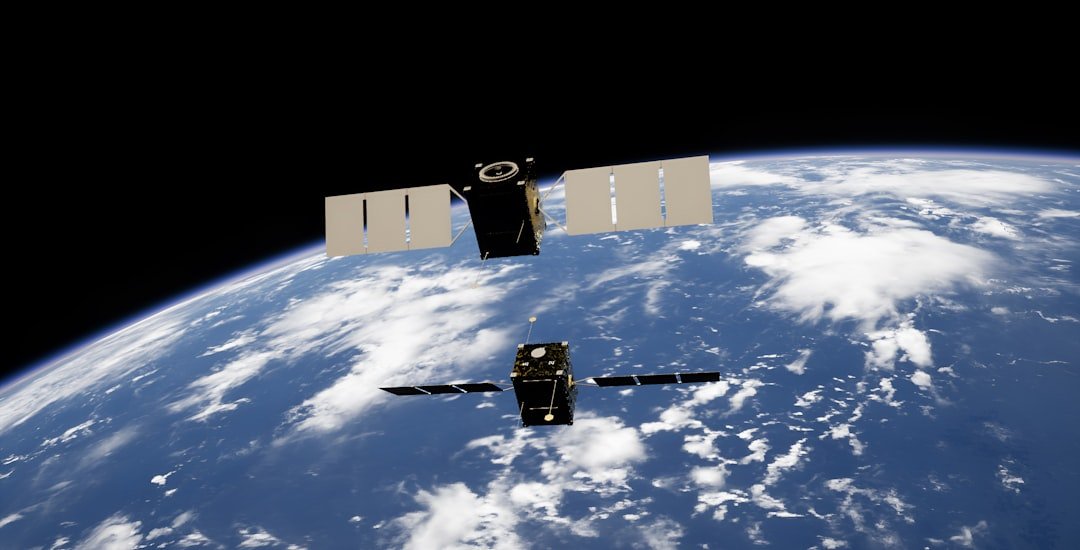
The Objective Force 2040 calls for abandoning vulnerable, high-value geostationary satellites in favor of proliferated, low-Earth orbit constellations. These distributed networks, inspired by models like SpaceX’s Starlink, can absorb attacks and maintain functionality.[2] Resilience becomes paramount, with layered systems integrating military, commercial, and allied elements into a hybrid warfighting framework.
- Proliferated small satellites replace singular large platforms.
- AI and automation enable rapid response to threats.
- Active defenses include orbital maneuvers, cyber operations, and spectrum dominance.
- Focus on mission areas like missile warning, navigation warfare, and space sensing.
This approach treats space as a warfighting domain, not merely a support function. Saltzman emphasized that the strategy serves as a “North Star” for 15-year evolution, with near-term priorities in higher detail.[1]
Scaling Up Personnel and Infrastructure
To execute this vision, the Space Force anticipates substantial growth. Thousands more guardians – officers, enlisted personnel, and civilians – will join over the next five to 10 years, alongside expanded training and infrastructure.[3] New deltas and squadrons will specialize in targeting, command and control, and battle damage assessment.
Recruitment targets experts in orbital mechanics, cybersecurity, electronic warfare, and AI. Automation may reduce some satellite control roles, but overall manpower demands rise with operational tempo. The service, still young since 2019, has grown its budget from $26 billion to nearly $72 billion in recent years.[3] Saltzman called for alignment across government, industry, and allies to realize these changes.
Commercial Space Enters the Frontline
A pivotal element involves deep integration with private sector operators. Commercial constellations demonstrate the viability of distributed models, but challenges arise in securing access during crises and aligning incentives.[2] The hybrid design leverages these assets for resilience, raising questions about reliability and prioritization.
| Aspect | Traditional Model | 2040 Vision |
|---|---|---|
| Satellites | Few, large, expensive (GEO) | Proliferated, small (LEO) |
| Integration | Military-only | Hybrid: military + commercial + allies |
| Response | Reactive support | Active warfighting |
This partnership extends to international allies through frameworks like AUKUS and NATO, enhancing deterrence without formal blocs against adversaries.
Navigating Uncertainty to 2040
The documents remain dynamic, with unclassified Objective Force updates planned every five years to refine assumptions amid rapid technological shifts. Near-term focus includes workforce buildup and doctrinal development, while longer horizons demand flexibility.[4] Saltzman urged critical review: “Read it critically, debate our assumptions, and then offer suggestions.”[1]
Key Takeaways
- Shift to distributed, resilient architectures counters persistent threats.
- Force expansion targets thousands more personnel and specialized units.
- Commercial integration creates hybrid systems but tests security protocols.
As space underpins military precision, global economy, and daily life, this blueprint positions the Space Force for enduring superiority. What implications do you see for the commercial space race? Share your thoughts in the comments.