

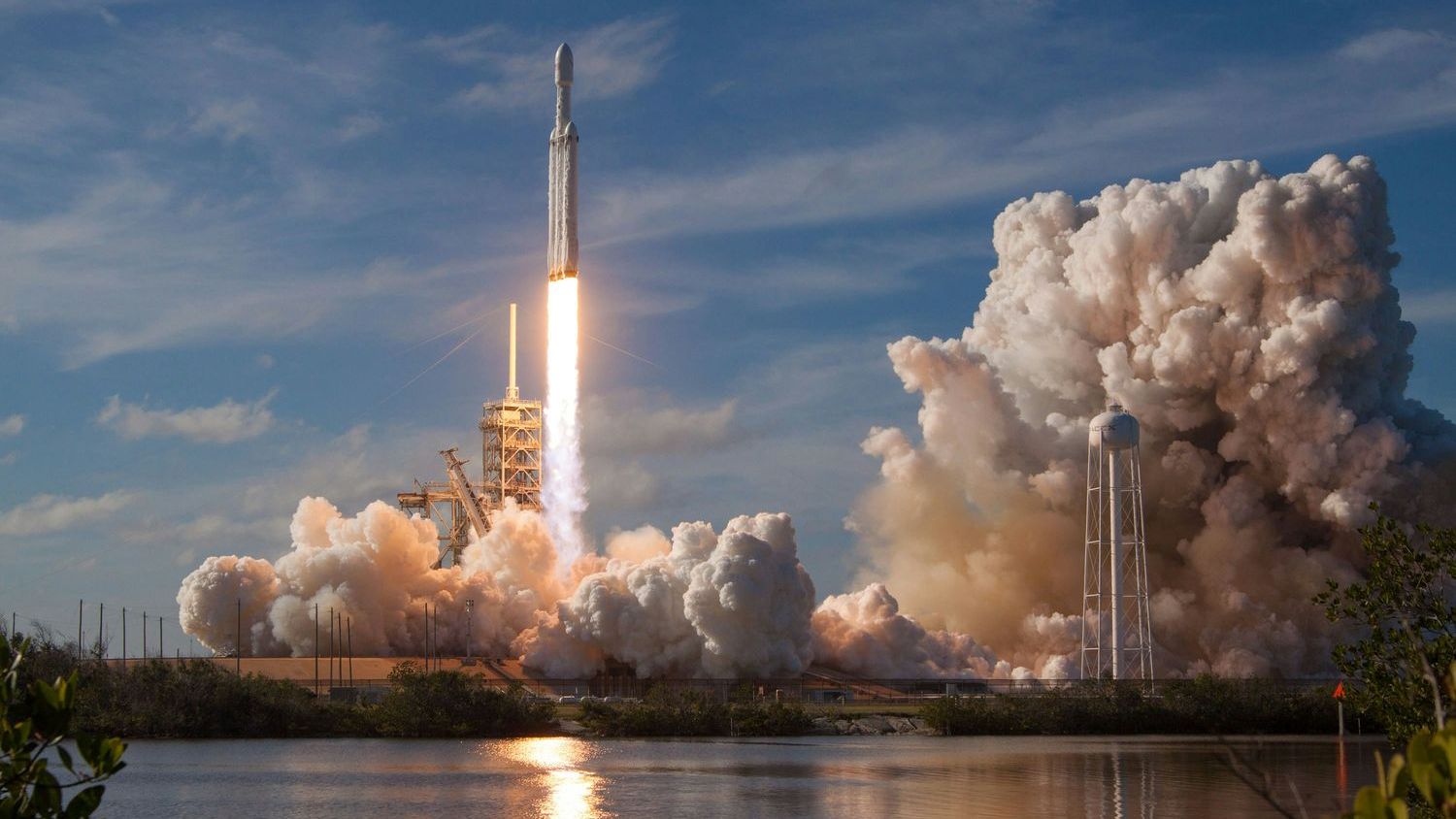
NASA Science, Cargo Launch on 34th SpaceX Resupply Mission to Station – Image for illustrative purposes only (Image credits: Unsplash)
Cape Canaveral, Florida – A SpaceX Falcon 9 rocket lifted off at 6:05 p.m. EDT on Friday, May 15, 2026, from Space Launch Complex 40 at Cape Canaveral Space Force Station. The launch sent the Dragon cargo spacecraft on its 34th resupply flight under contract with NASA, carrying nearly 6,500 pounds of supplies and equipment to the International Space Station. The spacecraft is scheduled to dock autonomously at the forward port of the Harmony module around 7 a.m. EDT on Sunday, May 17.
Experiments Targeting Human Health in Space
Among the scientific payloads is a project designed to test how closely Earth-based simulators replicate the conditions of microgravity. Researchers will compare results from these ground models with actual data collected aboard the station to refine future simulations and improve experiment planning.
Another investigation focuses on a bone scaffold constructed from wood. The material could lead to new treatments for conditions such as osteoporosis by examining how bone tissue grows and repairs itself without the influence of gravity. A third study will track changes in red blood cells and the spleen, providing fresh data on how the human body adapts to prolonged weightlessness.
Tools for Studying Earth and the Solar System
The Dragon spacecraft also carries an instrument to monitor charged particles in the space environment around Earth. These particles can disrupt power grids and satellite operations, and the measurements are expected to improve forecasting models used by operators on the ground.
Separate equipment will gather highly precise observations of sunlight reflected from Earth and the Moon. Scientists anticipate that the data will help refine climate models and offer new insights into planetary surfaces. An additional investigation aims to advance basic understanding of how planets form by studying processes that occur in the microgravity environment of the station.
Supporting Long-Term Space Exploration
These investigations represent only a portion of the research conducted continuously aboard the orbiting laboratory. For more than 25 years, crews have performed experiments in biology, physical sciences, and Earth observation that cannot be replicated on the ground.
The Dragon spacecraft will remain attached to the station until mid-June. At that point it will return to Earth with time-sensitive samples and results, splashing down off the coast of California. The mission continues to expand commercial activity in low Earth orbit while laying groundwork for future human exploration of the Moon and Mars.
Key Experiments at a Glance
- Microgravity simulator validation project
- Wood-based bone scaffold for osteoporosis research
- Red blood cell and spleen adaptation study
- Charged particle monitoring instrument
- Planetary formation investigation
- Earth and Moon sunlight reflection measurements