

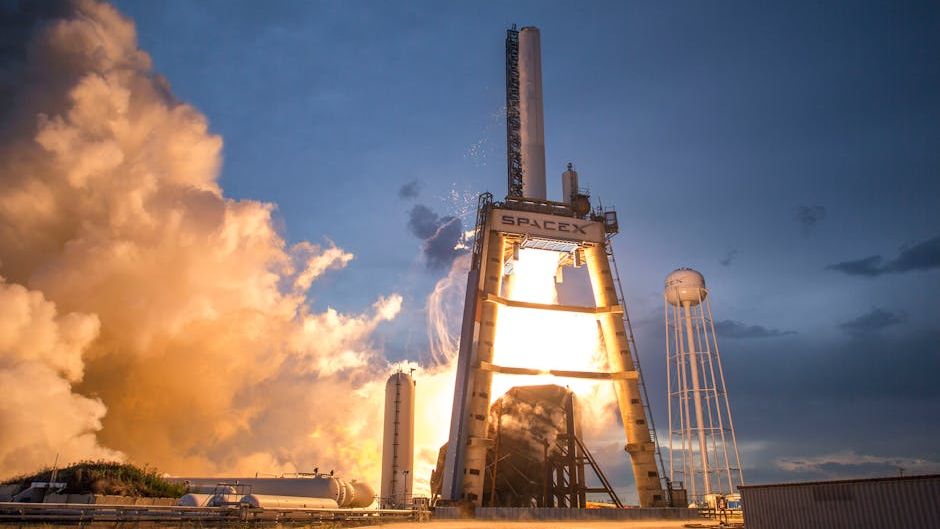
SpaceX is starting to move on from the world's most successful rocket – Image for illustrative purposes only (Image credits: Pexels)
SpaceX completed 165 Falcon 9 launches in 2025, a record that still stands as the highest annual total for any single rocket family. Yet company leaders have already signaled that the pace will slow in the year ahead. The change reflects a deliberate pivot rather than any shortfall in performance or demand.
The Falcon 9 remains the most flown orbital rocket in history, but its role is beginning to shrink as SpaceX readies the much larger Starship for operational flights. Executives have described the adjustment as a natural step in the company’s long-term plans for lunar landings, Mars missions, and expanded satellite networks.
Launch Totals Reveal a Clear Pattern
SpaceX flew 96 Falcon missions in 2023. The number rose to 134 in 2024 when Falcon Heavy flights are included. By 2025 the company achieved 165 Falcon 9 launches alone, excluding any Heavy missions. Those figures illustrate steady growth followed by an expected plateau.
SpaceX President Gwynne Shotwell outlined the next phase earlier this year. She said the company expects roughly 140 to 145 Falcon launches in 2026. “This year we’ll still launch a lot, but not as much,” she noted, adding that launches will taper further once Starship becomes available for routine service.
| Year | Falcon Launches | Notes |
|---|---|---|
| 2023 | 96 | Falcon 9 and Heavy combined |
| 2024 | 134 | Falcon 9 and Heavy combined |
| 2025 | 165 | Falcon 9 only |
| 2026 (planned) | 140–145 | Falcon 9 and Heavy expected |
Starship’s Capabilities Drive the Transition
Starship is designed to carry far more mass than the Falcon 9 and to be fully reusable from both stages. Those features open mission profiles that the current rocket cannot support at scale. SpaceX has identified lunar cargo delivery, crewed Mars flights, and large orbital data centers as early targets once Starship reaches regular operations.
The company has already conducted multiple test flights of the vehicle. Each successful test brings Starship closer to the point where it can begin taking over missions that Falcon 9 currently handles. Executives view the overlap period as temporary and necessary for an orderly handoff.
Operational and Strategic Considerations
Reducing Falcon 9 flights frees engineering and manufacturing resources for Starship production and testing. It also allows SpaceX to maintain high reliability on the workhorse rocket while it still flies. The modest decline projected for 2026 is therefore viewed internally as a controlled adjustment rather than a retreat.
Customer manifests remain strong for both vehicles. Starlink deployments, national security payloads, and commercial satellite launches continue to fill manifests. The shift simply reallocates some of those missions to the newer rocket as its flight rate grows.
Outlook for the Coming Years
SpaceX has not set a firm retirement date for the Falcon 9. The rocket is expected to remain in service for several more years, particularly for missions that do not require Starship’s greater capacity. Its flight rate will likely stabilize at a lower but still substantial level once Starship assumes the bulk of high-volume work.
The transition underscores a broader pattern in the space industry: even highly successful systems eventually give way to more capable successors. For SpaceX, the move from Falcon 9 to Starship represents the next chapter in its effort to make routine access to deep space a reality.