

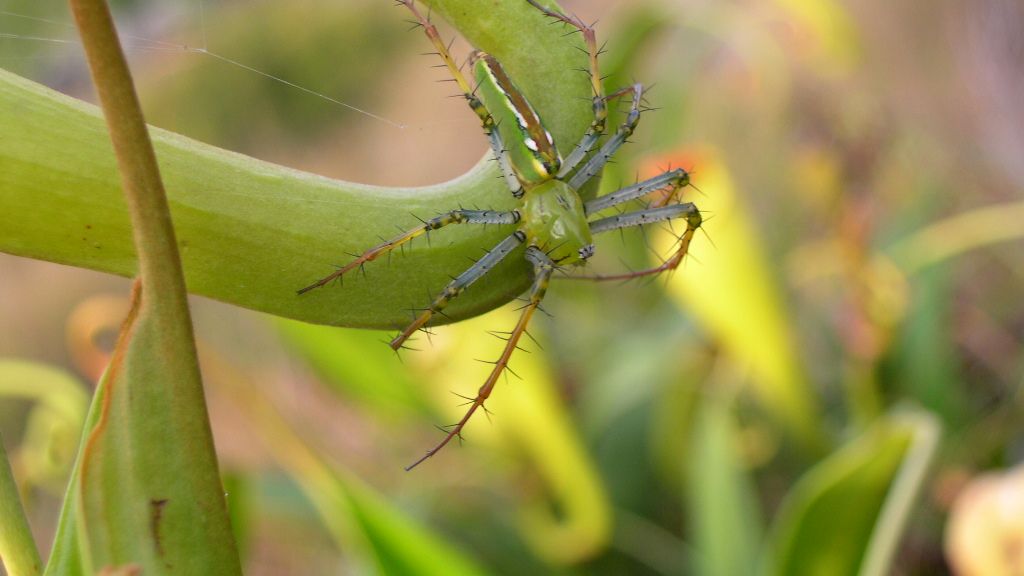
Evolutionary adaptation and mitogenomic diversity of spiders associated with Nepenthes smilesii Pitcher Plants in Thailand – Image for illustrative purposes only (Image credits: upload.wikimedia.org)
In the lush rainforests of Phu Kradueng National Park, Thailand, tiny spiders have carved out a precarious existence inside the digestive pitchers of Nepenthes smilesii plants. These carnivorous traps, which lure and dissolve insects, somehow spare certain spider species that dwell within their fluid-filled chambers. Researchers recently decoded the mitochondrial genomes of these remarkable inhabitants, uncovering signs of rapid evolutionary change that could reshape our understanding of specialized symbioses. The findings highlight how extreme environments drive genetic innovation in unexpected ways.
A Surprising Partnership in the Pitcher Traps
Most visitors to pitcher plants witness a straightforward predator-prey dynamic: the plant drowns and digests unfortunate insects. Yet a select group of spiders thrives amid this lethal soup, preying on the trapped victims without succumbing to the plant’s enzymes. Species from the Thomisidae family, such as Thomisus, Henriksenia, and Epidius, along with the Sparassidae’s Pseudopoda, make their home in Nepenthes smilesii pitchers. This setup offers a natural laboratory for studying how niche habitats accelerate evolution compared to their free-living kin.
Scientists focused on four spider species collected from these Thai pitchers. The study sequenced their complete mitogenomes – circular DNA molecules in cell mitochondria that power energy production and evolve quickly under selective pressure. Each genome contained the standard 37 genes typical of animal mitogenomes, but their sizes varied slightly: from 14,289 base pairs in Epidius to 15,888 in Henriksenia. These sequences revealed not just basic biology, but hints of adaptations tailored to the pitcher’s harsh conditions.
Genetic Signatures of Pitcher Life
Compared to free-living relatives, the pitcher-dwelling spiders showed elevated rates of nonsynonymous substitutions – changes in DNA that alter protein structures – in key genes like ND2, ND5, and ND6. These genes code for proteins in the electron transport chain, crucial for cellular respiration. Higher mutation rates suggest the pitcher environment imposes unique demands, perhaps related to surviving low-oxygen fluids or processing nutrient-poor prey. Such shifts point to positive selection favoring traits that let these spiders endure where others perish.
Gene arrangements also diverged notably. The three Thomisidae species displayed distinct rearrangements, including a duplication of control region-like sequences in Henriksenia – a feature rarely seen in related spiders. Pseudopoda, from a different family, maintained a more conventional layout. These structural quirks could influence replication or expression, potentially aiding survival in the confined, fluid-filled niche.
| Spider Species | Mitogenome Size (bp) | Key Genetic Features |
|---|---|---|
| Thomisus sp. | 14,731 | Gene rearrangements; elevated ND gene substitutions |
| Henriksenia sp. | 15,888 | Duplicated control regions; high nonsynonymous rates |
| Epidius sp. | 14,289 | Distinct Thomisid rearrangements |
| Pseudopoda sp. | 14,533 | Typical structure; family-specific adaptations |
Phylogenetic Trees Rewrite Family Ties
Building evolutionary trees from all 13 protein-coding genes yielded far stronger statistical support than those using just a 600-base-pair snippet of the COI gene – a common barcode for species identification. This comprehensive approach clarified relationships within Thomisidae. Thomisus and Henriksenia formed a tight monophyletic clade, suggesting a shared pitcher-adapted lineage. Epidius, however, appeared more distant, clustering in a paraphyletic group outside the main family branch.
These patterns challenge simpler views of spider diversity. Traditional COI-based trees often lack resolution for closely related species, but full mitogenomes expose finer divergences. The results underscore how pitcher association might have spurred independent evolutionary paths, even among spiders from the same family.
Broader Implications for Symbiosis and Conservation
The study provides baseline genomic data essential for taxonomy and future research on these understudied associations. By illuminating co-evolutionary signals, it models how plants and arthropods co-adapt over time – insights applicable beyond Thailand to other pitcher plant ecosystems worldwide. For instance, similar spider-plant symbioses occur in Borneo and Sumatra, where habitat loss threatens biodiversity hotspots.
Phu Kradueng National Park protects a fragment of Thailand’s montane forests, but climate shifts and tourism pressure Nepenthes smilesii populations. Documenting these spiders’ genetics aids conservation efforts, flagging unique lineages for protection. Researchers emphasize that while the mitogenomes reveal adaptation drivers, broader nuclear genome studies remain needed to confirm functional changes.
These pitcher-dwelling spiders remind us that evolution often hides in plain sight, within the very traps designed to end life. As genomic tools advance, such discoveries could unlock strategies for preserving fragile symbioses amid environmental change. For now, the Thai rainforest continues to yield lessons on resilience in the unlikeliest of homes. Details appear in a PLoS One publication by Lertkulvanich and colleagues.