

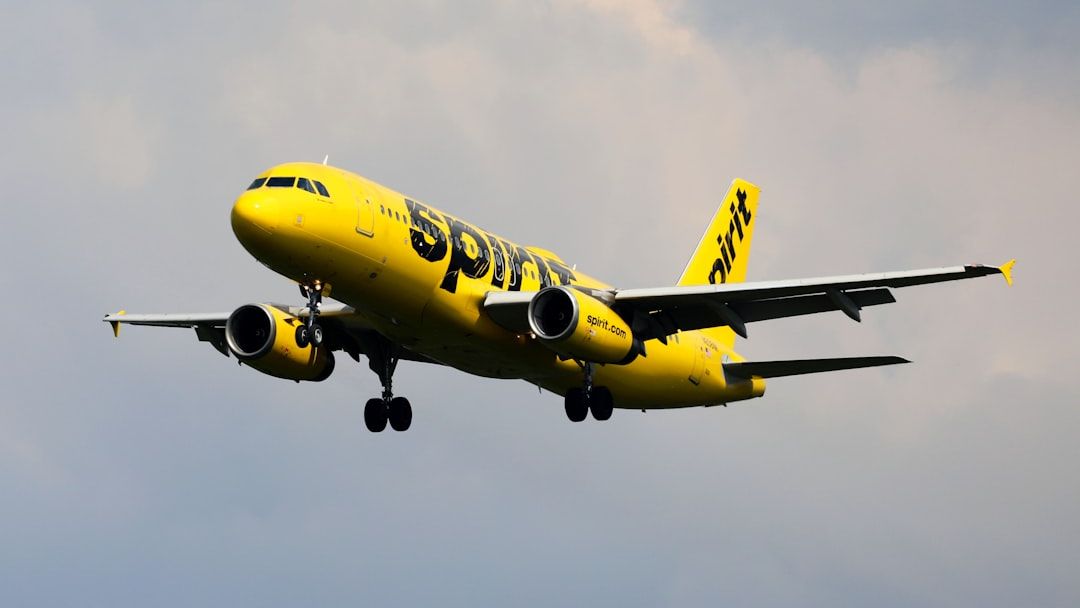
What Spirit Airlines’ implosion means for O’Hare and who’s offering rescue fares – Image for illustrative purposes only (Image credits: Unsplash)
Chicago’s O’Hare International Airport – Vacant check-in counters in Terminal 2 greeted passengers early last weekend after Spirit Airlines announced it had ceased all operations. The ultra-low-cost carrier, known for its bright yellow planes and bargain fares, grounded its fleet suddenly, leaving travelers nationwide scrambling for alternatives. Major competitors quickly responded with special “rescue fares” to accommodate those affected, particularly at busy hubs like O’Hare.[1][2]
The Timeline of Spirit’s Collapse
Spirit Airlines filed for bankruptcy protection in 2024 and again in 2025, aiming to restructure as a leaner operation. Those efforts unraveled amid soaring jet fuel prices, triggered in part by geopolitical tensions including the U.S. and Israeli conflict with Iran. The carrier canceled all flights and began winding down operations on May 2, 2026, after last-ditch talks for a $500 million government bailout fell through.[3]
Aviation expert Joseph Schwieterman, a professor at DePaul University, attributed the downfall to a combination of factors. “A one-two punch doomed Spirit: a relatively soft domestic travel market coupled with sky-high fuel prices,” Schwieterman said. The airline instructed passengers not to visit airports and directed them to seek rebooking elsewhere, as its website shifted to a restructuring notice.[4]
Immediate Disruptions at O’Hare
More than a dozen Spirit flights scheduled out of O’Hare faced cancellation, stranding passengers who arrived unaware of the news. Screens displayed messages confirming the carrier’s exit, while empty counters underscored the sudden departure from Terminal 2. One traveler, Andrew Benintende, recounted rebooking a New York-to-Chicago flight with United just 30 minutes before departure after learning mid-journey of the potential disruption.[1][5]
Chicago aviation officials urged affected flyers not to head to the airport and to contact credit card issuers for reimbursements on Spirit bookings. Frequent flyer miles in Spirit’s program vanished without transfer options, adding to the frustration. Travel expert Peter Greenberg noted early signs of fare hikes, citing a Newark-to-Colombia route that jumped from $700 to $1,200 overnight on American Airlines.[1]
Competitors’ Rescue Fare Programs
Several airlines moved swiftly to fill the void, launching dedicated portals and counterside deals for Spirit customers. These offers typically require proof of a Spirit booking, such as a confirmation number, and target overlapping routes. Availability varies by market, with most promotions running one to two weeks.[6]
- United Airlines capped most one-way fares at $199 and longer routes at $299 through May 16; book at united.com/specialfares with a MileagePlus account.[6][7]
- American Airlines provided discounted fares on 67 Spirit-overlapping routes, adding capacity with larger planes; details via their site.[6]
- Southwest offered tiered pricing at airport counters: $200 for under 500 miles, $300 for 501-1,000 miles, $400 beyond; elite status matches available.[6]
- JetBlue rolled out $99 one-ways through May 6 and $299 caps on select routes like Fort Lauderdale; call 1-800-JETBLUE.[6]
- Frontier slashed base fares by 50% networkwide, bookable by May 10 for travel to November; biggest savings midweek.[6]
- Delta provided reduced nonrefundable fares for five days on key routes; others like Allegiant and Avelo offered points bonuses or up to 75% off select paths.[6]
United’s Laura Mandile emphasized the two-week window: “We are keeping these capped fares available for two weeks.” Many carriers also prioritized hiring for Spirit’s 17,000 displaced workers, with dedicated microsites for applications.[1]
Longer-Term Implications for Chicago Flyers
Schwieterman highlighted O’Hare’s vulnerability, calling Spirit’s exit “a blow” due to its discount role on routes to Florida and the West Coast. Without this low-fare competitor, analysts expect upward pressure on ticket prices across the board, especially for budget-conscious travelers. O’Hare officials anticipate smoother operations as rivals absorb demand, but the loss reduces options for price-sensitive routes.[4]
U.S. Transportation Secretary Sean Duffy voiced support for rehiring initiatives, noting American and United’s efforts to fast-track Spirit staff. The episode underscores the fragility of ultra-low-cost models amid volatile fuel costs and market shifts. As O’Hare passengers adapt, the rescue fares provide short-term relief, but sustained competition remains key to keeping air travel affordable.[1]
The shutdown serves as a reminder of aviation’s thin margins. While rivals extend a hand now, Chicago-area flyers may soon navigate a pricier landscape without Spirit’s signature bargains.