

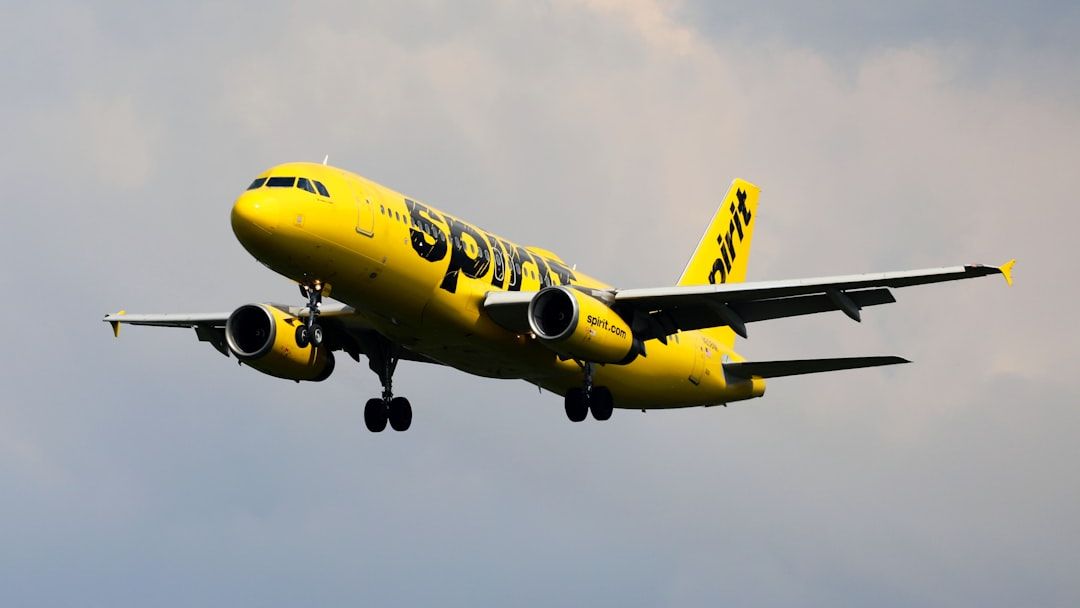
What to know about the Spirit Airlines shutdown – Image for illustrative purposes only (Image credits: Unsplash)
Travelers across the United States arrived at airports Saturday morning to find empty check-in counters and canceled departures after Spirit Airlines ceased operations overnight. The abrupt move stranded thousands mid-journey and left roughly 17,000 employees without work, marking the end of a budget carrier that redefined affordable air travel.[1][2] Families like that of Eustaquio Mendez in Chicago rebooked at steep markups, turning a round-trip ticket into a one-way cost that exceeded the original fare.[1]
Final Moments Seal a 34-Year Legacy
Spirit’s last revenue flight, NK1833 from Detroit to Dallas-Fort Worth, touched down just after midnight local time on May 2, 2026. Air traffic controllers exchanged farewells with the pilots, one saying, “Well, it was a pleasure working with you guys, and I wish you the best,” met with a grateful “Thank you very much.”[3][2] By 3 a.m. ET, the airline posted notices on its website and app declaring all flights canceled and customer service unavailable. Kiosks at terminals displayed a message regretting the end of global operations after 34 years of connecting friends and families.
The carrier, originally a Michigan trucking firm in the 1960s that pivoted to charters in the 1990s, embraced an ultra-low-cost model in the 2000s inspired by European pioneers like Ryanair. This no-frills approach – bare-bones service paired with rock-bottom fares – pressured rivals to introduce basic economy options and expand access to flying for millions.
Financial Woes and a Bailout That Fell Short
Spirit had filed for bankruptcy twice since 2024, shedding nearly 4,000 jobs and 200 routes in 2025 alone while ending the year with about 7,500 staff. Losses topped $2.5 billion since 2020, exacerbated by post-pandemic recovery struggles, engine issues, labor costs, and fierce competition at hubs like Las Vegas and Florida airports.[1][2] A surge in jet fuel prices – up 65 percent amid the U.S.-Israeli conflict with Iran – delivered the final blow, though Transportation Secretary Sean Duffy countered that the carrier’s troubles predated the war.
The Trump administration pursued a $500 million rescue package that would have granted the government a 90 percent stake, but creditors including Citadel and Ares Management rejected it late Friday. Bondholders urged the board to wind down, and talks collapsed despite efforts from Commerce Secretary Howard Lutnick. Spirit CEO Ted Davis thanked officials for trying to save jobs but cited insurmountable pressures in announcing the “orderly wind-down.”[3][2]
Stranded Flyers Seek Alternatives Amid Refund Rollout
Spirit automatically processed refunds for credit and debit card purchases by Monday, directing third-party bookings back to agents. A dedicated site at spiritrestructuring.com addressed common queries, though cash payments and loyalty points face bankruptcy proceedings.[4][2] The U.S. Department of Transportation required only a confirmation number and proof of payment for special assistance.
Competitors stepped in with rescue fares to ease the chaos:
- United capped one-way tickets at $199 ($299 for longer hauls) and rebooked 14,000 Spirit passengers in 12 hours.
- Delta, American, and Southwest offered reduced fares on affected routes through early May.
- JetBlue provided $99 options for 72 hours; Frontier, Allegiant, Avelo, and Breeze also pledged support.
Scenes unfolded at O’Hare in Chicago, Fort Lauderdale’s hub, and Logan in Boston, where unaware travelers learned of the shutdown via email or signage.[4]
17,000 Jobs Vanish Overnight
The closure idled 17,000 full- and part-time workers, including 2,000 pilots and 3,000 flight attendants, prompting Spirit to repatriate over 1,300 crew members.[1] Dispatchers like Wes Egan sent poignant “Godspeed” messages to pilots, while unions pressed for owed pay, vacation, and unemployment aid. Air Line Pilots Association President Jason Ambrosi emphasized the toll on families and communities.
United and American Airlines prepared job portals for Spirit staff, and carriers like Southwest honored displaced pilots with salutes upon their arrival home. Still, the suddenness left many, like retiring captain Jon Jackson, reflecting on decades of service cut short.
Wider Ripples for Air Travel Costs and Capacity
As the first major U.S. carrier to fold in 25 years, Spirit’s exit from 72 airports removes a key check on fares. Analysis showed round-trip prices rising 23 percent – or about $60 – on routes it abandoned previously, with volume dropping 20 percent.[4] Experts anticipate short-term hikes as rivals like Frontier and Breeze fill gaps slowly amid peak summer demand and elevated fuel bills projected to cost airlines $24 billion more annually.
Fort Lauderdale-Hollywood International Airport, where Spirit handled 25 percent of flights, now eyes expansions by JetBlue and others. While the low-cost model that democratized flying endures in fragments, its purest disruptor has landed for the last time.
For budget-conscious families and frequent short-haul travelers, the shutdown signals pricier options ahead and a reminder of aviation’s fragility. Displaced workers and rebooked passengers will rebuild, but the skies feel a little less accessible today.