

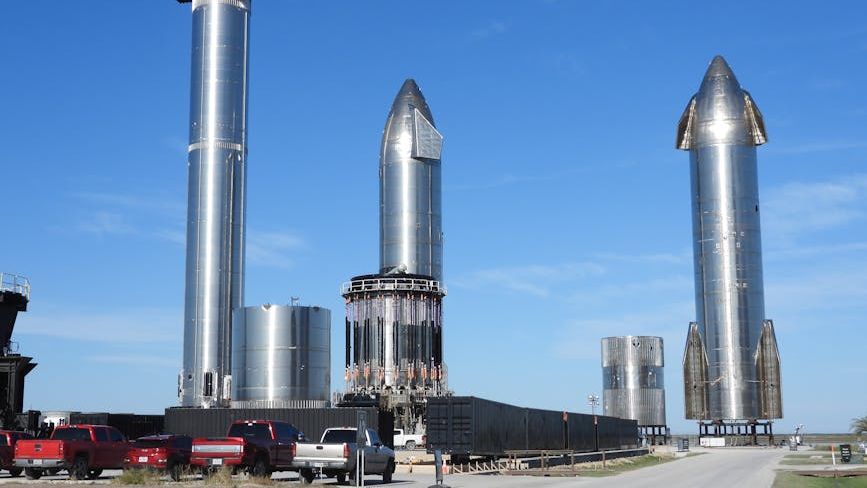
SpaceX’s Starship V3 megarocket will do something completely new on Flight 12 – take a good look at itself – Image for illustrative purposes only (Image credits: Pexels)
SpaceX stands at the threshold of another milestone in its push to make routine travel beyond Earth a practical reality. The company’s latest Starship variant, known as V3, is scheduled to launch for the first time next week. This debut flight carries an added layer of interest because it will test an in-space maneuver that has not been attempted on any prior Starship mission.
The Leap to Version 3
The V3 configuration represents the latest refinement in a vehicle designed from the outset for repeated use. Engineers have focused on strengthening the structure, improving propulsion efficiency, and expanding payload capacity. These changes aim to support longer-duration missions and heavier cargo loads than earlier versions could manage. The upcoming test will show how well those upgrades perform under real flight conditions.
A First Look at Itself
What sets Flight 12 apart is the planned in-space activity. The vehicle will perform a maneuver that allows it to examine its own exterior while still in orbit. No previous Starship flight has included this step. The capability could provide immediate data on how the spacecraft holds up after launch and during reentry stresses. Such information matters because it could shorten the time between flights and reduce the need for extensive ground inspections.
Why the Timing Matters
The test arrives as SpaceX works to increase launch cadence and prepare for more ambitious goals. Reliable self-assessment in orbit could help crews or ground teams spot issues earlier. That, in turn, supports plans for sustained operations around the Moon and eventual journeys to Mars. Observers will watch closely to see whether the new procedure integrates smoothly with the rest of the flight profile.
What Comes Next
Success on this flight would mark another incremental gain in the Starship program. Each test adds data that shapes the next vehicle iteration. The self-inspection step, if proven, could become a standard part of future missions. For now, the focus remains on executing the debut safely and gathering the clearest possible record of how V3 performs from liftoff through the new in-space sequence.