

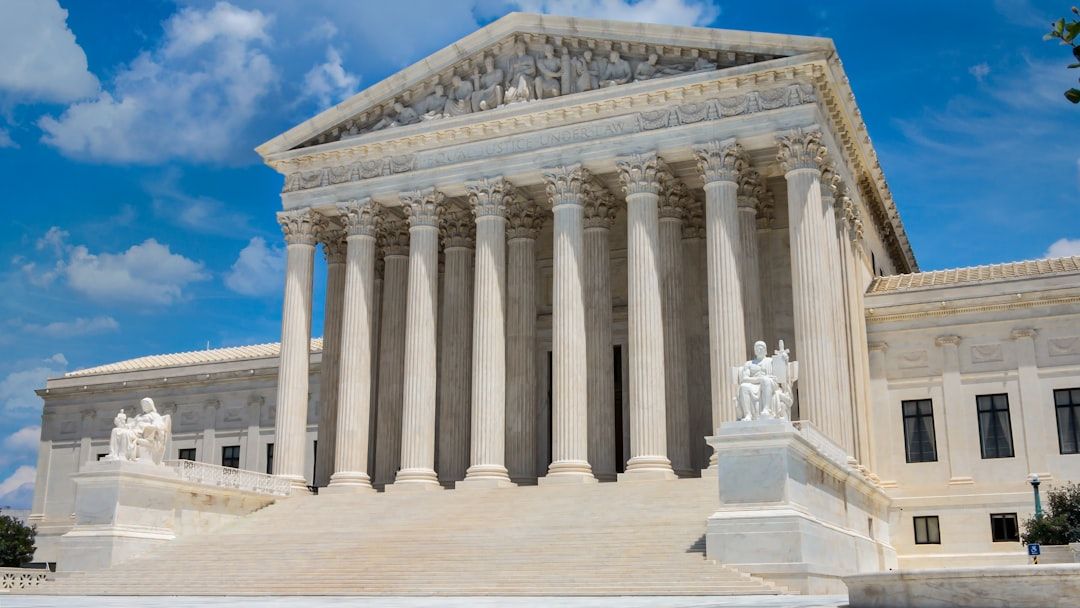
The Case for Staying the FDA Rule on the Abortion Pill – Image for illustrative purposes only (Image credits: Unsplash)
The U.S. Supreme Court issued a temporary order on May 4, 2026, halting a federal appeals court decision that reinstated in-person dispensing requirements for mifepristone, the primary drug in medication abortions.[1][2] Justice Samuel Alito, handling emergency applications from the Fifth Circuit, granted administrative stays requested by drug manufacturers, restoring mail and telehealth access while the court considers further action. This development marks the latest chapter in ongoing litigation over the Food and Drug Administration’s regulations easing access to the pill, used in more than 60 percent of U.S. abortions.[1]
The ruling came hours after Danco Laboratories and GenBioPro, the two main producers of mifepristone, sought Supreme Court intervention against a May 2 decision by the U.S. Court of Appeals for the Fifth Circuit. That panel had sided with Louisiana in its challenge to FDA rules, arguing the policies undermined the state’s abortion restrictions.[2] The administrative stays expire on May 11 unless extended, with responses from the FDA and Louisiana due by May 7.[1]
A History of Expansions and Challenges
The FDA first approved mifepristone in 2000 for use up to seven weeks of pregnancy. Regulators later modified the approval process through risk evaluation and mitigation strategies, gradually broadening availability.[1] In 2016, the agency extended its use to 10 weeks and allowed prescriptions by non-physicians without mandatory in-person visits.
Further changes arrived in 2021 amid the COVID-19 pandemic, when the FDA temporarily lifted the in-person dispensing rule to permit telehealth prescriptions and mail delivery. Officials made those adjustments permanent in 2023, citing safety data from widespread use.[3] These steps aligned with rising demand for medication abortion, which surged after the Supreme Court’s 2022 Dobbs decision ended federal abortion protections.
| Year | Key FDA Change |
|---|---|
| 2000 | Initial approval (up to 7 weeks) |
| 2016 | Extended to 10 weeks; non-physician prescribers |
| 2021/2023 | Telehealth and mail access (permanent) |
Louisiana’s Lawsuit Targets Mail-Order Access
Louisiana filed suit against the FDA in October 2025, claiming the mail-order policy enabled thousands of abortions annually within its borders, violating the state’s near-total ban enacted post-Dobbs. The state argued that out-of-state providers shipped mifepristone directly to residents, bypassing restrictions and generating emergency room costs from complications.[1] Plaintiff Rosalie Markezich joined, recounting a personal experience where mailed pills led to coercion, which an in-person requirement might have prevented.
A federal district judge initially paused the case pending an FDA safety review of mifepristone. However, the Fifth Circuit overturned that hold on May 2, 2026, granting Louisiana’s request for a nationwide stay of the FDA’s telehealth and mail rules. The panel found the state had standing, unlike anti-abortion doctors in a prior case, because the policy directly conflicted with Louisiana law treating the unborn as legal persons from conception.[2]
Drugmakers Push Back with Urgency
Danco Laboratories described the Fifth Circuit’s order as unprecedented, warning it would inject confusion into time-sensitive medical care nationwide. GenBioPro echoed concerns of regulatory chaos, noting the ruling affected access even in states without bans.[1] Both companies highlighted that telehealth accounted for over one in four abortions in early 2025, including shield-law shipments to ban states.
- Medication abortions comprised two-thirds of all U.S. procedures.
- Telehealth use rose from under 10 percent in 2022 to 25 percent in 2025.[2]
- Safety profiles showed fewer side effects than common drugs like Viagra or penicillin.
Advocates like the ACLU argued the decision ignored science and law, potentially harming rural patients, abuse survivors, and those with disabilities who rely on remote care. Louisiana Attorney General Liz Murrill countered that the FDA rule facilitated deaths of unborn children and imposed burdens on the state.[3]
Prior Supreme Court Involvement Sets Precedent
This dispute echoes the 2024 case FDA v. Alliance for Hippocratic Medicine, where anti-abortion groups challenged the same FDA expansions. A Texas district judge suspended approvals, but the Fifth Circuit partially upheld rollbacks. The Supreme Court unanimously dismissed the suit in June 2024, ruling plaintiffs lacked standing due to no direct injury.[1]
Justice Brett Kavanaugh’s opinion emphasized that policy objections alone did not suffice for lawsuits. The court had also issued emergency stays in 2023 to preserve access during appeals. Louisiana distinguished its claim by tying harm to enforcement of state law against federal overreach.
Stakes and Path Forward
The temporary reprieve buys time amid the FDA’s ongoing review, but prolonged uncertainty looms for providers and patients. Restrictions could reduce travel for abortions while increasing telehealth reliance elsewhere, reshaping access in a patchwork of state laws. Experts anticipate full Supreme Court briefing if the administrative stays lead to formal docket review.
As responses arrive this week, the justices face pressure to clarify standing and agency deference post-Dobbs. The outcome could redefine how federal drug rules intersect with state abortion policies, influencing medication access for years ahead.[1]