


The Feeling That Your Phone Is Always Listening
Almost everyone has experienced it at some point: an ad that seems to mirror a private conversation you just had. This is one of the most pervasive longstanding technology conspiracy theories, that your smartphone is constantly listening in on your private conversations, and almost everyone at some point has felt the eerie synchronicity of seeing an ad served up on a social media platform that exactly corresponds to a recent conversation.
Facebook’s algorithms may have already predicted your interest, or you might have already seen the product elsewhere, like on a site connected to Facebook, making it seem like the ad was triggered by your conversation. The bottom line is that there is no confirmed proof of Facebook listening in, but their advanced data collection and predictive analytics can feel just as invasive.
Facebook actually uses even more invasive and invisible surveillance and analysis methods, which give it enough information about you to produce uncanny advertisements all the same. Users’ fear and even paranoia about hyper-targeted ads is warranted, just not for the exact reasons they might think.
What Meta Actually Says About Your Microphone

Facebook has denied using microphones for ad targeting, and so far no credible evidence suggests otherwise. There have been no whistleblowers, leaked documents, official testimonies, or independent audits indicating Facebook is secretly listening to your conversations.
Facebook states it only uses your microphone when you’re actively recording audio or using voice features, and only after you’ve explicitly granted microphone permission. That said, granting permission in the first place opens a door that most users never consciously chose to open.
When rumors about microphone use gained momentum in 2019, Facebook came out to deny the allegation publicly. Facebook further clarified that the app only uses your microphone when you have given it permission, or when you are using a feature that requires the use of a microphone.
The Cox Media Group “Active Listening” Scandal of 2024

Media giant Cox Media Group said it could target adverts based on what potential customers said out loud near device microphones, and explicitly pointed to Facebook, Google, Amazon, and Bing as CMG partners, according to a CMG presentation obtained by 404 Media. The slide deck provided more information about CMG’s advertised capability, which it called Active Listening.
The technology, called “Active Listening,” uses artificial intelligence to collect real-time data on what users might be considering purchasing. By analyzing conversations, the software can identify potential customers and deliver ads that align with their spoken intentions. The technology works by combining voice data captured from everyday conversations with behavioral data gathered from users’ online activities.
While tech firms like Google, Meta, and Amazon were listed as CMG clients in the deck, all three denied involvement with the active listening program. Meta specifically responded, saying, “Meta does not use your phone’s microphone for ads, and we’ve been public about this for years,” adding that it was reaching out to CMG to clarify that their program was not based on Meta data.
Apple’s Own Microphone Problem in 2025

In January 2025, Apple paid a $95 million settlement in cash for a lawsuit that claimed Siri listened to users without their consent from September 17, 2014, to December 31, 2024. It all started when Apple rolled out the “Hey Siri” feature, which initiated the unauthorized recording. Apple still denies any wrongdoing, even as the company settled the case.
The point here is broader than just Meta. Even Apple, the company that built an entire marketing campaign around privacy, was not entirely in the clear. Every major tech platform has a relationship with your microphone that deserves scrutiny.
Whenever a microphone is active, Apple’s devices display an indicator alerting the user to the activity. This can include an orange dot on an iPhone screen when the mic is being used, and a green indicator for the camera. Most users simply don’t know to watch for it.
The Real 3-Second Fix: Revoking Microphone Access

The single most direct thing you can do is remove Meta’s microphone access entirely from your iPhone’s system settings. On iPhone, open Settings, scroll down to your apps and select Facebook. You will see a list of permissions. Slide the toggle next to Microphone to the left to disable it.
The same applies to Instagram and WhatsApp, both of which are Meta-owned. Each app has its own microphone permission that can be toggled independently. Doing so will stop Facebook’s access to your iPhone’s microphone. Since you have turned off the settings from iOS settings, the social network won’t be able to change the setting even if they wanted to.
Alternatively, on an iPhone you can simply head to the Settings app, then go to Privacy followed by Microphone, where you can revoke Facebook’s access to the mic. This second route is actually faster because you can see all apps with microphone access in a single list.
What Meta Collects Even Without the Microphone

The truth is, Facebook doesn’t need your microphone to target you with surprisingly accurate ads. Its behavioral profiling already draws on your interests, browsing habits, location, device details, and social interactions. The system is comprehensive enough to feel psychic, even without any audio.
Meta’s ad delivery system has evolved into something far more advanced than most advertisers realize. What used to be a manual process of layering demographics, interests, and behaviors is now largely handled by the algorithm behind the scenes. The 2025 Meta targeting model relies on machine learning to build probabilistic user profiles based on large volumes of behavioral and conversion data.
Each time you see a targeted ad, your personal information is exposed to thousands of advertisers and data brokers through a process called real-time bidding. This process does more than deliver ads. It fuels government surveillance, poses national security risks, and gives data brokers easy access to your online activity.
Meta AI Chats Are Now Also Feeding the Ad Machine
Things got notably more intrusive at the end of 2025. As of December 2025, Meta is using your interactions with Meta AI, its AI chatbot, to personalize ads and content across Facebook, Instagram, and WhatsApp. When you chat with Meta AI about weekend plans, parenting struggles, or major life decisions, those conversations are now fair game for advertisers. The change applies in nearly every region, with exceptions in the EU, the UK, and South Korea, where strong privacy regulations remain in place.
Unlike likes, shares, or comments, which are public actions, AI chats are inherently more intimate. People tend to speak more openly in one-on-one conversations with AI, asking questions they wouldn’t post publicly or search directly. AI assistants are often treated like confidants, encouraging users to explain situations in detail and talk through decisions step by step.
So even if you disable the microphone, using Meta AI on any of its platforms is effectively a different kind of listening. The data pipeline has expanded well beyond hardware permissions.
Apple vs. Meta: A Privacy Standoff That Affects You
Apple singled out Meta, saying it has made at least 15 requests for “potentially far-reaching access to Apple’s technology stack” that would reduce privacy protections for users. If those requests were granted, Facebook, Instagram, and WhatsApp could enable Meta to read all of a user’s messages and emails, see every phone call they make or receive, track every app they use, scan all of their photos, look at their files and calendar events, and log all of their passwords.
This standoff, which became public in December 2024, is significant context. It shows that the tension between Apple’s privacy architecture and Meta’s data appetite is real and ongoing. Apple’s refusal is, in practical terms, one of the strongest protections iPhone users have.
Direct long-term audio surveillance, like secretly recording conversations, is highly unlikely because it would drain your battery, be detectable via system indicators like the mic icon on iPhones, require extensive resources, and be less effective than Facebook’s behavioral analysis, which can already predict interests through data patterns.
What Research Actually Says About Microphone Surveillance
Multiple studies have failed to prove microphone-based ad targeting, despite widespread conspiracy theories. For example, a study by Northeastern University analyzed more than 17,000 apps and found no evidence that phones were secretly recording conversations for advertising.
Investigative news site 404 Media revealed that Cox Media Group had developed a system it called Active Listening. The system could apparently capture what it called “real-time intent data” using a smart device’s microphone. This voice data could then be paired with AI processes and other behavioral data to serve up highly targeted advertisements. Exactly how this Active Listening system actually worked was unclear, but almost immediately every major tech company distanced itself from CMG.
The Northeastern University study examined app behavior at scale and found no smoking gun, which matters. Absence of proof is not proof of absence, but it does suggest that mass covert microphone surveillance is not currently how the system operates for most users.
Beyond the Microphone: Additional Steps Worth Taking
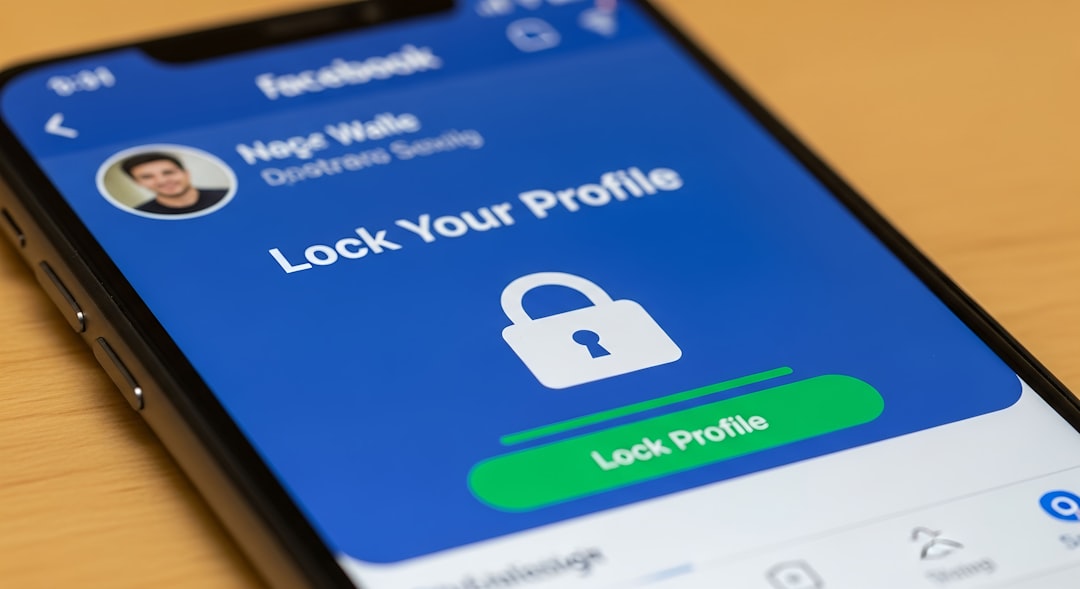
Even if you delete Meta accounts entirely, Meta may build a shadow profile with information about you using limited, non-account data via third-party websites and apps that integrate Meta trackers, unless you actively block them. If you’re not ready to leave Meta’s apps just yet, you can still change your ad preferences on Facebook and Instagram to reduce how aggressively you’re targeted.
There is also another way to prevent Facebook from tracking your online activity. You can turn off your Off-Facebook Activity to prevent Facebook from tracking your online activity outside of its own platforms. This setting is buried inside Facebook’s privacy settings but is one of the more meaningful opt-outs available to users.
In March 2025, Meta settled in legal action brought by human rights campaigner Tanya O’Carroll, and said they would no longer process her personal data for targeted advertising. Since then, thousands of people in the UK have requested that Meta stop profiling them for advertising. Regulatory pressure is slowly expanding user rights, but you still have to take the first step yourself.
The three-second microphone toggle won’t solve everything. Meta’s data apparatus is far larger than any single permission. Still, removing hardware access is a firm and clear boundary, one you control directly, without needing to trust anyone’s policy statement. Start there, then look at what else your apps are quietly holding onto.