


What Attachment Theory Actually Says About Change
Attachment theory provides a framework to understand the importance of human bonding, and its long-term influence on interpersonal relationships. What many people don’t realize, though, is that the story doesn’t end in childhood. Recent research shows that while attachment patterns generally remain stable, they are not permanent and can change over time with effort and support.
Research tracking individuals from age 13 to 72 shows that anxious attachment typically peaks in young adulthood before declining, while avoidant attachment gradually decreases from adolescence onward. That peak in young adulthood is telling. It lands almost exactly where the Saturn Return does.
Although there is some evidence that attachment orientations might be moderately stable over time, the small links to early caregiving environments and the often-underappreciated within-person fluctuations that people experience suggest that it is far from destiny. That last phrase matters more than it might seem.
What the Saturn Return Actually Is

In horoscopic astrology, a Saturn return is an astrological transit that occurs when the planet Saturn returns to the same position that it occupied at the moment of a person’s birth. While the Saturn return is most often discussed in terms of the first return, which occurs in one’s late 20s, Saturn returns again in one’s 50s and 80s.
This transit typically lasts about two and a half years and tends to bring a confrontation with everything you have been avoiding. Relationships that lack genuine foundation often end. For anxiously attached individuals, that confrontation with avoidance is not minor.
This transit often signals a major shift in personal identity, responsibility, and life direction. While it is often spoken of with dread or confusion, Saturn Return is fundamentally a call to maturity. It presents challenges, yes, but more importantly, it offers opportunities for structural growth and a deeper alignment with one’s authentic purpose.
Why Water Signs Carry Anxious Attachment Patterns Most Intensely

If you have many placements in water signs – Cancer, Scorpio, Pisces – you might tend toward anxious attachment. Water signs are deeply emotional and sensitive, often fearing abandonment and seeking constant reassurance in relationships. Understanding this about yourself can help you work on building emotional security within, instead of relying solely on external validation.
Water signs (Cancer, Scorpio, Pisces) were consistently linked to elevated neuroticism and empathy traits, as measured by the Interpersonal Reactivity Index and BIS/BAS sensitivity scales. This elevated empathy, while a genuine strength, feeds directly into the relational hypervigilance that defines anxious attachment.
According to a 2019 study published in Frontiers in Human Neuroscience, there is a direct correlation between empathy and anxiety. People who are highly emotionally aware are naturally sensitive to the feelings and emotions of those around them. Through their empathy, Cancer can’t help but be affected by the suffering of others, therefore giving rise to anxiety that could reveal itself in an anxious attachment style.
Cancer: Learning That Caregiving Doesn’t Require Self-Erasure
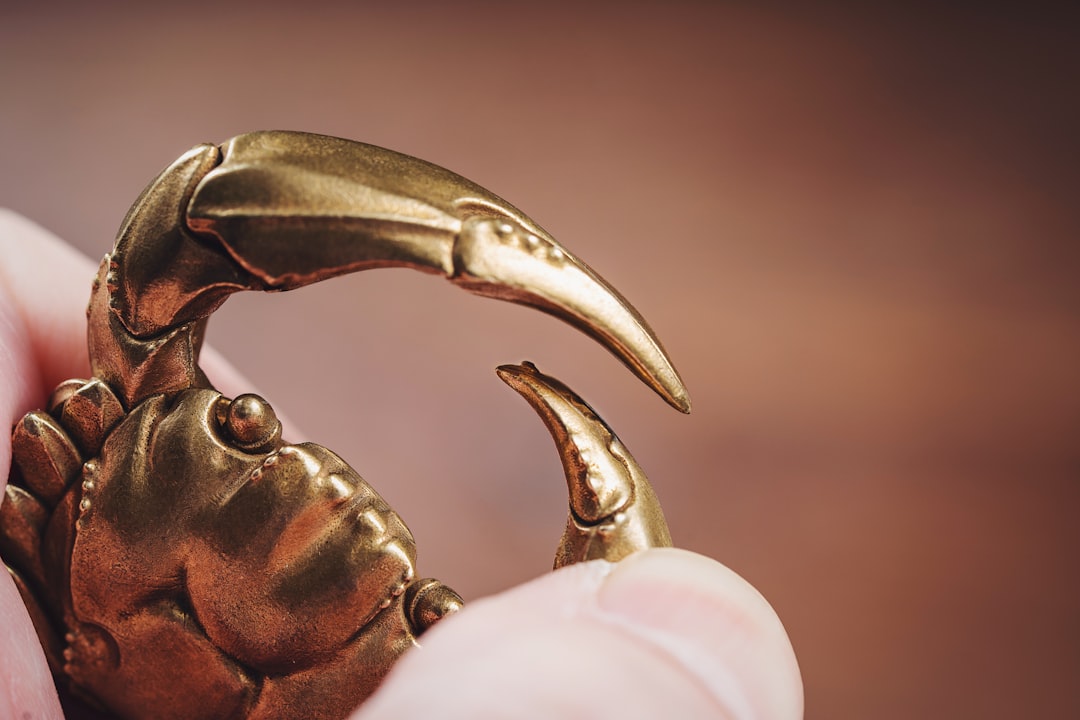
Cancer, the fourth sign of the zodiac, is ruled by the Moon, the celestial body tied to emotions, instincts, memories, and the past. Cancer’s psychological world is built around emotional safety, loyalty, and the desire to protect those they love. Often considered the “mother” of the zodiac, Cancer embodies deep sensitivity wrapped in tough emotional armour.
The Saturn Return confronts Cancer with a specific truth: caretaking that comes from fear of abandonment is not the same as love. Cancer’s protective nature often manifests as emotional caution, using shyness as a shield against potential hurt. They typically reveal their true selves only to those who have earned their trust. Yet beneath this protective shell lies a remarkable capacity for emotional growth and adaptation. When the time is right, Cancer individuals can shed their old emotional patterns like a crab shedding its shell, embracing new phases of emotional development with courage and resilience.
The challenges that arise during a Saturn return often strengthen resilience and confidence. You may notice changes such as greater focus or a renewed sense of identity, and these shifts create the foundation for long-term growth. For Cancer, that renewed identity is often the discovery that security can come from within.
Scorpio: Transforming Mistrust Into Earned Intimacy

Scorpio rules the 8th house, which governs intimacy, shared resources, sex, psychological transformation, and the exchange of power between people. While Cancer protects emotions, Scorpio tests them. Scorpio energy asks people to confront emotional truth, particularly in situations involving trust, vulnerability, and shared power.
Scorpio’s anxious attachment tends to look different from Cancer’s. It reads more like controlled suspicion than open clinging. Scorpios don’t merely experience emotions; they dive into them, explore their depths, and emerge transformed. This capacity for emotional rebirth makes them among the most resilient and psychologically sophisticated signs of the zodiac.
Cancer, Scorpio, and Pisces experience the Saturn Return as a mandate to structure the emotional and psychological realms. For Scorpio specifically, that structuring means converting raw emotional intensity into something trustworthy and consistent, both in how they show up for others and in how they allow others to show up for them.
Pisces: Dissolving Codependency and Finding the Self Within the Connection

Pisces, the twelfth and final sign of the zodiac, is ruled by Neptune, the planet of dreams, illusions, compassion, and transcendence. Pisces’ psychology is rooted in intuition, emotional fusion, and deep spiritual awareness. They’re not just empaths – they become what others feel. That last quality is where anxious attachment quietly lives for Pisces.
Their challenge lies in maintaining boundaries between their own emotions and those of others, as their exceptional empathy can sometimes lead to emotional overwhelm or confusion. The spiritual journey for Pisces involves learning to navigate between vision and reality, compassion and self-preservation, illusion and truth. When they achieve this balance, they become channels for profound spiritual insight and creative inspiration.
The Saturn Return arrives for Pisces as a kind of clearing. The experience can feel like destruction, but it is more accurately described as a clearing – making room for structures that actually reflect who you are becoming rather than who you were told to be. For Pisces, that structure is a sense of self that no longer dissolves completely into another person’s emotional world.
What Psychology Says About the Late-Twenties Shift

Psychologically, Saturn return is associated with self-discovery and reevaluating one’s priorities. The first Saturn return is seen as the time of reaching full adulthood, and being faced, perhaps for the first time, with adult challenges and responsibilities.
Psychologically, this phase corresponds to what Carl Jung called individuation – the journey toward becoming a fully realized adult self, beyond societal masks or inherited expectations. Saturn pushes individuals toward inner clarity and authenticity. Both Jungian psychology and attachment research point to the same window of opportunity.
About half of major life events trigger immediate shifts in attachment security, with roughly a quarter producing lasting changes toward greater security. Understanding what drives these shifts can help you actively work toward a more secure attachment pattern. The late twenties are, by almost any measure, dense with exactly those kinds of major life events.
How Therapy and Self-Awareness Accelerate the Process

Early patterns of attachment have been shown to influence later relationships, although significant life events, mental health challenges, and therapeutic interventions can modify these patterns. This is one of the more quietly hopeful findings in attachment research, especially for the three water signs who are wired to feel everything so deeply.
Several factors influence how flexible attachment styles can be in adulthood. Therapeutic interventions – individual and couples therapy – can significantly help in changing adult attachment patterns. Therapists assist clients in understanding and revising their internal working models, often formed during childhood.
When participants rated their attachment and the extent to which they would like to change, they tended to change in the desired direction of their goals over time. In other words, changes toward security occurred even without direct researcher, partner, or therapeutic intervention of specific strategies. Intention, it turns out, is a real factor in how attachment evolves.
The Role of Secure Attachment in Long-Term Wellbeing

Secure attachment functions as a protective factor, attenuating risk for depression, enhancing self-esteem, and reducing vulnerability to anxiety, mood disturbances, and behavioral dysregulation through its facilitative role in emotion regulation and stress coping. This is not a small benefit. For people who have spent years operating from a baseline of relational fear, moving toward security reshapes the entire architecture of daily life.
Secure adults report higher relationship quality due to effective communication and emotional regulation, while insecure adults experience greater conflict and dissatisfaction. The gains, in other words, aren’t just internal. They play out concretely in how relationships feel and function.
Promoting attachment security is crucial in preventing mental health issues, as early secure attachments provide a foundation for emotional regulation, resilience, and healthy interpersonal relationships. What current research is beginning to confirm is that this foundation can still be built, even in adulthood, if the conditions are right.
What “Earned Secure Attachment” Actually Looks Like

Earned secure attachment involves developing stability later in life, showing signs of becoming more secure despite earlier insecure patterns. For Cancer, Scorpio, and Pisces, this is the destination the Saturn Return is quietly pointing toward – not because astrology dictates outcomes, but because the transit tends to create the exact conditions under which earned security becomes possible.
Saturn doesn’t bring overnight results, or overnight understanding. This work is slow and steady. All Saturn asks is that you commit to the process of your own healing, your own growing, your own learning. That framing is not so different from what attachment-focused therapists describe: consistent, incremental work that gradually revises how safety is understood and experienced.
A Saturn return can strengthen relationships that are built on honesty, respect, and shared goals. It provides an opportunity to work through challenges, improve communication, and deepen commitment. For anxiously attached water signs, that deepening isn’t just possible – it tends to arrive exactly on time.
The Bigger Picture: Structure as an Act of Self-Love

People who have done significant Saturn work often describe their Saturn placement as the source of their greatest strength, not their greatest weakness. The suffering is real, particularly in the first three decades of life, but it is the kind of suffering that builds something permanent when it is met honestly rather than avoided.
It’s important to recognize that changing attachment patterns requires effort, self-awareness, and a willingness to engage in new relational experiences. While the journey towards more secure attachment can be challenging, it is possible with the right support and resources. The Saturn Return doesn’t hand anyone a new attachment style. It strips away enough noise that the work becomes harder to ignore.
For Cancer, Scorpio, and Pisces, that stripping away is rarely comfortable. The emotional sensitivity that made anxious attachment so persistent in the first place is the same sensitivity that, when finally directed inward, fuels some of the most profound relational transformations these signs are capable of. The shift from anxious to secure isn’t a personality change. It’s more like finally learning to trust what was always already there.