
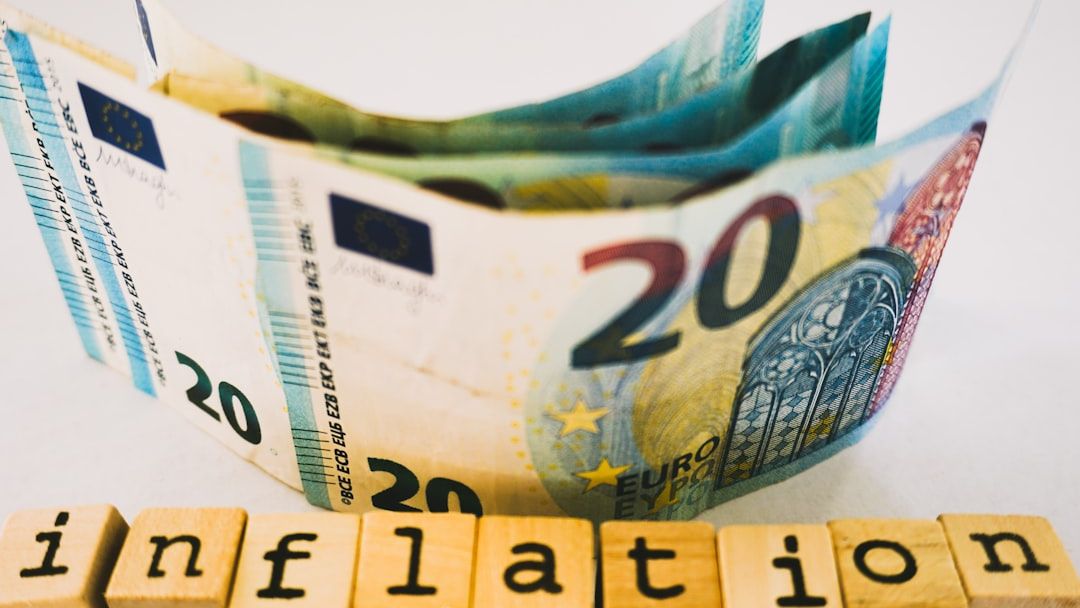

The Real Return Problem: Nominal Gains vs. Actual Wealth
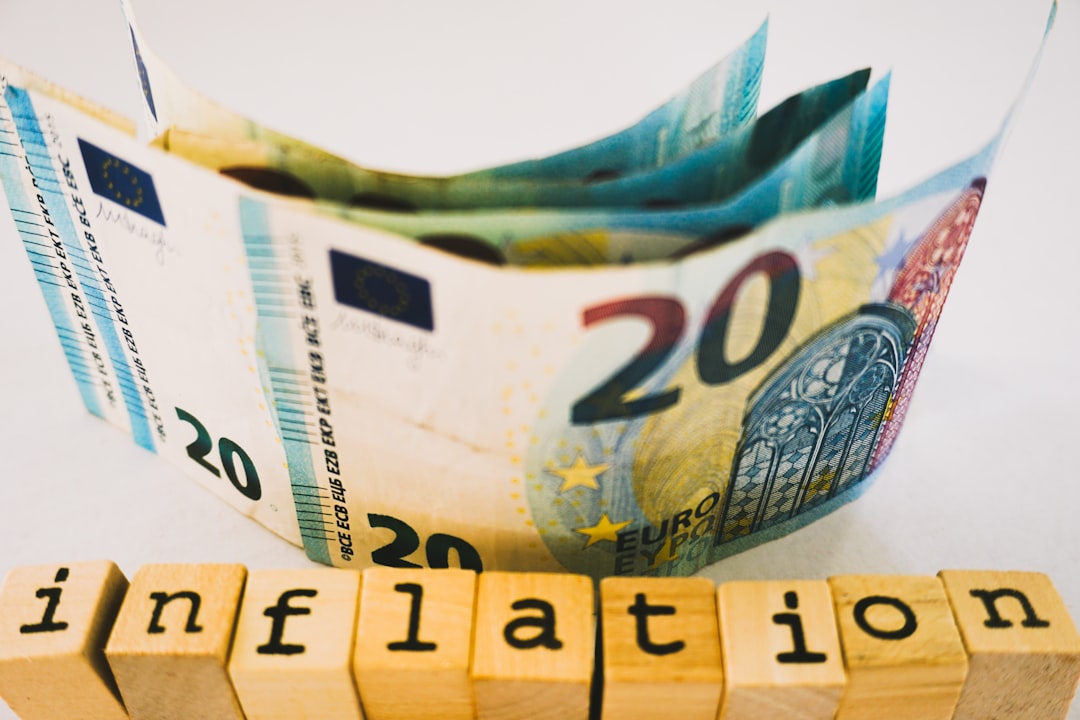
The central illusion of the compound interest story is that a growing balance equals growing wealth. It doesn’t, not automatically. A savings account earning 3% interest when inflation is 4% is actually losing real value at 1% per year, and GDP growth of 5% in a year with 4% inflation is really only 1% real growth. The same math applies to any fixed-income instrument, whether it’s a savings account, a bond, or a certificate of deposit.
Inflation reduces the purchasing power of your returns. A 4% return with 3% inflation gives you only 1% real growth. Always consider real returns when planning investments. This is not a fringe concern reserved for economists. It’s the foundational calculation that most retail savers skip entirely when they celebrate a 5% APY on their high-yield account.
Inflation is often described as a “silent tax.” Unlike income tax, which you see deducted from every paycheck, inflation quietly reduces what your money can buy – year by year, dollar by dollar. A household that earned $60,000 in 2015 and still earns $60,000 in 2026 has seen its real purchasing power fall significantly, because the goods and services that $60,000 could buy a decade ago now cost considerably more.
What Debasement Actually Means and Why It’s Different from Inflation
Debasement refers to the process through which money loses real value over time. We are not talking only about inflation visible in supermarket prices. Debasement concerns a broader devaluation: money buys fewer goods, fewer services, fewer real assets. Inflation is one symptom. Debasement is the underlying condition.
The increase in the money supply, permanent public deficits, and the need to support the economy with expansionary policies lead to a structural loss of value of fiat currencies. Debasement is therefore a form of slow impoverishment. It does not manifest itself with a sudden collapse, but with constant erosion that is reflected in real estate prices, service costs, safe-haven assets that rise, and savings that are worth less.
Even when inflation falls, debasement continues to operate. Money can lose purchasing power not only due to rising prices, but also due to depreciation against other currencies or against real assets. That’s a critical distinction. Inflation statistics can moderate while the erosion of real value continues along a different axis.
The Dollar’s Structural Decline: Not a Blip, but a Cycle Break
The U.S. dollar ended the first half of 2025 with its biggest loss since 1973. The dollar index, which measures the greenback against a basket of currencies of the U.S.’s major trading partners, fell about 11% from January through the end of June. That decline also marked the end of a structural bull cycle for the dollar, which started in 2010 and ended in 2024 with an accumulated gain of about 40%.
The U.S. Dollar Index declined 9.4% in 2025. 2026 opened with weakness, touching a four-year low before rebounding into the U.S.-Iran conflict and standing at a 0.4% gain as of April 22. For savers holding dollar-denominated instruments, this means the denomination itself has become a source of risk, not shelter.
Morgan Stanley Research estimates the U.S. currency could lose another 10% by the end of 2026. If that estimate proves even partially correct, a 5% nominal yield in a savings account leaves a saver firmly in negative real-return territory once currency depreciation is layered on top of domestic inflation.
Tariffs, Trade War, and the Inflation They’re Adding to Your Grocery Bill

One of the most consequential developments of 2025 was Trump’s sweeping new tariff regime. Acting through executive authority, the president increased the effective tariff rate implied from customs duties from 2.1 percent to an estimated 11.7 percent as of January 2026. That’s not a minor policy adjustment. It’s a dramatic repricing of the global goods flowing into American homes and businesses.
Tariffs are taxes on imports and are formally paid by importing firms, but their economic incidence – who ultimately bears the cost – is more complex and can be shared across exporters, wholesalers, retailers and consumers. The best evidence to date suggests that pass-through to consumers now exceeds 50 percent, and while this has been slower and less complete than the near-100 percent pass-through observed under the first Trump administration’s tariffs, it still represents a meaningful burden on households.
Goldman Sachs projects that the current tariff regime will raise inflation by 1 percent between the second half of 2025 and the first half of 2026 relative to its counterfactual path. Add that to existing inflation, and a 5% yield starts looking thinner by the month. The Congressional Budget Office has also estimated that inflation will increase by an annual average of 0.4 percentage points in 2025 and 2026, reducing the purchasing power of households and businesses.
The High-Yield Savings Account: Better Than a Mattress, Not Better Than Inflation
As of 2025 to 2026, online banks like Marcus, Ally, and Wealthfront offer 4 to 5% APY on high-yield savings accounts. These rates track the Federal Reserve’s federal funds rate and will decrease when the Fed cuts rates. That last part is what most savers don’t factor into their planning. The rate is not guaranteed to stay where it is, and the trajectory of Fed policy points toward cuts, not stability.
For savings accounts earning 4.5%, the real return is only about 1.5 to 2.5% – enough to slightly outpace inflation but not build significant wealth. That’s assuming inflation stays at or below current levels, which is far from certain given active tariff pressure and fiscal deficits. When taxes on interest income are factored in, many savers find the real after-tax yield is essentially zero.
A standard savings account yields roughly 5% per annum. When inflation is running at 15%, that 5% is a loss of 10 percentage points in real purchasing power every year. Your balance climbs. Your lifestyle quietly shrinks. The money sits there, getting poorer on your behalf, while you congratulate yourself for being responsible. That quote refers directly to Nigeria in 2026, but the logic applies wherever the yield-to-inflation gap turns negative.
The Fiscal Backdrop: Structural Deficits Compounding the Risk
The 2025 policies have locked in a structurally high $1.8 trillion annual deficit, accelerated the $38 trillion national debt, and deepened the nation’s net indebtedness to the rest of the world. This is the fiscal environment in which savers are being asked to trust that a 5% yield is adequate protection. The math has always been that governments carrying extreme debt loads eventually inflate away the real burden.
The U.S. federal deficit is running at approximately 6 to 7% of GDP at full employment. Federal interest expense is approaching $1 trillion annually. Moody’s downgraded U.S. sovereign debt in May 2025, making it the third major rating agency to do so. When all three major ratings agencies have lowered their assessment of U.S. creditworthiness, ignoring the medium-term implications for real yields and currency strength becomes an increasingly expensive oversight.
2026 opens with an anomalous configuration in which what was historically perceived as the most defensive investment shows a risk profile even higher than equities. Markets today fear public debt more than a slowdown in the real economy, and this fear changes the very nature of the bond segment. Central banks proceed with extreme caution in cutting rates, constrained by their inflation-control mandate, creating a gap between expectations and actual decisions that weighs on the prices of government and corporate bonds.
What Currency Crises Actually Do to Savers: The Historical Record
Such currency collapses leave real GDP 2 to 6% lower than trend three years after the event. Empirical work shows currency and banking crises reinforce each other, with twin-crisis probability rising markedly after a peg break. Currency crises typically cause real GDP to be 2 to 6% below trend three years post-event. In every documented case, savers holding cash or low-yield instruments were among the worst positioned.
When domestic inflation runs persistently above trading partners, the currency often weakens over time to “re-price” local costs. In the extreme, this can become a feedback loop: depreciation raises import prices, which raises inflation, which then pressures the currency again. This dynamic is not hypothetical. Governments raised interest rates by an average of 200 basis points during currency defense attempts in 2024 to 2025.
From 1971 – when the U.S. abandoned dollar-gold convertibility – through 2025, gold rose from $35 per ounce to over $5,000 while the dollar lost approximately 87% of its purchasing power, per Bureau of Labor Statistics CPI data. That long-run number puts the compound interest promise in stark perspective. The dollar’s debasement has been steady, quiet, and very well documented.
What Markets Are Actually Doing: The Flight to Real Assets

In 2024 and 2025, gold prices soared to successive record highs, and 2026 has continued the trend with even greater momentum. Gold has surged above $5,000 per ounce, having reached an intraday high of $5,595 on January 29, 2026, before pulling back. That kind of price action is not driven by sentiment alone. It reflects a very broad institutional reassessment of where real value actually resides.
Gold has recently served both as a debasement hedge – a form of protection against the loss of a currency’s purchasing power due to inflation or currency debasement – and in its more traditional role as a non-yielding competitor to U.S. Treasuries and money market funds. When gold competes favorably with interest-bearing instruments, it tells you something important about what the market thinks those instruments are actually worth in real terms.
As of late 2025, gold continues to outperform major equity benchmarks, including the S&P 500, over multiple time horizons. In the past 12 months alone, gold has more than doubled the returns of the S&P 500 Index. The strategic pivot for investors involves moving away from traditional fixed income and toward “real assets.” The current divergence suggests that the market is preparing for a multi-year period where inflation remains structurally higher than the previous decade’s average.
De-Dollarization: The Slow Erosion of Dollar Demand
The dollar’s share of FX reserves has declined in tandem with the U.S.’s share of global GDP and exports. This is a slow process, not a sudden cliff, but its direction is consistent and the pace has been accelerating. The share of foreign ownership in the U.S. Treasury market has been declining over the last 15 years, in a sign of de-dollarization in bond markets.
The freezing of Russia’s $300 billion in foreign exchange reserves in 2022 was a structural wake-up call. World Gold Council data shows central bank gold purchases averaged approximately 1,000 tonnes per year from 2022 to 2025, versus roughly 200 tonnes per year in the prior decade. Central banks don’t usually make strategic portfolio shifts of that magnitude without a clear underlying thesis about the asset they’re moving away from.
Fundamentally, de-dollarization could shift the balance of power among countries, and this could, in turn, reshape the global economy and markets. The impact would be most acutely felt in the U.S., where de-dollarization would likely lead to a broad depreciation and underperformance of U.S. financial assets versus the rest of the world. Savers holding fixed-yield dollar instruments need to understand that this structural shift is already in motion.
Rethinking the Safety of Fixed Income in This Environment
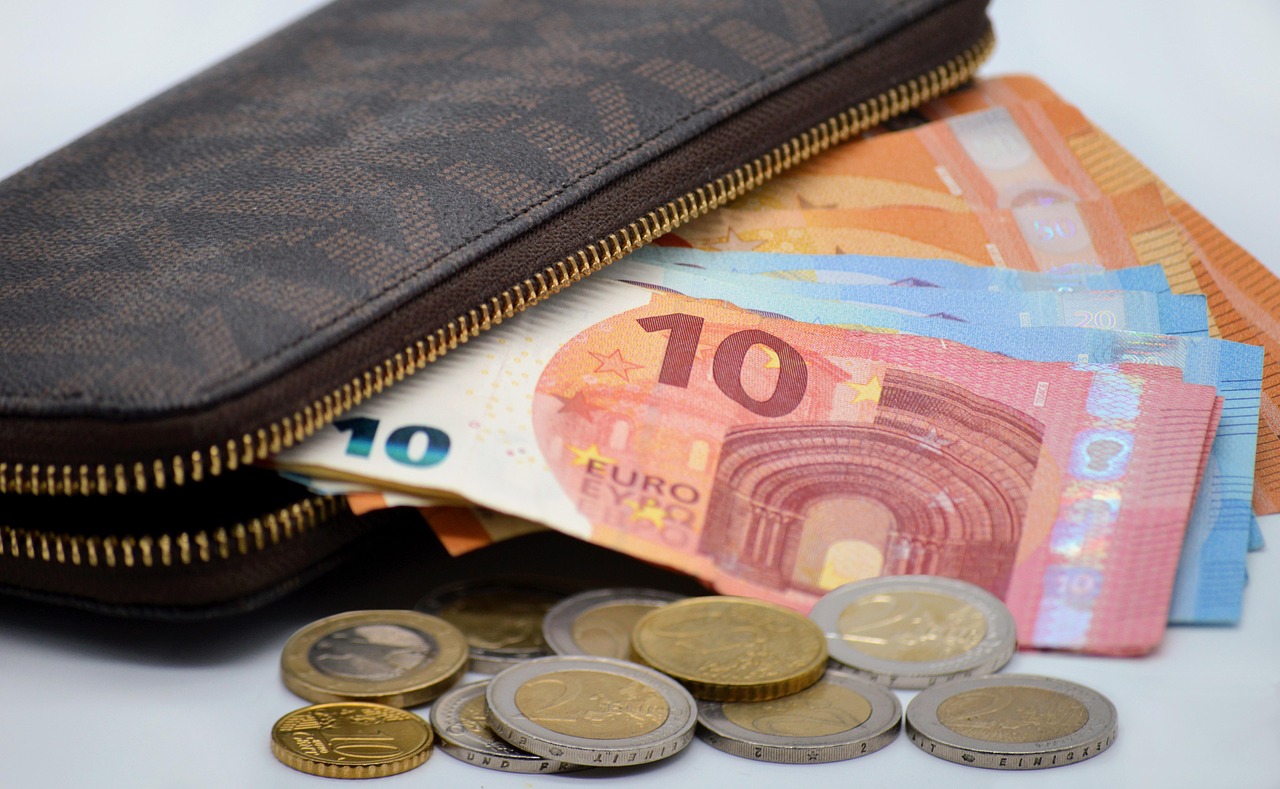
If you buy a fixed-income security like a CD with a 5% yield and inflation rises to 7%, you’re losing money. In an environment where interest rates are low, it can be tough to beat inflation without buying stocks. Bonds, CDs and savings accounts will keep your principal intact but won’t necessarily grow enough to keep pace with inflation. That means you’re less likely to meet your retirement savings goals.
Tax and inflation combined make it hard to grow the real value of money. For example, in the United States, the middle class has a marginal tax rate of around 25%, and the average inflation rate is 3%. To maintain the value of the money, a stable interest rate or investment return rate of 4% or above needs to cover both. That breakeven level shifts upward quickly whenever inflation surprises to the upside, which it has repeatedly done in recent years.
The economy is being hit with cost-push inflation from tariffs and demand-pull inflation from fiscal deficits, while the Federal Reserve has just eased monetary policy. One alternative scenario models the risk that if this combination of tariffs and looser monetary policy causes inflation to accelerate through 2026, the Fed will be forced to reverse course and raise interest rates aggressively to defend its 2% target. For holders of fixed-rate savings instruments, that scenario creates a double bind: inflation erodes purchasing power before the rate hike arrives, then rising rates push down the market value of any bonds already held.
What Savers Should Actually Be Asking in 2026
The better question for 2026 is not “what is my yield?” but rather “what is my real yield after inflation, taxes, and currency depreciation?” Nominal returns don’t reflect purchasing power. A 7% return with 3% inflation produces 4% real growth. Failing to account for inflation overestimates actual wealth accumulation. The solution is to subtract expected inflation from return rates, or use calculators with built-in inflation adjustment to see real purchasing power projections.
Common strategies that can help address this gap include investing in equities, since stock markets have historically outpaced inflation, holding inflation-linked bonds such as U.S. TIPS or UK index-linked gilts, investing in real estate, and keeping liquid savings in high-yield accounts that earn above the inflation rate. None of these are risk-free, but they acknowledge the actual problem in ways that a standard savings account simply does not.
The deeper issue is psychological. Watching a balance rise in nominal terms triggers a feeling of progress even when real purchasing power is falling. Debasement is one of the most relevant processes for an investor with a long-term perspective, because it concerns the progressive loss of purchasing power of money, often in a silent and gradual way, without being perceived as an immediate event. Understanding what debasement means makes it possible to distinguish between assets that suffer from this dynamic and assets that, in theory or in practice, can protect wealth.
The compound interest story is not wrong. It’s just incomplete. In the current environment, with a dollar that shed nearly a tenth of its value in 2025, tariffs adding persistent inflationary pressure, and fiscal deficits that show no credible path to resolution, a 5% nominal yield is less a safety net and more a slow leak. The savers who will fare best in 2026 are the ones who stopped treating “my account balance went up” as the final answer, and started asking what that balance can actually buy.