

The Threat Is No Longer Theoretical
Deepfake-enabled voice phishing attacks surged by over 1,600% in just the first quarter of 2025 compared to the final quarter of 2024 in the United States. That is not a gradual shift. That is a near-vertical climb. Voice deepfake incidents rose 680% year-over-year in 2025, and deepfake fraud losses exceeded $200 million in the first four months of 2025 alone, following a full-year total of $359 million in 2024.
This is not a Hollywood problem or a “big enterprise” issue. It is a small and mid-sized business problem that strikes at the heart of financial controls, with criminals using AI-generated audio and video to impersonate senior leadership with alarming accuracy. The technology is accessible, cheap, and getting better by the month.
How the Scam Actually Works
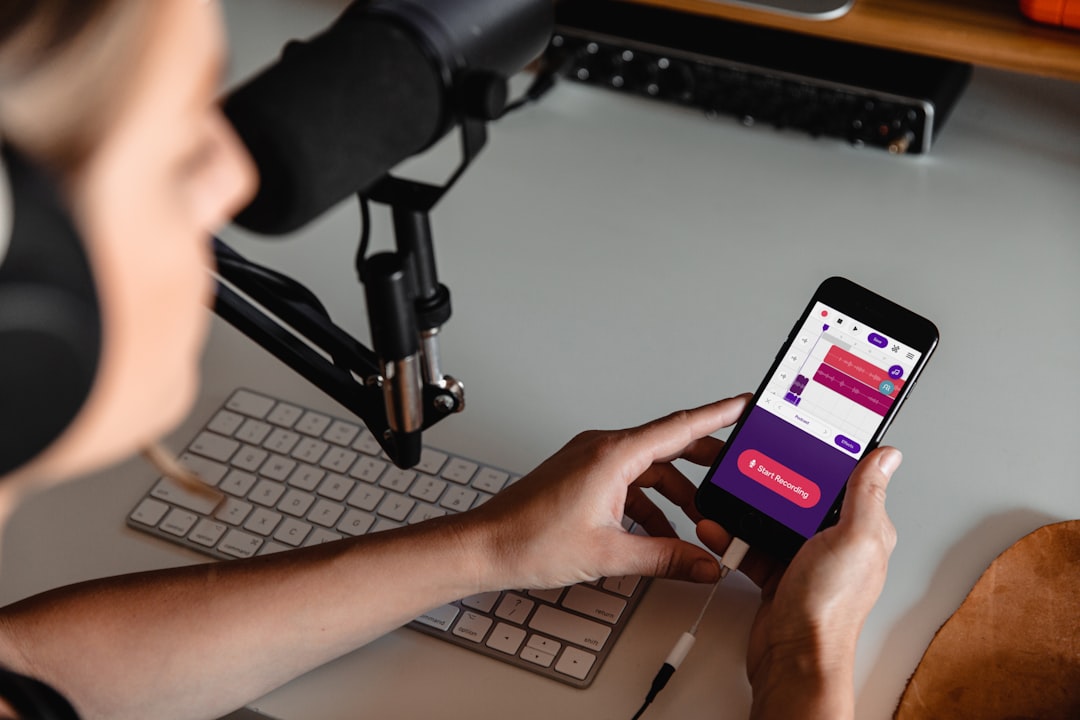
The attacker creates a voice model by feeding voice samples of the targeted individual into a computer algorithm, collecting audio from public sources such as speeches, presentations, corporate videos, and interviews. Cloning someone’s voice takes as little as three seconds of audio from a voicemail, a podcast appearance, an earnings call, or a LinkedIn video, which is all a current AI model needs to generate a fully interactive voice replica in real time.
Once a sufficiently robust deepfake audio profile is built, it can be used with specialized text-to-speech software to create scripts for the fake voice to read. The attacker then calls a trusted employee, typically someone in finance or HR, and delivers a high-pressure request. They impersonate a CEO, CFO, or other executive and contact an employee in the finance or HR department with an “urgent” and “confidential” request, such as processing an emergency wire transfer or changing payroll bank details.
The $25 Million Proof of Concept
In February 2024, a finance worker at global engineering firm Arup was tricked into wiring $25 million to fraudsters through a sophisticated video conference featuring deepfaked versions of the company’s CFO and other executives. The employee thought they were talking to their bosses. They weren’t.
During the subsequent investigation, Hong Kong police determined that the perpetrators developed AI-generated deepfakes of the finance worker’s CFO and colleagues by leveraging existing video and audio files from online conferences and virtual company meetings. Every individual on the video call with the finance employee was a fraud. The stolen funds were never recovered.
Why Small Businesses Are Especially Vulnerable

This is fundamentally a small and mid-sized business problem, striking at the heart of financial controls. Criminals are now using AI-generated audio and video to impersonate senior leadership with terrifying accuracy. Smaller businesses tend to have fewer verification layers, less formalized payment procedures, and a culture of trust that makes an urgent call from the boss feel entirely natural.
Finance teams face the greatest risk because, unlike other departments, they can move money directly. They have authority to approve wire transfers and payment requests and handle urgent transactions regularly. Attackers know this, which is why CFOs and finance directors have become primary targets for deepfake fraud.
The Numbers Behind the $50,000 Threshold
Average losses from deepfake fraud now exceed $500,000 per incident, with large enterprises facing average losses of $680,000. Individual cases have resulted in losses ranging from $243,000 to $50 million. However, those headline figures from major corporations mask the quieter, more common hits on smaller operations.
Among organizations that lost money to a deepfake attack, roughly three in five reported losses above $100,000, and nearly one in five reported losses above $500,000. These are only the losses that were reported. The actual total is far higher. For a small business with thin margins, even a $50,000 transfer can be genuinely ruinous.
The Psychological Lever These Scams Pull

Deepfake scams are so effective because they combine hyper-realistic AI-generated media with proven social engineering tactics that exploit human trust, authority, and a sense of urgency. These scams are psychologically persuasive and difficult to detect by untrained employees. The voice of a known authority figure short-circuits normal skepticism in a way a suspicious email simply cannot.
Human detection accuracy for deepfakes can drop to as low as 24.5% for high-quality media, AI classifiers lose up to half their accuracy in real-world deepfake detection scenarios, and some employees show detection rates as low as 5% in voice cloning situations. Scammers use extreme urgency precisely to prevent you from pausing to verify, because slowing down for even 30 seconds breaks the entire attack.
Where Criminals Get the Audio

Source audio is easily scraped from social media posts, podcasts, corporate webinars, or YouTube videos. A business owner who has appeared on a local news segment, a chamber of commerce panel, or even a LinkedIn Live session has likely already given scammers everything they need. A scammer finds a public social media post, such as a TikTok, Instagram Reel, or YouTube video, and extracts just three to fifteen seconds of clean audio.
A 2024 Deloitte study found that scamming software sells on the dark web for as little as $20, and an AI scam can go live in under two minutes. The barrier to entry has essentially collapsed, turning what was once a sophisticated operation requiring technical expertise into something almost anyone with bad intentions can execute over a lunch break.
Real Cases, Real Losses
In March 2019, a UK-based energy company lost $243,000 after criminals cloned the CEO’s voice using AI, called the finance director, and instructed him to transfer funds to a supplier in Hungary. The fraudsters mimicked the CEO’s tone, accent, and cadence so precisely that the director believed the call was authentic. The attackers added urgency to the request, exploiting authority bias and bypassing normal verification procedures. Once the funds were wired, they were quickly rerouted across several bank accounts, making recovery impossible.
In March 2025, a finance director at a multinational firm in Singapore joined what seemed like a routine Zoom call with senior leadership, where the CFO appeared on screen alongside other executives. Everyone looked right. Everyone sounded right. The finance director listened to the urgent request for a fund transfer and authorized it. None of those executives were real. Every face on that video call was a deepfake, every voice was artificially generated, and the entire meeting was fabricated using AI technology and publicly available media of the actual executives.
The Regulatory and Detection Gap

While the Federal Trade Commission does not have specific data on voice-cloning scams, over 845,000 imposter scams were reported in the U.S. in 2024. The law has not kept pace with the technology. While the threat grows exponentially, regulatory responses remain fragmented.
Content-based deepfake detection is increasingly unreliable as generation quality improves, and Gartner predicts that by 2026, roughly a third of enterprises will find standalone identity verification solutions unreliable in isolation. Generative AI-enabled fraud losses are projected to hit $40 billion by 2027, up from $12.3 billion in 2023, representing a 32% compound annual growth rate. The detection tools are racing against a technology that keeps improving faster.
What Small Business Owners Can Do Right Now
Building a zero-trust callback workflow is the most effective, low-cost defense to implement. Create a mandatory, non-negotiable policy that any unsolicited phone call requesting a sensitive action, such as transferring funds, changing payment details, or providing credentials, must be verified through an out-of-band channel. This single step alone disrupts the majority of voice cloning attacks.
The Safe Phrase Protocol is straightforward in principle: a specific word or phrase known only to a defined group of trusted individuals, such as key business partners or an executive’s inner circle. It remains one of the most effective defenses against AI impersonation because AI cannot access private, offline memories. Organizations using call verification protocols have reduced vishing success rates by up to 46%, and employee training programs lower phishing susceptibility by up to 70% over 12 months.
The Bigger Picture for 2026 and Beyond

According to the World Economic Forum’s Global Cybersecurity Outlook 2026, nearly three in four organizations were directly affected by cyber-enabled fraud in 2025. For decades, cybersecurity focused on defending systems, networks, and data. Between 2024 and 2026, enterprises face a more destabilizing challenge: the weaponization of trust itself. Deepfakes, including synthetic audio, video, and images generated by AI, have evolved from novelty and entertainment into powerful tools for fraud, manipulation, and deception.
The threat of deepfakes extends well beyond financial loss. It can lead to reputational damage, legal liability, and lasting damage to a brand’s integrity. A recording of a CEO making offensive comments could go viral before the company can prove it is a fake. Organizations need a crisis communication plan that specifically addresses deepfakes, since voice phishing is just the beginning.
The $50,000 wire transfer scam is not an edge case anymore. It’s a repeatable playbook, executed daily, against businesses that still trust their own ears. The most important shift a business owner can make in 2026 is a simple one: treat any urgent, unexpected voice request for money as unverified by default, no matter how familiar it sounds. The technology is sophisticated. Your process doesn’t need to match it in complexity. It just needs to add a 30-second pause.