

A Signal Without a Name
Scientists have found traces of DNA that they say is evidence that prehistoric humans procreated with an unknown hominin group in West Africa. There aren’t any bones or ancient DNA to prove it – the evidence is found entirely in the genes of modern West Africans. That’s precisely why the term “ghost” stuck. Researchers don’t have a clear identity for this archaic group. That’s why they use the term “ghost” – it doesn’t seem to be particularly closely related to the groups from which scientists currently have genome sequences. It exists as a pattern, an anomaly in the data that no known species can account for.
The Study That Brought It to Light
UCLA researchers Arun Durvasula and Sriram Sankararaman compared Neanderthal and Denisovan DNA with genomes of 405 individuals from West Africa. They found differences that could be best explained by introgression by an unknown archaic hominin whose ancestors split off from the human family tree before Neanderthals. The research was published in the journal Science Advances. Their computer modeling technique overcomes the challenges of sparse fossil records, enabling the discovery of genetic contributions from archaic hominins even when fossils or DNA are lacking.
How Much Ghost DNA Is Actually There
Four West African populations – Yoruba, Esan, Mende, and Gambian – derive between two and nineteen percent of their genetic ancestry from a yet-undiscovered species of archaic hominin that diverged before the split of modern humans and the ancestors of Neanderthals and Denisovans, according to the research from UCLA. That’s a substantial proportion by any measure. The parameter estimates are largely consistent across the African populations: split times of 360,000 years to 1.02 million years ago, admixture times of zero to 124,000 years ago, admixture fractions ranging from 2 to 19 percent, and effective population sizes ranging from approximately 22,000 to 28,000.
When and Where the Mixing Happened

The scientists think the interbreeding happened roughly 50,000 years ago – around the same time that Neanderthals were breeding with modern humans elsewhere in the world. It’s not clear whether there was a single interbreeding event, though, or whether it happened over an extended period of time. The data suggest this introgression may have happened relatively recently, or it may have involved multiple populations of archaic humans, hinting at complex and long-lived interactions between anatomically modern humans and various populations of archaic hominins. The picture that emerges is not a single chance encounter but potentially a recurring pattern of contact across tens of thousands of years.
Older Than Neanderthals on the Family Tree
Using whole-genome data from present-day West Africans, scientists found a small portion of genetic material that appears to come from a mysterious lineage thought to have split off from the human family tree even before Neanderthals. That ghost population diverged from the direct ancestors of present-day Yoruba and Mende people more than one million years ago, the scientists estimate. To put that in perspective, the Neanderthal lineage split from ours somewhere between 400,000 and 600,000 years ago. Whatever this ghost ancestor was, it branched off even earlier.
A New Method Was Needed to Find It
Historically, archaeologists and genetic researchers required reference DNA in order to compare and draw conclusions from fossilized genetic material. Developments in statistical analysis, however, meant that the team was able to look back hundreds of thousands of years without any reference material. Using a method that can identify segments of archaic ancestry without the need for reference archaic genomes, the team built genome-wide maps of archaic ancestry in the Yoruba and the Mende populations. That methodological innovation is what made the discovery possible – a clever workaround for the absence of any physical fossil evidence.
The Genes the Ghost Left Behind

Some of the archaic genes found at high frequency across both the Yoruba and Mende populations include NF1, a tumor suppressor gene, MTFR2, a gene involved with mitochondrial aerobic respiration in the testis, HSD17B2, a gene involved with hormone regulation, KCNIP4, a gene involved with potassium channels, and TRPS1, a gene associated with trichorhinophalangeal syndrome. Three of these genes – NF1, KCNIP4, and TRPS1 – have been found in previous scans for positive selection in the Yoruba population. The fact that these segments appear at high frequency and show signs of positive selection suggests they weren’t just tolerated but were actively useful to the people who carried them.
The Fossil Clue From Nigeria
The Iho Eleru skull from Nigeria dates to approximately 13,000 years old and may be evidence of modern humans possessing possible archaic human admixture, or of a late-persisting early modern human. Analysis indicates that the Iho Eleru skull possesses neurocranial morphology intermediate in shape between archaic hominins – including Neanderthals and Homo erectus – and modern humans. The dating of the Iho Eleru fossil to the late Pleistocene implies that the transition to anatomical modernity in Africa was more complicated than previously thought, with late survival of archaic features and possibly deep population substructure during this time.
An African Story That’s Been Underfunded and Overlooked
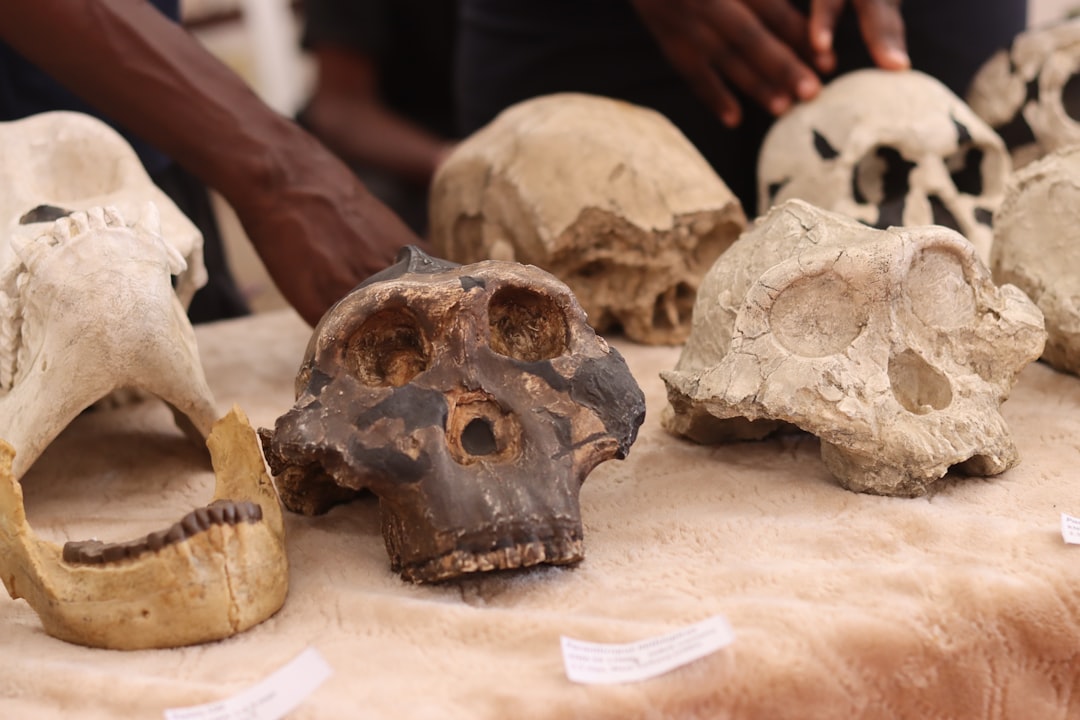
Compared with Neanderthals, where there is abundant DNA fossil evidence, physical samples are much harder to come by in Africa. The climate on the continent has made things challenging – the conditions have to be right for fossils not to totally disintegrate in order to recover DNA. The sparse fossil record and the difficulty in obtaining ancient DNA have made it challenging to dissect the contribution of archaic hominins to genetic diversity within Africa. While several studies have revealed contributions from deep lineages to the ancestry of present-day Africans, the nature of these contributions remains poorly understood. The result is a scientific blind spot at the very center of human evolution’s deepest history.
One Ghost, or Several?
It’s possible that the ghost DNA found in this study comes from multiple groups. Within Africa, researchers don’t know how many archaic groups might have been involved, and the study doesn’t determine that. It tells us that there was integration, but it could have been from more than one archaic population, in theory. Despite the evidence for archaic admixture, it cannot be ruled out that deep population structure confounds the inference of archaic ghost introgression in Africa. A structured model with two weakly differentiated Homo populations connected by gene flow over evolutionary time can also explain the observed signals. The ghost ancestor may turn out to be one population, multiple populations, or something even more complicated – science hasn’t settled the question yet.
What This Means for the Story of Human Origins
The findings on ghost DNA, published in the journal Science Advances, further complicate the picture of how Homo sapiens – or modern humans – evolved away from other human relatives. As the ancestral homeland of our species, Africa contains elevated levels of genetic diversity and substantial population structure. African genomes are heterogeneous, containing mixtures of multiple ancestries, each of which experienced different evolutionary histories. The old model of a simple, linear march from early hominin to modern human has been quietly dismantled, one genome at a time.
The ghost ancestor story is, at its core, a reminder that the human family tree was never a neat line. It was more of a tangled thicket – full of branches that crossed, merged, and disappeared. The DNA evidence found in West Africans today doesn’t just complicate the past. It preserves it, encoded silently in living people, waiting for better tools and bolder questions to reveal what it is.