
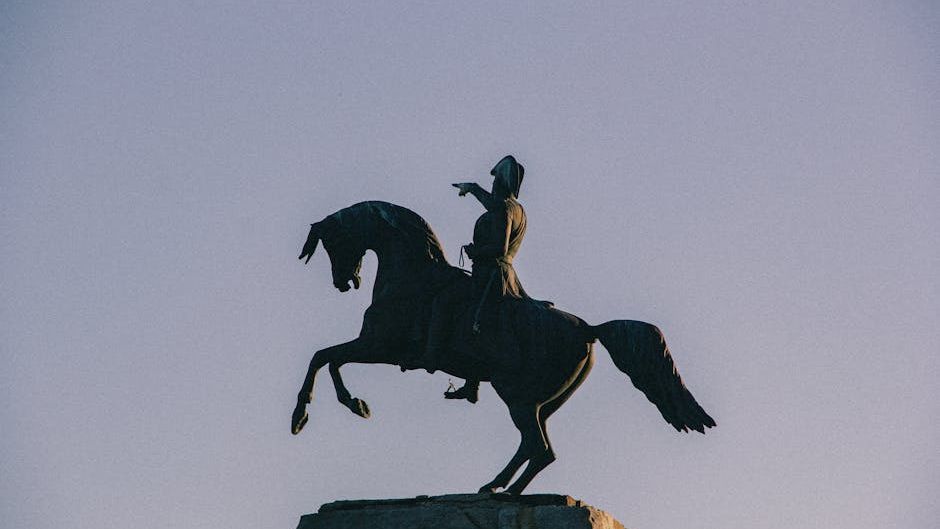
Most Americans can recite the story without thinking twice. A lone silversmith, a dark road, a warning cried into the night. Paul Revere is one of the most iconic heroes of the American Revolution, immortalized by Henry Wadsworth Longfellow in his 1860 poem, “Paul Revere’s Ride.” The problem is that the story most of us know is more poem than history. The actual events of April 18 to 19, 1775 were messier, more collaborative, and far more interesting than the legend lets on.
A Poem Written for the Wrong Reasons
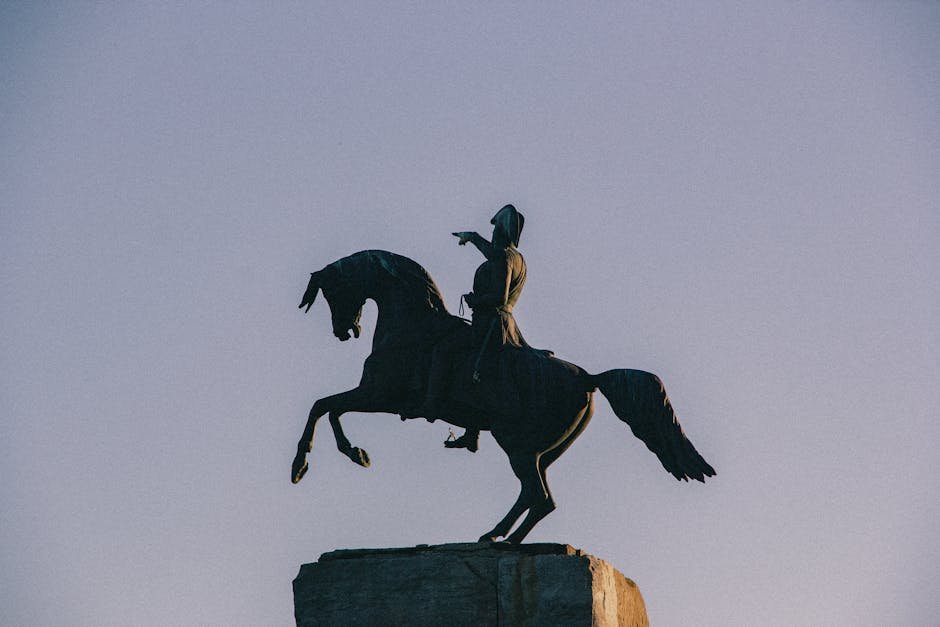
The foundation of the Revere myth wasn’t built on historical research. It was built on politics. Longfellow was writing in a time of growing national crisis, with war clouds forming between North and South, and wrote a poem more about national unity than the true story of Paul Revere. His intent was to stir patriotic emotion, not to record events accurately.
In 1860, Longfellow wrote a fictionalized account of the events, which was published in The Atlantic Monthly in 1861. Although the poem made many people aware of Revere’s heroics, it also created many of the myths associated with the Midnight Ride. Longfellow published “Paul Revere’s Ride” in The Atlantic Monthly magazine, which appeared on newsstands the day South Carolina seceded. At the time, people viewed it as a call to arms for the North.
Longfellow, an ardent abolitionist, designed the poem to stir up patriotic fervor, not to record history. That distinction matters enormously. A work of deliberate political inspiration became, over generations, a substitute for genuine historical understanding.
Revere Wasn’t Even Famous When He Died
Here’s the detail that surprises most people: Revere’s ride was essentially forgotten during his own lifetime. When Revere died in 1818, his obituary in the Columbian Centinel hailed him as “one of the earliest and most indefatigable patriots and soldiers of the Revolution,” but there wasn’t a single mention of the now famous “midnight ride.” It wasn’t until Longfellow’s poem, written 42 years after Revere’s death, that the events from that night became the most prominent part of the revolutionary’s legacy.
Locally, he was remembered as a popular figure and successful businessman, with one obituary stating that “seldom has the tomb closed upon a life so honorable and useful.” Nationally, though, his life and his death passed by mostly unnoticed, but 40 years later, a poem turned Paul Revere into a folk hero and national icon.
This tells us something worth sitting with. The man himself, and the people who actually lived through the Revolution, did not consider the ride his defining act. That elevation came from a poet nearly half a century later.
The Mission Had Two Riders from the Start
On April 18, 1775, Dr. Joseph Warren learned through Boston’s revolutionary underground that British troops were preparing to cross the Charles River and march to Lexington, presumably to arrest John Hancock and Samuel Adams. Fearing an intercept by the British, Warren had devised a redundancy plan to warn Hancock and Adams. He would send one rider by land and one by sea.
Warren sent for Revere and William Dawes in the evening on April 18, once the British intention was clear. Revere would take the short but more dangerous water route from Boston across the harbor to Charlestown, while Dawes would ride out across Boston Neck. This was a deliberate strategic decision, not an afterthought.
It beggars belief to think the colonial leaders would assign such a critical task to just one man as Longfellow’s poem infers. Of course they didn’t. Revere was only one of at least two men specifically assigned to carry the message of the British movements to critical personnel. The entire structure of the operation assumed that one rider might be caught.
William Dawes: The Man Who Made It Out of Boston
While every schoolchild knows of the midnight ride of Paul Revere, Dawes made an even more daring gallop out of Boston that same April night in 1775. Unlike his silversmith counterpart, he managed to evade capture by the British. His exit from the city alone was a feat of nerve.
Dawes left the city via a narrow strip of land called the Boston Neck, just before British guards closed access to or from the city. According to some accounts, Dawes eluded the guards by slipping through with some British soldiers or attaching himself to another party. Other accounts say he pretended to be a bumbling drunken farmer. The simplest explanation is that he was already friendly with the sentries, who let him pass.
Dawes arrived at his destination, Lexington’s Hancock-Clarke House, at 12:30 a.m., about half an hour after Revere, who had traveled a shorter distance on a faster horse. He reached his destination, completed his objective, and kept his liberty – which is more than can be said for Revere later that same night.
Revere Never Yelled “The British Are Coming”
The most repeated line in the entire mythology may also be the least accurate. Passing through the towns of Somerville, Medford, and Menotomy (Arlington), Revere did not yell “the British are coming!” Instead, accounts show that Revere passed the message of “the Regulars are coming out.”
The distinction was practical, not poetic. Since they were all British, the warning would have seemed nonsensical. Colonists in 1775 still considered themselves British subjects. Shouting “the British are coming” would have confused everyone.
Everyone knew what “the Regulars are coming out” meant, and as Revere passed through, more alarm riders rode out, signal guns fired, church bells rang, all alerting the countryside to the coming threat. As the alarm spread, Minutemen grabbed their weapons and headed for town greens, followed by the rest of the Militia. The actual warning system was a chain reaction, not a solo performance.
The Lantern Signal Wasn’t for Revere
Another cornerstone of the legend doesn’t hold up to scrutiny either. The signal lanterns were not for Paul Revere. The signal lanterns were for the Patriots in Charlestown, not Revere. He had already arranged the signal system in advance so that others across the harbor could receive the message even if he was stopped before crossing.
Two signal lanterns briefly showed from the Old North Church steeple, a prearranged signal designed by Revere to alert the alarm network across the Harbor. The famous “one if by land, two if by sea” signaled that the British would row across Boston harbor instead of marching out over the neck.
This actually speaks to something Revere deserves credit for: his organizational skill. By the time the British finished unloading at Cambridge, the alarm had already reached Concord; Revere’s network had worked splendidly. The network was his real contribution, not the horse ride itself.
Revere Was Captured – The Poem Forgets to Mention This

Longfellow’s poem ends triumphantly. The real night did not, at least not for Revere personally. Revere’s famous ride ended on the outskirts of Lincoln when he, Dawes, and Prescott ran into a British patrol. While Dawes and Prescott escaped, Revere was captured, playing no further role in the events of April 19.
Prescott and Dawes escaped; Revere was held for some time, questioned, and let go. Before he was released, however, his horse was confiscated to replace the tired mount of a British sergeant. Left alone on the road, Revere returned to Lexington on foot in time to witness the latter part of the battle on Lexington Green.
He walked. Without his horse. Back the way he came. That image tends not to make it into the schoolbooks, but it is what actually happened after the famous ride came to an abrupt stop at a British roadblock.
Samuel Prescott: The Man Who Actually Finished It
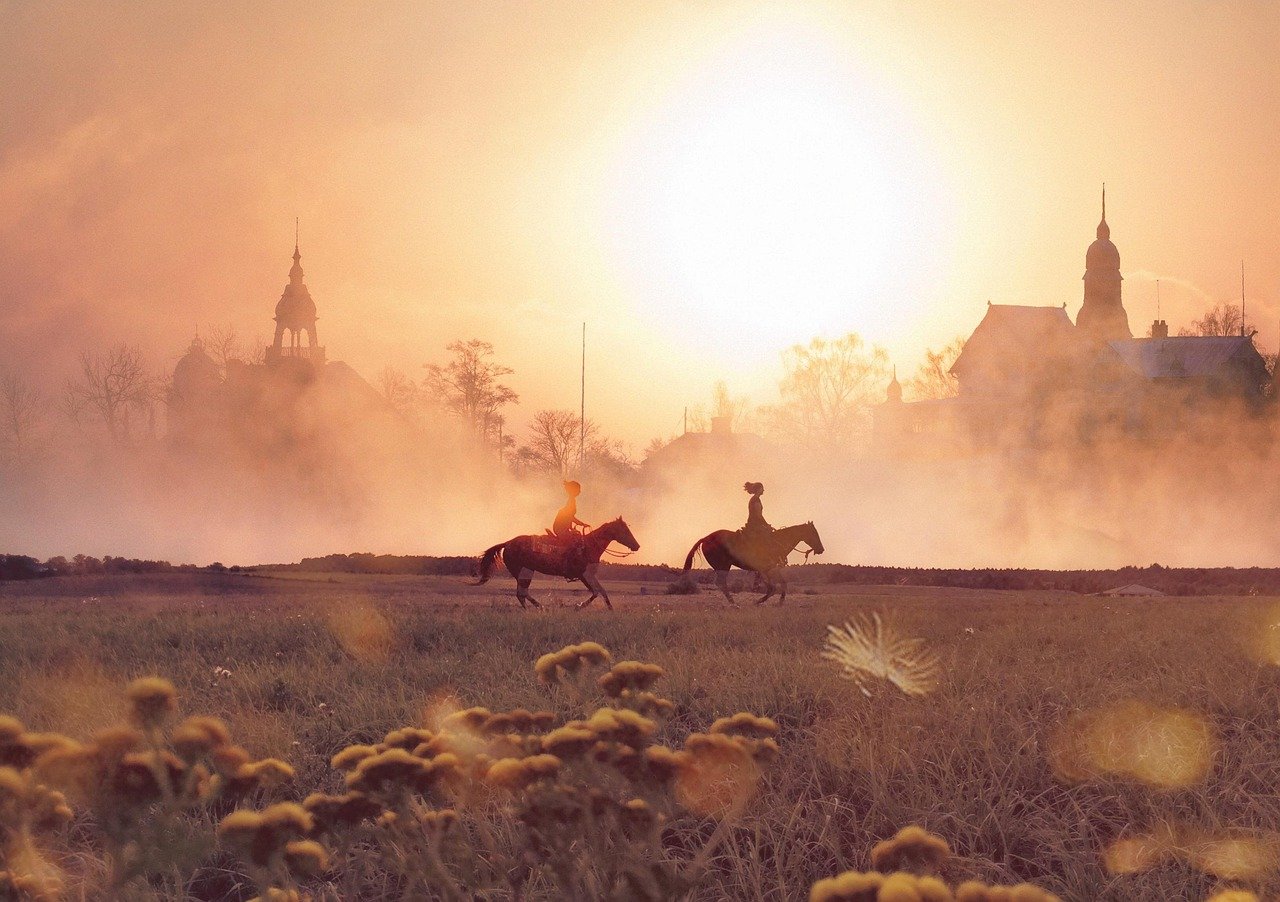
Samuel Prescott was headed home to Concord from the home of a lady friend in Lexington when he encountered Revere and Dawes on horseback around 1 a.m. on April 19. He joined them almost by coincidence. Yet he was the only one of the three who actually completed the mission.
Upon hearing about their mission, Prescott offered to assist Revere and Dawes, pointing out that he was known in the area and residents would be more likely to believe a warning coming from him rather than strangers. Prescott, according to Revere’s account, took off on horseback towards a stone wall, jumped his horse over it, and disappeared into dense woods. After riding through woods and swamp, Prescott emerged at the Hartwell Tavern. He alerted the Hartwell family who, in turn, raced off to warn others.
When Prescott arrived in Concord, he gave word to the sentry there and the Concord First Parish Church bell was rung to alert the town. Thus Prescott completed the second objective given to Revere and Dawes. He was the only participant in the ride to reach Concord.
Up to Forty Riders Spread the Alarm That Night
The entire framing of a singular hero on a singular horse misses what the night actually was: a coordinated, expanding alarm network. Along the way, Revere and Dawes tried to warn people that the “regulars are coming out.” Other riders joined them, spreading the message, and by the early hours of April 19, probably forty men rode through the countryside warning their neighbors of the impending invasion.
Sons of Liberty members Paul Revere and William Dawes prepared the alert, which began when Robert Newman, the sexton of Boston’s Old North Church, used a lantern signal to warn colonists in Charlestown of the British Army’s advance by way of the Charles River. Revere and Dawes then rode to meet John Hancock and Samuel Adams in Lexington, alerting up to 40 other Patriot riders along the way.
Visitors to the Paul Revere House can see maps tracing the routes of the three known riders, though the Paul Revere Memorial Association emphasizes that many other nameless riders also played vital roles. The alarm was a network, not a narrative.
The Rider Who Went the Farthest
If raw distance is the measure, Paul Revere barely registers compared to one largely forgotten figure. Israel Bissell was assigned to alert American colonists of the news and rally them to assist the Massachusetts minutemen. The Lexington Alarm message was carried by Bissell through eastern Massachusetts, Connecticut, New York City, New Jersey, and ultimately to Philadelphia, Pennsylvania.
The numbers are stark. Bissell averaged about 69 miles per day on a 345-mile journey, requiring him to obtain fresh horses along the route. Revere’s ride covered roughly 24 miles before it ended at a British patrol. Historians do debate the precise details of Bissell’s route and whether one rider covered the full distance, or whether primary documentary evidence for such a solo feat is absent, with historical records indicating a relay system of riders. Still, the message itself traveled to Philadelphia and reached the Continental Congress, a feat that dwarfs what any single night rider accomplished around Lexington.
Isaac Bissell and Israel Bissell are often confused with one another. Many historians credit one or both of them with participating in the Lexington Alarm, in which patriot messengers spread the news that the American Revolutionary War had begun. The historical record here is genuinely murky, which is itself a reminder of how selectively history tends to remember.
Why Revere Got the Credit and the Others Did Not

It comes down to documentation and rhyme. Revere was certainly more prominent in Boston’s political underground and business circles, but more importantly, he had written detailed first-person accounts of his mission, while very few records of Dawes and his ride exist. Prescott was even more obscure. Nobody is sure what happened to Prescott during the war, though one account suggests that he died in a British prison in 1777. Unlike Dawes, it appears unlikely he had any descendants who would seek to promote his legacy.
Revere never attempted to claim all the glory for that fateful night. In firsthand accounts, he appropriately credits both Dawes and Prescott. The erasure of his companions was done by Longfellow, not by Revere himself.
“Dawes” may not have rhymed as nicely as “Revere” when it came to writing classic American poetry, but that does not detract from the courage and commitment William Dawes showed as he rode through the night, warning the countryside and patriot leaders that the British had left Boston and were heading for Concord. That observation, simple as it is, contains the whole problem in a sentence.
Conclusion: The Network Behind the Legend
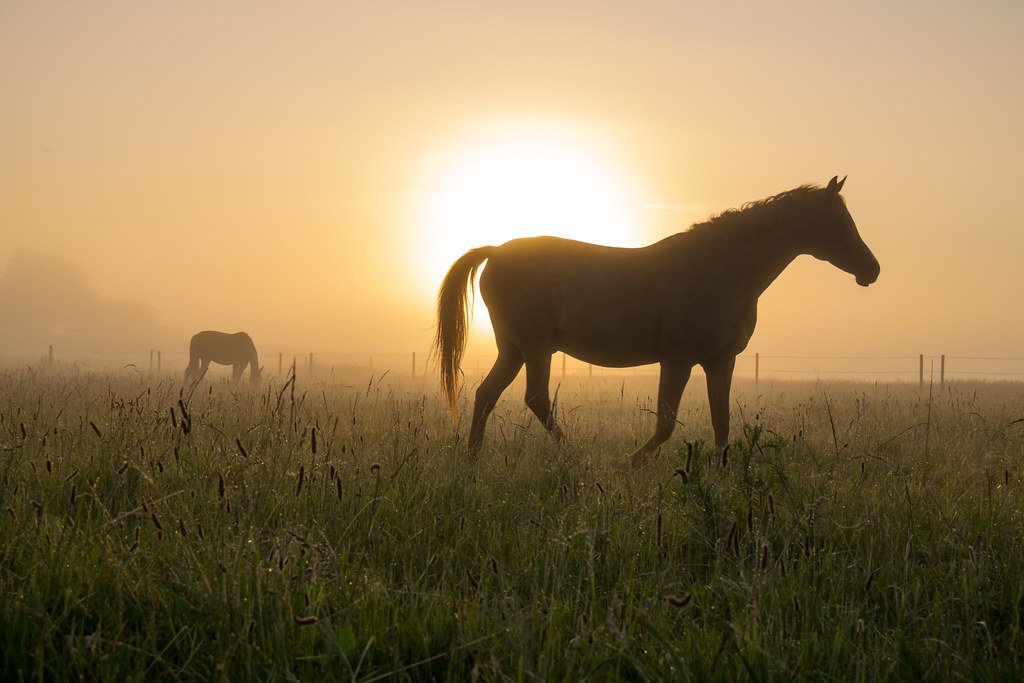
Revere was one of many riders who rode through the countryside, spreading the alarm on April 18, 1775. That fact doesn’t diminish what he did. His organizing of the lantern signal, his intelligence network, his years of service as a courier for the patriot cause – these are real and consequential contributions. Revere served for years as the principal rider for Boston’s Committee of Safety, making journeys to New York and Philadelphia in its service.
The problem isn’t Paul Revere. The problem is what the poem did to everyone else. William Dawes made a bolder exit from Boston and avoided capture. Samuel Prescott was the only one of the three to reach Concord, the entire point of the second leg of the mission. Dozens of other riders fanned out across the countryside that night. By giving the minutemen advance warning of the British Army’s actions, the ride played a crucial role in the Patriot victory in the subsequent battles at Lexington and Concord.
That victory belonged to all of them. History just happened to have a better poet on Revere’s side.