


There is a well-documented quirk in the human brain that makes most people believe they are slightly more charmed than the average person. Psychologists have studied it for decades. It shows up in financial decisions, health choices, personal goals, and yes, even in the personality types that astrology has long described as naturally lucky, bold, and fearless.
Sagittarius and Aries are the two zodiac signs most consistently associated with optimism, risk tolerance, and a deep faith in their own fortune. Whether you take astrology seriously or simply find it a useful mirror for personality patterns, the overlap between what astrological tradition says about these signs and what behavioral science says about the optimism bias is genuinely worth exploring.
What the Optimism Bias Actually Is

When it comes to predicting what will happen to us tomorrow, next week, or fifty years from now, we tend to overestimate the likelihood of positive events and underestimate the likelihood of negative ones. For example, people consistently underrate their chances of getting divorced, being in a car accident, or suffering from cancer.
This phenomenon is known as the optimism bias, and it is one of the most consistent, prevalent, and robust biases documented in psychology and behavioral economics. It is not a rare personality quirk. Across many different methods and domains, studies consistently report that a large majority of the population, about four in five people according to most estimates, display an optimism bias.
The concept of optimistic bias was first described and demonstrated by psychologist Neil Weinstein in 1980, and various studies on the concept have since been conducted in the field of psychology. It has since grown into a cornerstone topic in behavioral science, neuroscience, and economics alike.
The Four Core Traits That Define It

Optimistic bias can be defined by four key attributes: underestimation of personal risk, vague confidence, positive future prediction, and lack of risk recognition. These are not abstract concepts. They show up in everyday decisions, from starting a new business to making an impulsive bet.
Factors affecting optimistic bias are generally not demographic characteristics but psychological factors related to perception or disposition, such as an individual’s general positivity bias, risk perception, egocentric way of thinking, self-efficacy, involvement based on experience, and illusion of control.
The optimism bias is essentially the belief that the agent must be in an environment that affords positive outcomes. It is important to consider the relationship between optimism and the environment to understand when optimism may not be adaptive, such as environments that do not afford good outcomes. That last point matters enormously when discussing high-stakes risks.
Why Aries Personality Traits Mirror Optimism Bias

Aries, ruled by Mars and belonging to the element of Fire alongside Leo and Sagittarius, is one of the most active zodiac signs. It is in their nature to take action, sometimes before they think about it. This impulsiveness maps almost directly onto the “vague confidence” and “lack of risk recognition” attributes of optimism bias.
Even though Aries can be wise and save money for a rainy day, this is not often the case, as the joy of spending and taking risks is even greater. They live in the present and aren’t that focused on the future, and this can make them irrational and hasty when it comes to financial decisions.
Aries makes quick decisions in any situation and often relies on energy rather than reasoning. Impulsive actions and inconsistent behavior may lead to burnout, resulting in setbacks in both professional and personal life. The pattern is familiar to anyone who has watched an Aries plunge headlong into a venture that others flagged as risky from the very start.
Why Sagittarius Leans Even Harder Into Overestimation

Sagittarius, the final fire sign, is characterized by its adventurous and optimistic spirit. Ruled by Jupiter, these individuals are known for their love of freedom and exploration. Sagittarians are often wanderers, drawn to travel and discover new philosophies.
Due to their knack for contemplation and critical thought, a Sagittarius is prone to overestimating their intellect and can come across as egotistical. Narcissism has a tendency to lead to self-indulgence, and Sagittarians can get carried away with it. In high-stakes situations, this combination of intellectual overconfidence and restless ambition is a recognizable setup for risk miscalculation.
Sagittarius has the opposite problem from risk-avoidant signs. They are liable for putting themselves at risk by indulging in risky behaviors. They make the mistake of assuming that they are invincible or untouchable, which gets them into trouble. That assumption of invincibility is almost a textbook description of the optimism bias at work.
The Aries and Sagittarius Combination: A Double Dose of Fire

Being a risk taker is an understatement for the Aries-Sagittarius combination. With both signs desiring change and being very comfortable switching things up, it comes naturally to take risks. When these two fire energies reinforce each other, either in a single person’s chart or in shared temperament patterns, the tendency to overestimate favorable outcomes can become especially pronounced.
The Sagittarius influence adds an air of optimism and very laid-back, friendly components. The fiery combination of passion and warm, adventurous energy makes for a person who readily attracts others and makes things happen. A Sagittarius influence creates such an easygoing appearance that it can seem like they don’t take anything too seriously.
In practical terms, this easygoing confidence is an asset in normal life but becomes a liability when stakes are genuinely high, whether that means financial investments, physical risks, or major life decisions made without adequate information.
What Behavioral Science Says About Illusion of Control

Research has shown that the illusion of control is the strongest predictor of risk propensity and investment performance. Both Aries and Sagittarius are described in astrological tradition as signs that believe deeply in their own ability to direct outcomes, which is precisely what the illusion of control describes in psychological terms.
In public health and safety contexts, people are more likely to think they will not be harmed in a car accident if they are the one driving the vehicle. Someone who believes they have a lot of control over becoming infected with HIV is more likely to view their personal risk of contracting the disease as low. The pattern holds across domains.
Self-efficacy, as an individual’s subjective psychological factor, is an individual’s belief in their ability to escape from a particular risk, and acts as a psychological mechanism. Self-efficacy decreases one’s perception of risk to oneself rather than to others and consequently increases the difference between the perception of risk to oneself and to others, which may lead to an increase of optimistic bias.
Optimism Bias in Financial Decisions and Risk-Taking

Overconfidence and unrealistic optimism together tend to increase people’s willingness to take financial risks. This finding challenges the traditional idea in portfolio theory that more risk-averse people are less likely to engage in risky financial activities.
Research shows that optimistic participants incur a higher total cost of risk and are more likely to underinsure than non-optimistic participants, even when purchasing insurance would actually maximize their expected payoffs. They consistently bet on their own luck over statistical probability.
Managers affected by optimism bias could not adequately evaluate risks, overestimate their capabilities, or avoid risks they should have accounted for, which might jeopardize financial stability and expansion opportunities. This plays out at the individual level too, not just in corporate settings.
When the Bias Turns Genuinely Costly

Individual biases that are inconsequential on their own can accumulate together to produce a large bubble, such as in the case of the 2008 financial market fall. What looks like harmless confidence at the personal level can compound in serious ways over time and at scale.
Optimistic individuals undertake projects more quickly than rational actors do. They perceive too little risk or too little chance of failure. They will greatly underestimate the option value of delaying a decision or greatly overestimate the likelihood of success.
Research suggests that optimism and overconfidence biases lead individuals to underestimate their risks, consequently resulting in underinsurance and the formation of higher total risk costs. Differences in risk perceptions due to these biases can lead to the perception of some high-risk situations as low risk, reducing individuals’ willingness to take precautions.
The Science Behind Astrology and Personality: A Balanced View
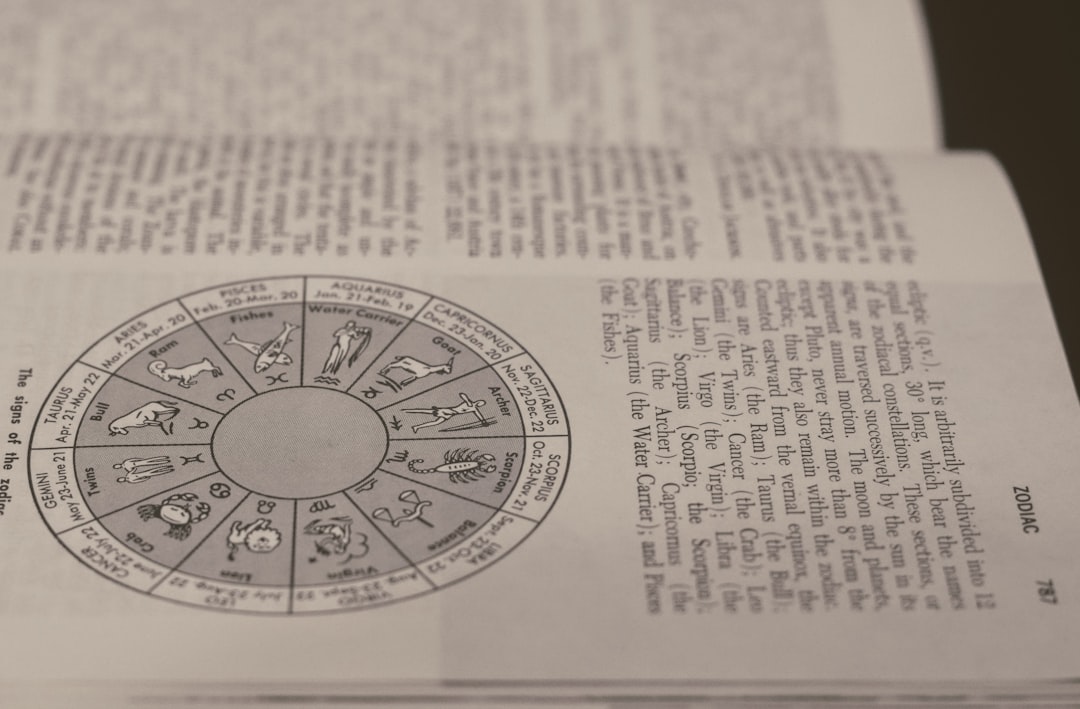
It is only fair to note what the scientific evidence actually says about zodiac signs and personality. Although many people believe that astrological birth sign information can provide personality insights, there is an overwhelming lack of scientific support for this. A review of studies found that professional astrologers who were asked to match someone’s birth chart with their actual personality were no more accurate than chance.
None of the 12 astrological signs were significantly associated with any of the Big Five personality traits in large-scale research. Additionally, none of the four elements associated with each sign had any effect on personality. That is a meaningful finding, and intellectual honesty requires acknowledging it.
Still, fire-sign analogues, including Aries, Leo, and Sagittarius, showed correlations with extraversion and novelty-seeking in some research frameworks, suggesting a modest connection worth noting, even if causation is not established. The interplay between personality type and risk perception is what matters here, regardless of the astrological framing used to describe it.
Turning the Bias Into an Advantage, or at Least Managing It

All else being equal, optimists live longer and are healthier. The effects can be quite substantial, with one survey of 97,000 individuals reporting that optimists are significantly less likely to die between the ages of 50 and 65, and considerably less likely to die from cardiac arrest. Optimism, properly calibrated, is genuinely useful.
Prior experience is typically associated with less optimistic bias. Some studies suggest this is from a decrease in the perception of personal control, or by making it easier for individuals to imagine themselves at risk. For Aries and Sagittarius personalities, this is a practical takeaway: the sting of a past loss, fully absorbed, is often the most effective corrective for overestimated luck.
Adopting training programs to tackle psychological biases, especially optimism bias and impulsivity, can be beneficial. Organizations and individuals can increase decision confidence to enable more informed and rational decisions even when biases are present. Optimism bias and impulsivity can be mitigated by introducing decision-making frameworks that promote a thorough assessment of risks and benefits.
Conclusion: The Gift and the Blind Spot

The optimism bias is, at its core, a deeply human phenomenon. It keeps people moving forward, taking chances, and building things that would never get built if everyone calculated odds with cold precision. For Sagittarius and Aries, whether you interpret those labels psychologically or astrologically, the tendency to lean hard into hope is often a genuine strength.
The danger, as the research makes clear, is when that forward momentum runs ahead of reality, especially in high-stakes situations where the downside is concrete and severe. A willingness to take risks is not the same as being immune to their consequences.
The most practical insight here might be this: the same fire that drives bold action also has a way of burning the person holding it, if they never learn to check whether the ground is solid before they leap.