

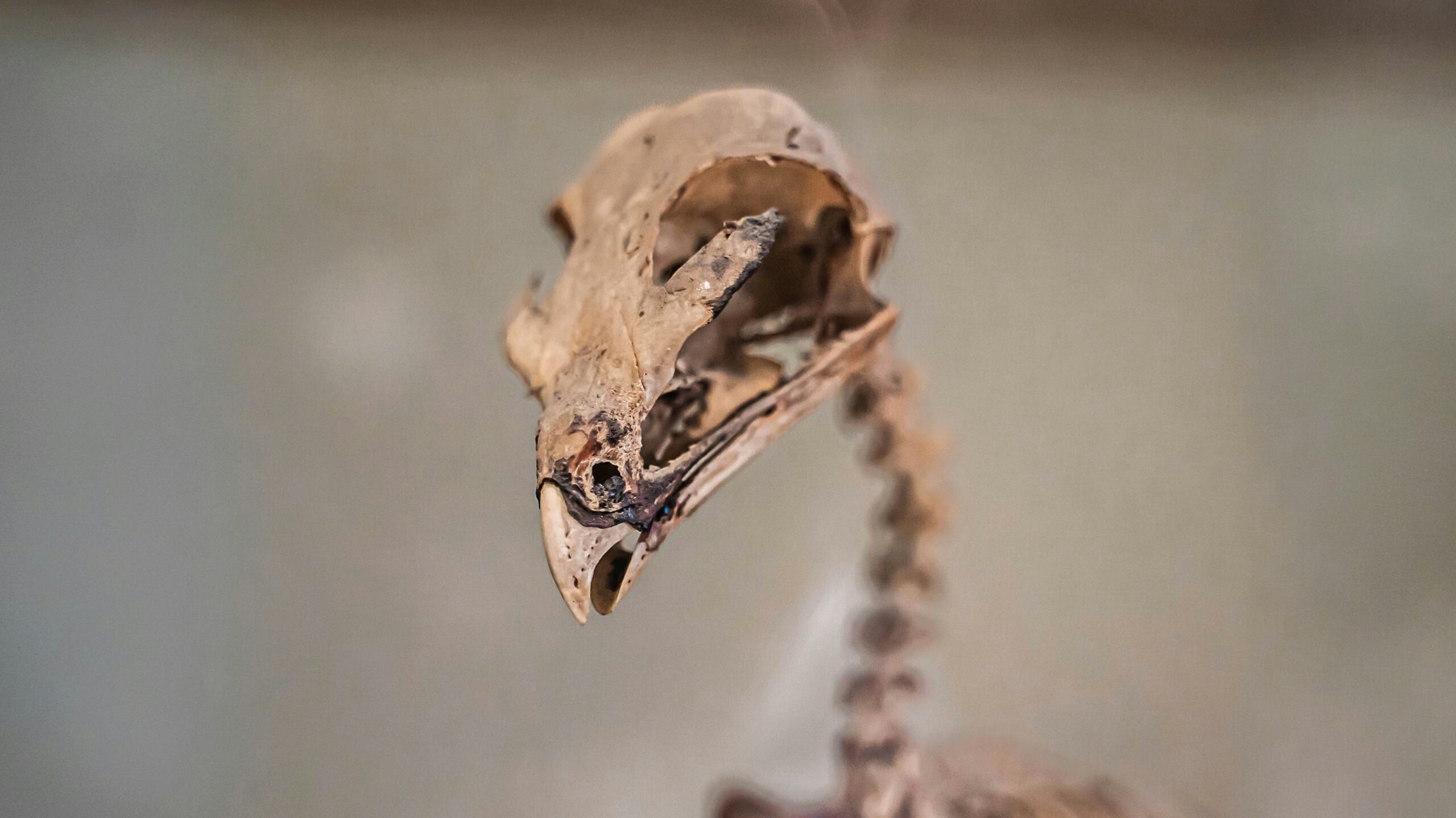
Why emus can't fly: A 'time switch' in bird embryos holds the answer – Image for illustrative purposes only (Image credits: Unsplash)
Emus stride across open landscapes with powerful legs, yet they never lift into the air the way eagles or falcons do. The difference traces back to a single skeletal feature: the keel, a prominent ridge on the breastbone that serves as the anchor point for the large flight muscles required for powered flight. In flying birds this structure grows robust and well-defined, while in emus and other flightless species it remains underdeveloped. A precise timing mechanism active during embryonic development appears to govern whether that ridge ever reaches its full size.
Why the Keel Matters for Flight
The keel functions like a sturdy mast on a ship, providing the leverage and attachment surface that flight muscles need to generate the downward force for takeoff and sustained flapping. Without a fully formed keel, those muscles simply lack the structural support to produce enough power. Flying species such as pigeons or albatrosses develop a deep, blade-like keel early enough in growth for the muscles to attach and strengthen properly. Flightless birds, by contrast, show a noticeably flatter breastbone that never extends far enough to serve the same purpose.
Timing Inside the Developing Embryo
Researchers have identified a regulatory process in the embryo that acts like an internal clock for skeletal growth. This mechanism determines when and how long certain genes remain active during the formation of the breastbone. In species destined for flight, the clock allows the keel-forming cells to continue dividing and shaping the ridge for an extended period. In emus the same clock appears to shut off earlier, halting further development of the structure before it can reach functional size. The result is a bird that hatches with the basic body plan of its flying relatives but without the hardware needed to leave the ground.
Because the switch operates at a specific window of embryonic life, small shifts in its timing can produce large differences in adult anatomy. Embryos of flightless birds follow the same early steps as those of flying birds, yet the window for keel expansion closes before the ridge can fully emerge. This single change in schedule explains why emus, ostriches, and kiwis share the same limitation despite belonging to different evolutionary branches.
What Remains Unknown
Scientists still do not know exactly which molecular signals flip the timing switch on or off in different bird lineages. The process likely involves several genes working in sequence, and researchers continue to map how those genes respond to the embryo’s internal environment. It is also unclear whether the same timing adjustment occurred independently in each flightless group or whether a common ancestor already carried the altered schedule. Further study of additional species will be needed to settle those questions.
Broadening the Picture of Bird Diversity
The discovery of this embryonic timing control adds a concrete mechanism to long-standing observations about flightless birds. Rather than viewing the loss of flight as a simple absence of wings or muscles, biologists can now point to a developmental decision made weeks before hatching. That decision ripples outward to shape the entire adult skeleton and lifestyle. Understanding the switch may eventually help explain how other flightless traits, such as reduced wing bones or altered metabolism, arise in parallel across unrelated species.
Ultimately, the contrast between an eagle riding thermals and an emu running across the plains comes down to when a small cluster of cells in the embryo receives its final instructions. One extra interval of growth, or one interval withheld, determines whether the keel forms and whether the bird ever leaves the ground.