

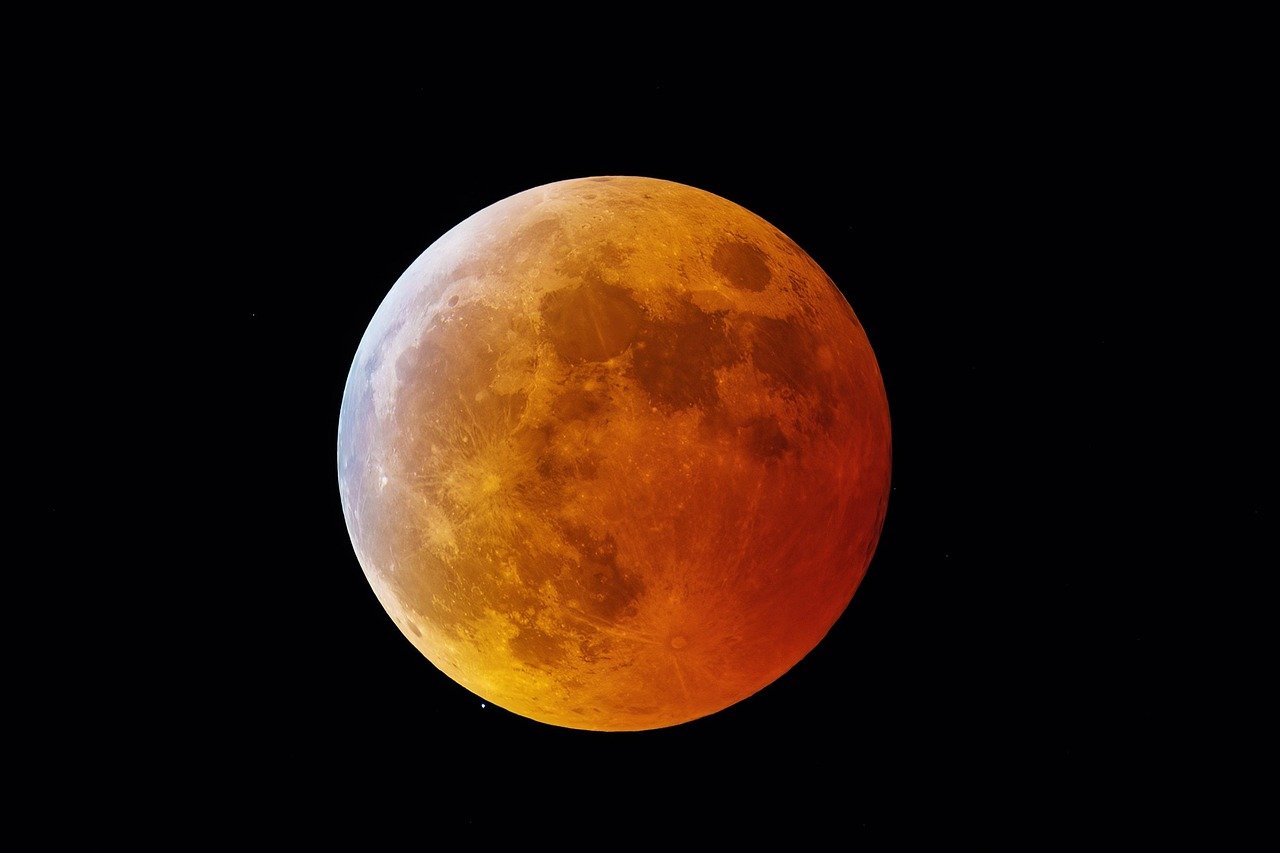
A Striking Start on April 16 (Image Credits: Pixabay)
Adelaide – Skywatchers in southern Australia prepare for a striking celestial gathering low on the eastern horizon during morning twilight from April 16 to 23. Mercury, Mars, and Saturn draw remarkably close, forming tight triangles visible to the naked eye about an hour before sunrise. A slender waning crescent Moon joins the display on the opening day, enhancing the scene with its gentle glow.
A Striking Start on April 16
Observers face east around 5:44 ACST on Thursday, April 16, roughly 60 minutes before sunrise, to catch the initial alignment. The three planets span a compact 6-degree circle, roughly one hand-span at arm’s length. Mercury sits highest, positioned 4 degrees from Mars and 6 degrees from Saturn.
The 28-day-old waning Moon adds drama nearby, passing just 3 degrees from Mars. This massing offers a prime chance for unaided viewing before the group tightens further over the weekend.
Peak Closeness Unfolds Midweek
By Sunday, April 19, at 5:48 ACST, Mercury, Mars, and Saturn form a neat triangle hugging the horizon. The configuration sharpens dramatically on Monday, April 20, when Mars edges within 1.1 degrees of Saturn – their closest approach of the event.
Binoculars reveal finer details in this tight grouping, where the planets cluster low but vividly. The trio remains compact through Tuesday, April 21, with Mercury now only 0.6 degrees from Saturn and 1.6 degrees from Mars, creating another highlight conjunction.
Mars Steals the Spotlight with Close Passes
Mars plays the central role in several near-misses during this planetary parade. Beyond its Saturn rendezvous on the 20th, it brushes 1.7 degrees from Mercury the following day.
Earlier, on the 16th, the Red Planet stands 3 degrees from the crescent Moon, framing a picturesque quartet. These separations, all under 3 degrees, challenge viewers to test their eyesight while rewarding patience in the pre-dawn chill.
Observing Tips for Clear Views
Head to a site with an unobstructed eastern view, far from city lights, to maximize contrast against the brightening sky. Times hover around 5:44 to 5:48 ACST daily, 60 minutes pre-sunrise – check local adjustments for precise sunrise data.
Patience pays off as planets rise slowly; arrive 15 minutes early. Naked eyes suffice for the main event, though binoculars sharpen the closest pairs.
- April 16: Moon joins Mercury (top), Mars, Saturn (6° span).
- April 19-20: Triangle tightens; Mars-Saturn at 1.1° on 20th.
- April 21: Mercury-Saturn 0.6°; Mercury-Mars 1.6°.
- April 23 onward: Lineup elongates as Mercury dips and dims.
The Show Fades into Line
From April 23, the planets stretch into a vertical line toward the horizon. Mercury leads the descent, growing fainter as it nears the sun’s glare.
This brief alignment reminds us of the solar system’s dynamic choreography, visible to anyone willing to rise early.
Key Takeaways
- Best views: April 19-21 for tightest triangles.
- Closest pairs: Mars-Saturn (1.1° on 20th), Mercury-Saturn (0.6° on 21st).
- Bonus: Crescent Moon enhances April 16 scene.
As the planets disperse, this dawn display leaves a lasting impression of cosmic proximity. What do you think about it? Tell us in the comments.