
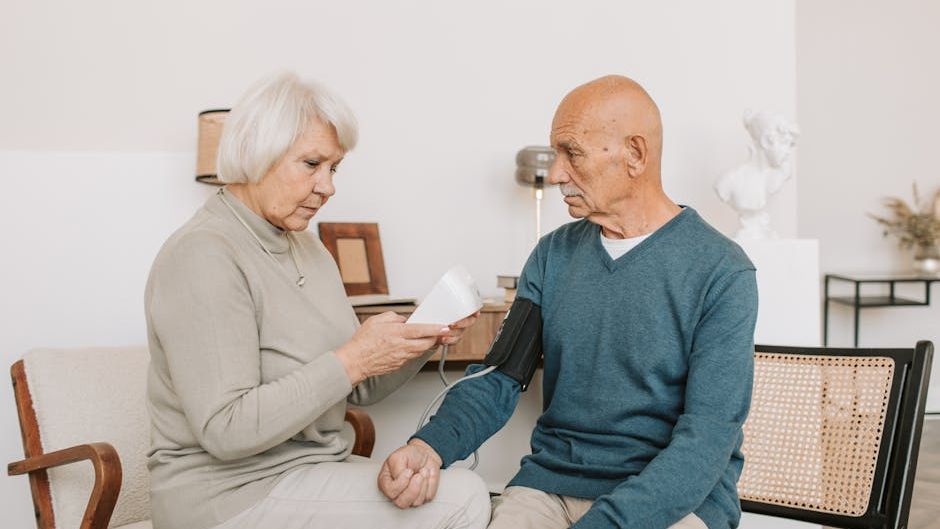
At least 80% responsibility for ill health in old age down to individual, says study – Image for illustrative purposes only (Image credits: Pexels)
A new analysis released in the United Kingdom asserts that individuals carry at least 80 percent of the responsibility for health problems that appear in later life. The document, presented at the Smart Ageing Summit in Oxford, directly confronts the widespread view that physical decline is largely unavoidable or mainly a matter for government support. Authors maintain that people hold far more influence over how long they stay healthy than is generally accepted.
Key Claims About Control and Decline
The report frames aging not as a fixed process but as one shaped heavily by daily decisions made across decades. It points to lifestyle patterns as the dominant driver behind many conditions that reduce quality of life after retirement age. By placing such a high share of accountability on personal behavior, the authors seek to shift public conversation away from inevitability and toward practical steps individuals can take earlier. Still, the document stops short of claiming complete personal mastery over every outcome. It acknowledges that genetics and early-life circumstances play roles, yet it insists these factors do not override the cumulative effects of choices made in adulthood. The central message remains that most people possess greater leverage over their future health than they typically exercise.
Policy Recommendations on Alcohol
One concrete proposal calls for legislative measures on alcohol that mirror existing restrictions on smoking. The authors argue that current rules around drinking fail to reflect its long-term contribution to chronic illness. They suggest tighter controls could help reduce the burden of preventable conditions that surface decades later. Such steps, the report states, would complement rather than replace individual efforts. The focus stays on creating an environment where healthier choices become easier defaults for the wider population. Without these changes, the authors warn, the gap between what people could achieve and what actually occurs will persist.
Reactions to the Report’s Approach
Not everyone accepts the 80 percent figure as a complete picture. Some observers describe the claim as overly straightforward, noting that social and economic conditions often limit the options available to individuals. These critics point out that access to nutritious food, safe exercise spaces, and preventive care varies widely across communities. The report itself does not dismiss these external influences entirely. Instead, it positions them as secondary to the decisions people make within their circumstances. This distinction has sparked debate about how much emphasis should fall on personal agency versus structural support.
Looking Ahead at Longevity Research
The document arrives at a time when interest in extending healthy years continues to grow. Its authors hope the findings will encourage both personal reflection and public discussion about realistic ways to influence later-life outcomes. Whether the 80 percent estimate holds up under further scrutiny remains an open question for ongoing studies. Ultimately, the report serves as a reminder that longevity involves a mix of factors, with individual actions forming a substantial but not exclusive part. Continued examination of these dynamics will help clarify where personal responsibility ends and collective responsibility begins.