

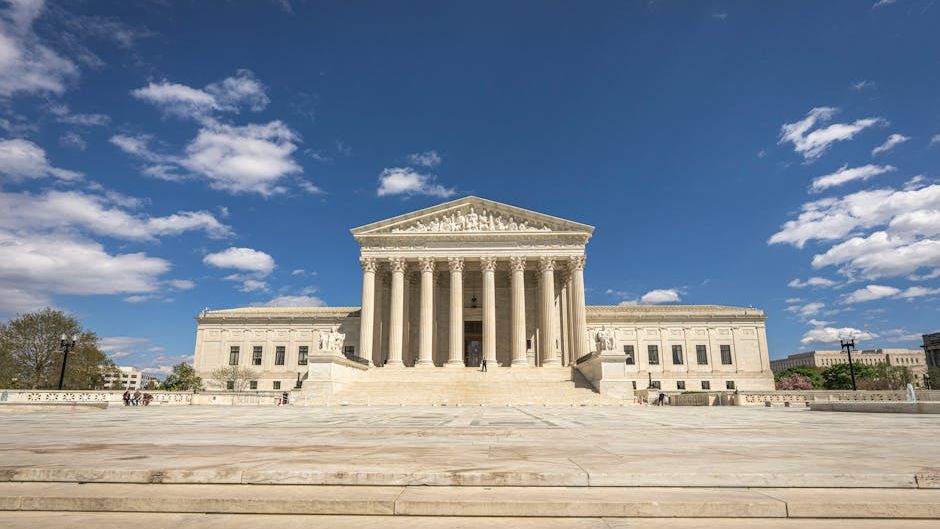
Angry Left plots To Purge Virginia’s High Court – Image for illustrative purposes only (Image credits: Pexels)
Richmond, Virginia – The Virginia Supreme Court’s rejection of a Democratic-backed redistricting plan has quickly given way to a new legislative proposal that would require several justices to step down years ahead of schedule. The move, introduced in the General Assembly, would lower the mandatory retirement age for members of the state’s highest court and apply it retroactively to sitting justices. Lawmakers behind the measure describe it as a routine update to judicial qualifications, yet critics immediately labeled it an attempt to reshape the court’s composition through procedural means.
Background on the Redistricting Dispute
The sequence began when the Supreme Court ruled against the redistricting maps advanced by Democratic leaders. The decision preserved existing district lines in key areas and blocked changes that would have altered representation in the House of Delegates and state Senate. Court observers noted that the ruling rested on strict interpretation of state constitutional requirements for compactness and contiguity, standards the proposed maps failed to meet.
With the maps now set for the next election cycle, attention shifted to the court itself. Several justices who participated in the decision face retirement within the next few years under current rules. The new proposal would accelerate that timeline for those appointed before a certain date, effectively opening multiple seats on the seven-member bench.
Details of the Retirement Proposal
Under the legislation, the retirement age for Supreme Court justices would drop from 70 to 65, with the change applying to anyone currently serving. Proponents argue the adjustment aligns Virginia with practices in other states and ensures the court reflects contemporary legal perspectives. The bill also includes provisions for a transition period that would allow affected justices to complete pending cases before departing.
Supporters in the Democratic caucus have emphasized that the change would apply equally to all justices regardless of who appointed them. They point to similar age adjustments made in lower courts over the past decade as precedent. Still, the timing of the measure, coming directly after the redistricting loss, has drawn scrutiny from legal scholars who track state judicial politics.
Concerns Over Court Independence
Opponents of the plan have framed it as a form of court packing by another name. They note that forcing early retirements would allow the party in power to appoint replacements before the next gubernatorial election, potentially shifting the court’s ideological balance for years. Several former judges and bar association leaders have issued statements warning that such changes undermine public confidence in an independent judiciary.
The debate has also touched on broader questions of separation of powers. Virginia’s constitution grants the legislature authority over judicial qualifications, yet historical practice has treated retirement rules as stable and non-retroactive. Legal analysts say any successful challenge would likely reach the very court whose composition is now in question, creating a circular dynamic that could prolong uncertainty.
Potential Impact on Future Cases
If enacted, the retirement changes would take effect at the start of the next fiscal year, creating immediate vacancies. The governor would then nominate replacements subject to legislative confirmation, a process that has grown more contentious in recent sessions. Pending matters involving election law, redistricting challenges, and criminal appeals could face delays as new justices are seated and briefed.
Advocates for the proposal counter that turnover on the court is inevitable and that earlier retirements simply accelerate a natural process. They argue that younger justices bring fresh energy to complex dockets and that the public benefits from regular infusion of new perspectives. The measure is expected to receive committee hearings within weeks, setting the stage for floor votes before the session ends.
What matters now: The proposal tests the limits of legislative authority over judicial tenure in Virginia. Its outcome will shape both the court’s makeup and the tone of future debates over institutional independence.