
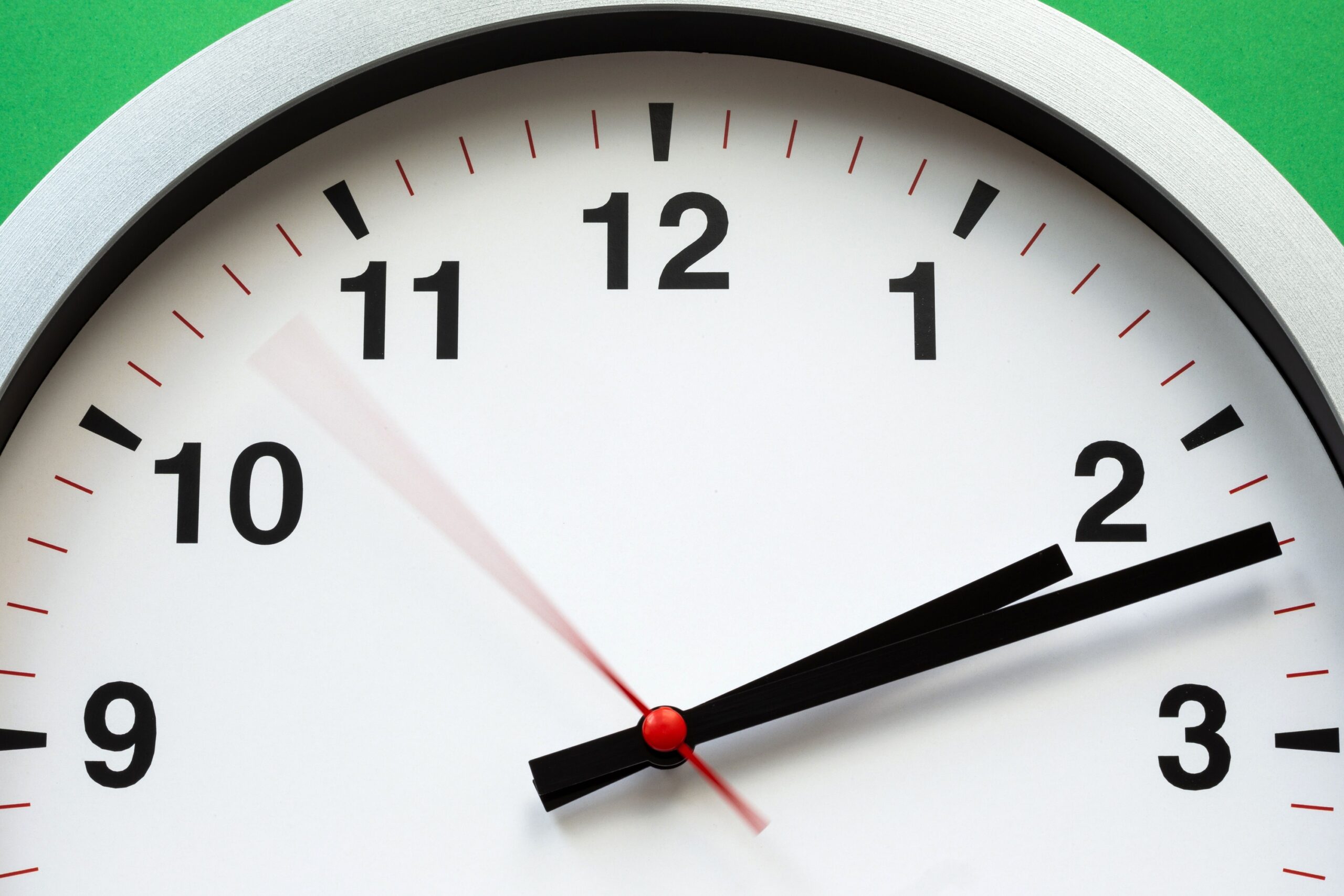

Time feels fixed. Sixty seconds, sixty minutes, twenty-four hours – it’s so deeply wired into daily life that questioning it seems almost absurd. Yet the version of a “minute” that we carry around in our pockets and on our wrists is the product of thousands of years of negotiation, inheritance, and occasional failed revolution. The idea that a minute has always contained sixty seconds is, in fact, quite wrong.
Different civilizations carved up the day in ways that reflected their mathematics, their astronomy, and even the shape of their own hands. Some of those systems were abandoned. One survived – not because it was the most logical, but because it was the most persistent. Here’s how that happened.
The Sky Was the First Clock
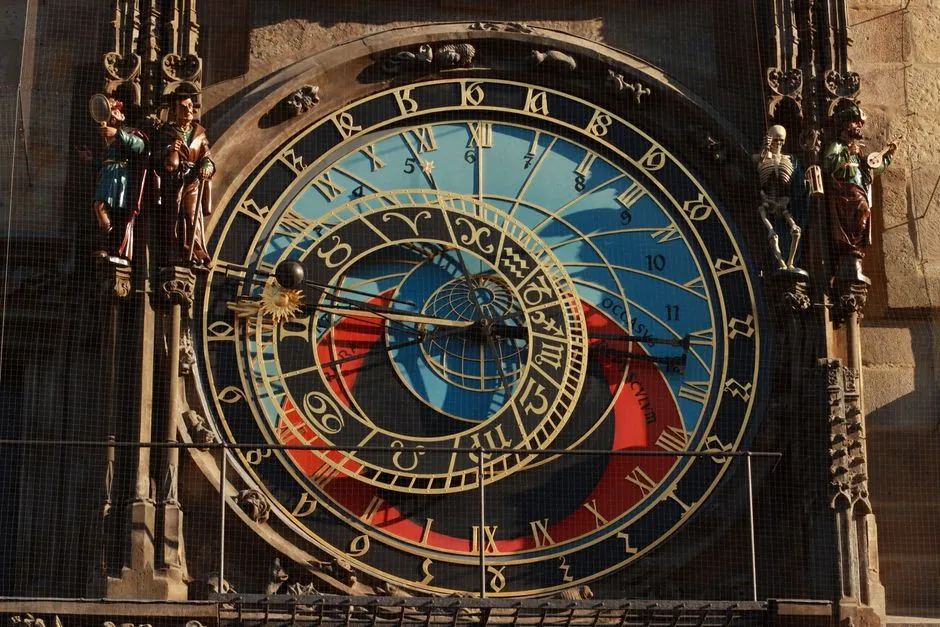
The earliest method of measuring time was through observation of celestial bodies – the sun, moon, stars, and the five planets known in antiquity. The rising and setting of the sun, the solstices, phases of the moon, and the position of particular stars and constellations were used in all ancient civilizations to mark particular activities. Nobody was counting seconds. Days were loosely divided by light and darkness, and more precise measurement simply wasn’t needed for most of human history.
The history of timekeeping dates back to when ancient civilizations first observed astronomical bodies moving across the sky. Devices and methods for keeping time gradually improved through a series of new inventions, starting with measuring time by continuous processes such as the flow of liquid in water clocks, advancing to mechanical clocks. Fine subdivisions like minutes and seconds came very late in that story.
Ancient Egypt Divided the Day, but Not Evenly
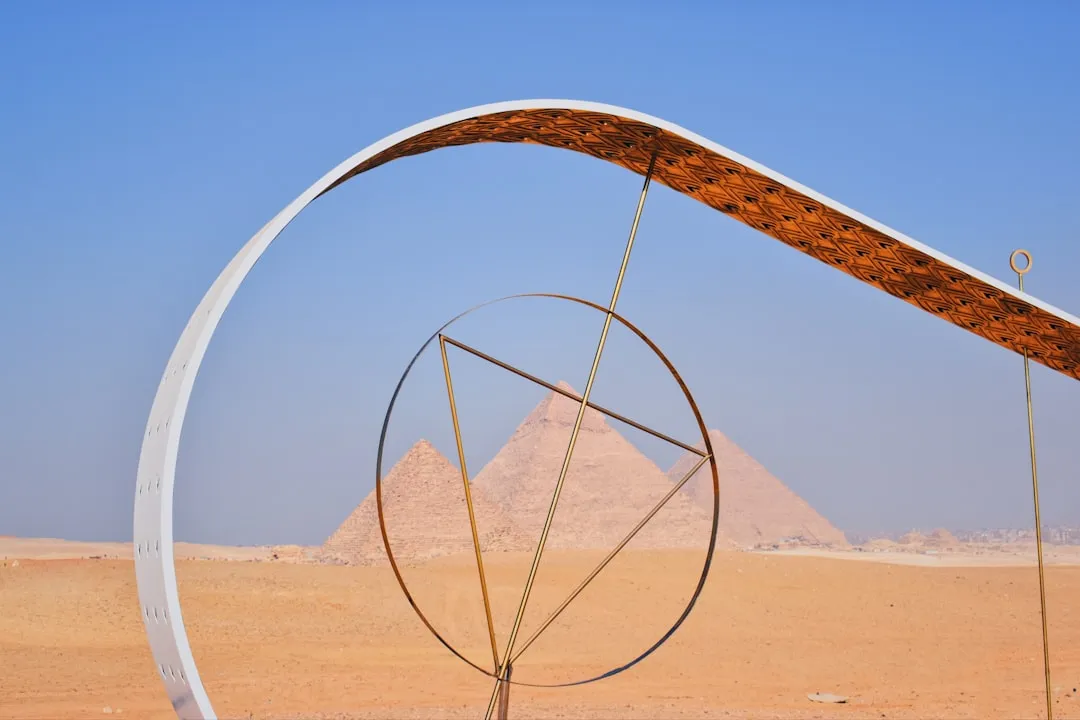
The ancient Egyptians were among the first cultures to widely divide days into generally agreed-upon equal parts, using early timekeeping devices such as sundials, shadow clocks, and merkhets, which were plumb-lines used by early astronomers. Their approach was sophisticated for its time, but “equal” is a relative term here.
Ancient civilizations such as the Egyptians, Greeks, and Romans relied on sundials as their primary timekeeping devices. These instruments divided the day into twelve sections, providing reasonably accurate time as long as the sun was shining. The problem is that a summer hour and a winter hour were completely different lengths. There was no standardized minute, and certainly no second.
The Babylonians and the Number 60

The sexagesimal system originated with the ancient Sumerians in the 3rd millennium BC, was passed down to the ancient Babylonians, and is still used in a modified form for measuring time, angles, and geographic coordinates. This is the foundational decision that still governs your alarm clock today, made roughly five thousand years ago.
The 60-second minute and 60-minute hour originate from the sexagesimal, or base-60, number system developed by the ancient Sumerians and Babylonians over four thousand years ago. The number 60 was highly prized for its exceptional divisibility, making it ideal for fractions and calculations in early astronomy and trade. Sixty can be evenly divided by two, three, four, five, six, ten, twelve, fifteen, twenty, and thirty – a list no other small number comes close to matching.
Why 60? The Hand Counting Theory

Both the ancient Sumerians and the Babylonians laid the foundation for our modern understanding of time, employing a sexagesimal system with 60 as its basis. But why 60? Without advanced mathematics, the Sumerians looked to the human hand as the primary tool for counting and visualizing quantities. There’s a practical elegance to this that gets overlooked.
The reasons for the choice of 60 are obscure, but one good mathematical reason might have been the existence of so many divisors of the base, which would have greatly facilitated the operation of division. Base-60 was also once proposed to be the product of the number of moons per year, which is twelve, with the number of planets yet discovered by the Babylonians, including Mercury, Venus, Mars, Jupiter, and Saturn. The true origin may have been a combination of all of these factors together.
Hipparchus and the Greek Refinement

The concept of fixed-length hours did not originate until the Hellenistic period, when Greek astronomers began using such a system for their theoretical calculations. Hipparchus, whose work primarily took place between 147 and 127 B.C., proposed dividing the day into 24 equinoctial hours, based on the 12 hours of daylight and 12 hours of darkness observed on equinox days. This was a genuinely novel idea.
Despite this suggestion, laypeople continued to use seasonally varying hours for many centuries. Hours of fixed length became commonplace only after mechanical clocks first appeared in Europe during the 14th century. Hipparchus used Babylonian base-60 mathematics to divide the hour into 60 parts, and those parts into another 60 parts. That two-step subdivision is still exactly what we use today.
The Words “Minute” and “Second” Have Latin Roots
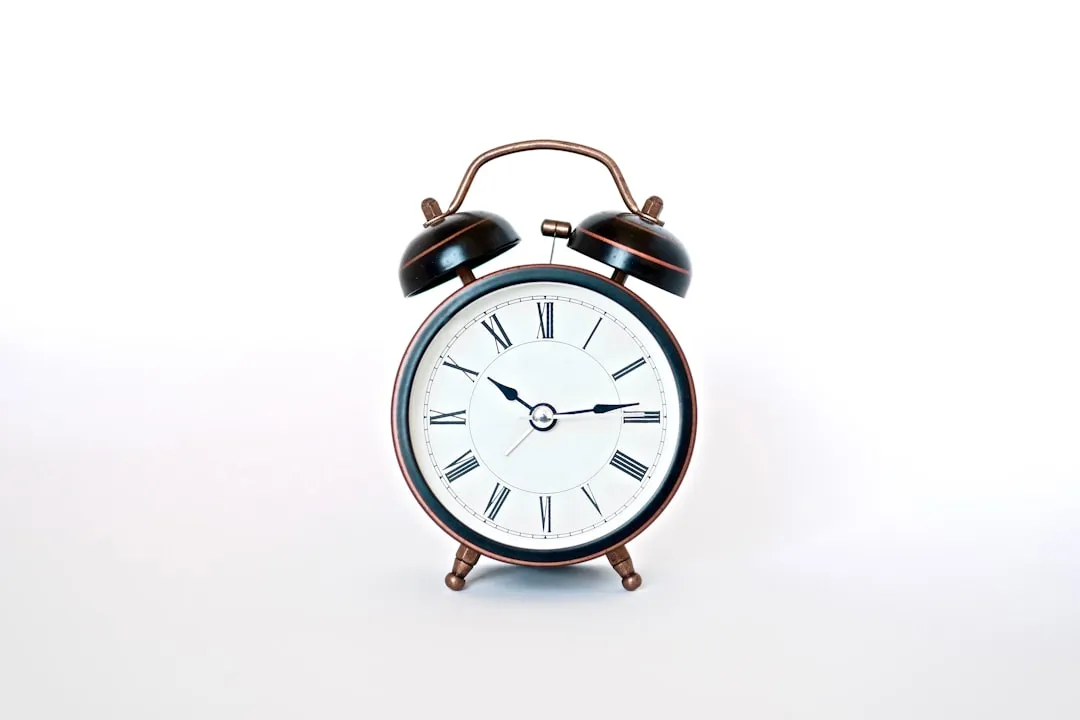
The word “minute” comes from the Latin pars minuta prima, meaning “first small part,” and “second” from pars minuta secunda, meaning “second small part.” These labels are essentially just ordinal rankings. The first division of an hour. The second division. The names themselves reveal how relatively recent the whole concept was.
The “second small part” was a purely theoretical abstraction for a long time. No clock before the late 17th century could actually measure a second with any reliability. The concept of a named, consistent second existed in astronomy long before it existed in everyday life.
The Pendulum Changed Everything

The concept of the pendulum as a timekeeping mechanism was first realized on December 25, 1656, by the Dutch scientist and inventor Christiaan Huygens. By building upon Galileo’s work, Huygens’ pioneering work provided the foundation for this reliable and precise timekeeping instrument. In its simplest form, a pendulum swings back and forth, with one complete swing representing one second. For the first time, the second became physically measurable.
By 1889, Sigmund Riefler’s pendulum clock kept time to within 0.01 seconds a day. That’s a staggering leap from anything the ancient world could manage. The pendulum didn’t invent the second, but it made the second real in a way that mattered to ordinary people, not just astronomers.
The French Revolution Tried to Replace the Whole System
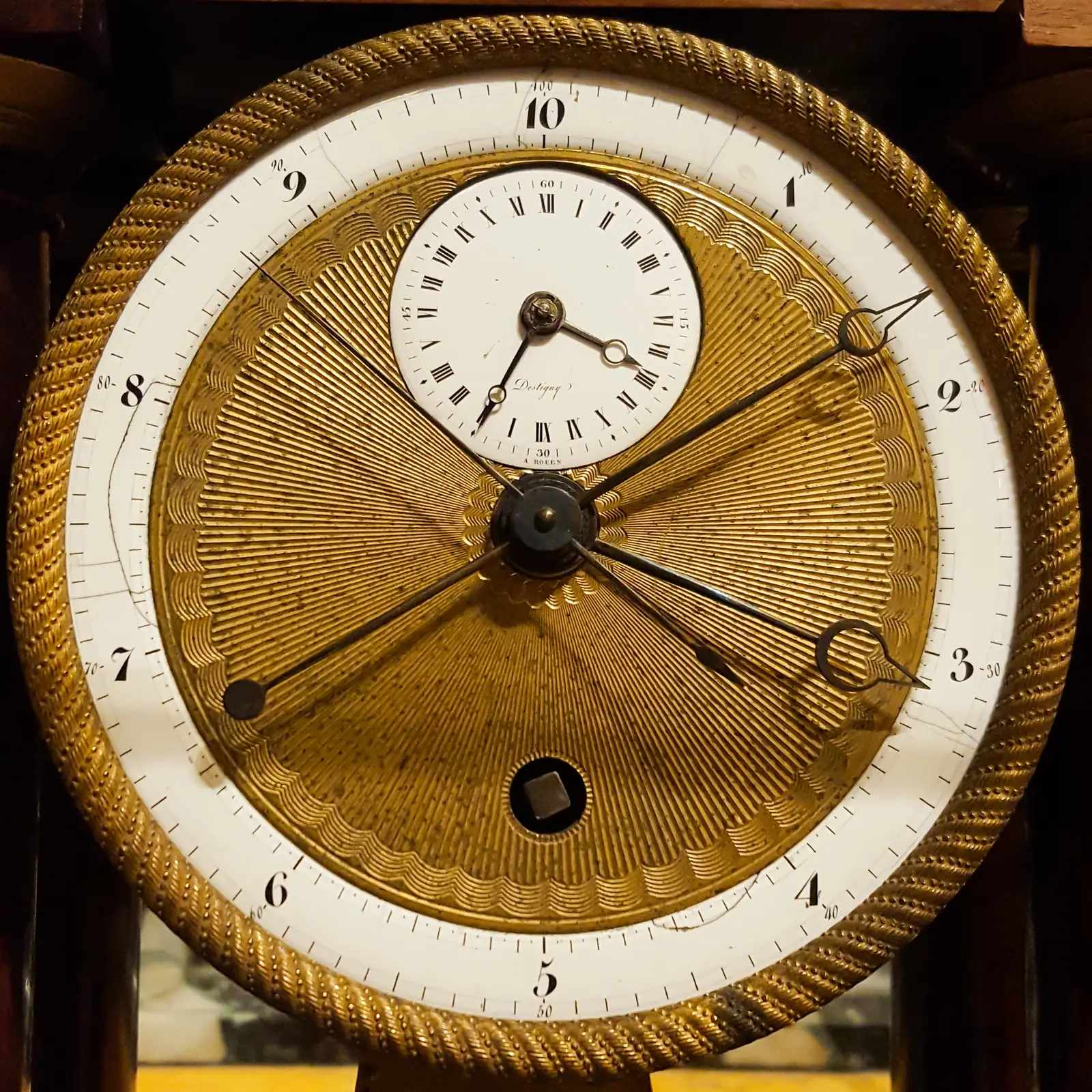
French Revolutionary Time was a short-lived concept that used a base-10 timekeeping system. Otherwise known as “decimal time,” this unprecedented method included 10-hour days, 100 minutes per hour, and 100 seconds per minute. The logic was clean: a fully decimal day, consistent with the metric system being rolled out for weights and measures.
French Revolutionary Time officially began on November 24, 1793, although conceptual work around the system had been going on since the 1750s. The French officially stopped using decimal time after just 17 months: French Revolutionary Time became non-mandatory starting on April 7, 1795. The trick was that every living person already had a well-established way to tell time, and old habits die hard. The math was better. The adoption was catastrophic.
Islamic Scholars Kept the Sexagesimal Flame Alive

When Islamic scholars translated Greek astronomical texts during the 8th and 9th centuries, scholars such as Al-Battani in Baghdad, the sexagesimal system came along with them. This transmission mattered enormously. Without the Islamic scholarly tradition preserving and extending Greek astronomical work, the base-60 system might well have been lost or significantly altered during the medieval period in Europe.
Al-Battani, working around 858 to 929 CE, used base-60 fractions to calculate the solar year to within two minutes. That level of precision, achieved over a thousand years ago using inherited Babylonian mathematics, is a reminder that the connection between ancient number systems and practical science was never purely theoretical.
The Atomic Clock Finally Defined the Second Precisely
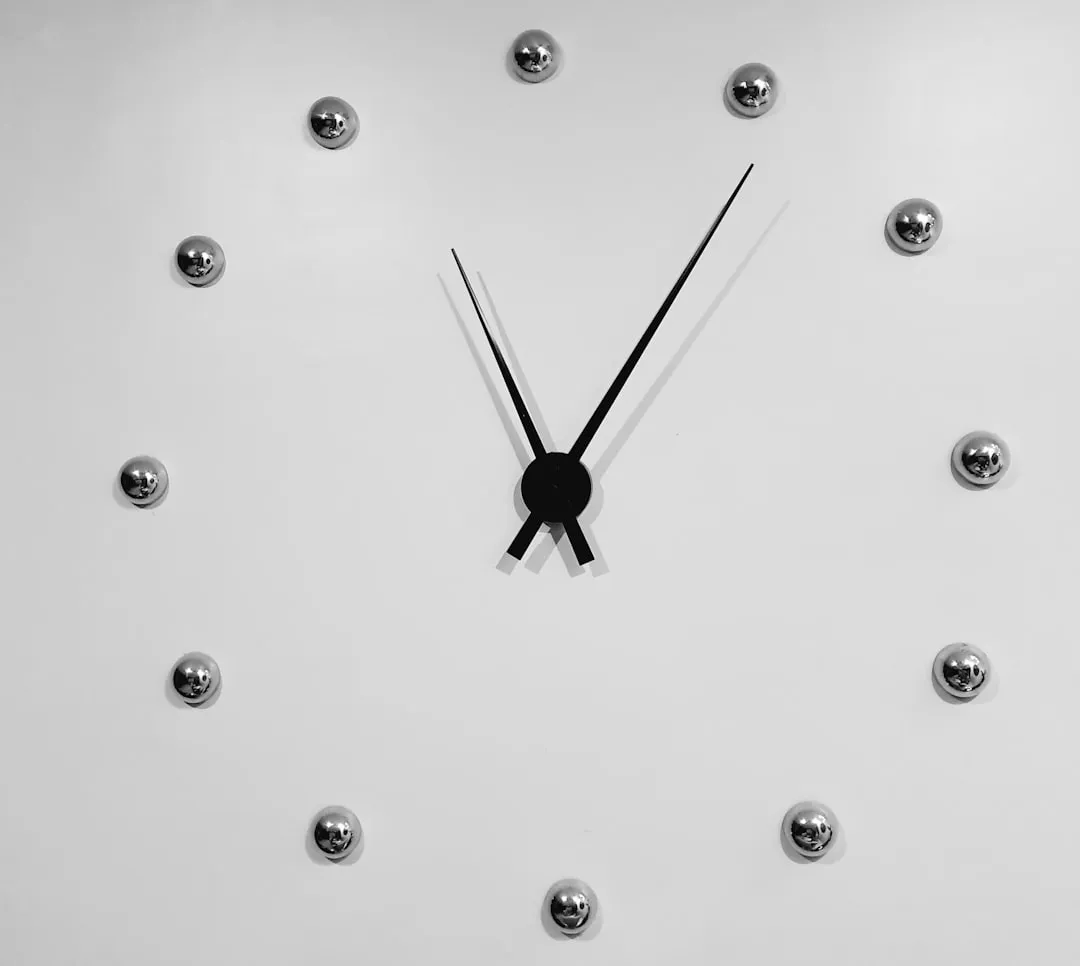
The most accurate timekeeping devices in practical use today are atomic clocks, which can be accurate to a few billionths of a second per year and are used to calibrate other clocks and timekeeping instruments. The second is now defined not by pendulum swings or astronomical observation, but by the vibration of cesium atoms. It’s a definition precise enough to underpin GPS navigation and global financial systems.
Even today, this ancient Babylonian legacy underpins global timekeeping, including standards like Coordinated Universal Time, or UTC. Although the sexagesimal system is no longer used for general computation, it is still used to measure angles, geographic coordinates, and time. In fact, both the circular face of a clock and the sphere of a globe owe their divisions to a four-thousand-year-old numeric system of the Babylonians.
The Takeaway
The sixty-second minute isn’t a law of nature. It’s a convention, passed through Sumerian grain markets, Babylonian star charts, Greek astronomical theory, Islamic scholarship, and medieval European clockmaking, arriving intact on your phone screen with almost no modifications. There were real alternatives. The French tried one. It failed within a year and a half.
The base-60 system remains remarkably solid. Its persistence is a testament not just to its mathematical utility, but to the power of established human convention. Once a system is universally adopted, the cost and disruption of changing it become immense, even if a theoretically simpler alternative exists. The minute stayed at sixty seconds not because no one thought of a better idea, but because a good enough idea, used by enough people, becomes almost impossible to dislodge. That’s a lesson that goes well beyond telling time.
AI Disclaimer: This article was created with the assistance of AI tools and reviewed by a human editor.