


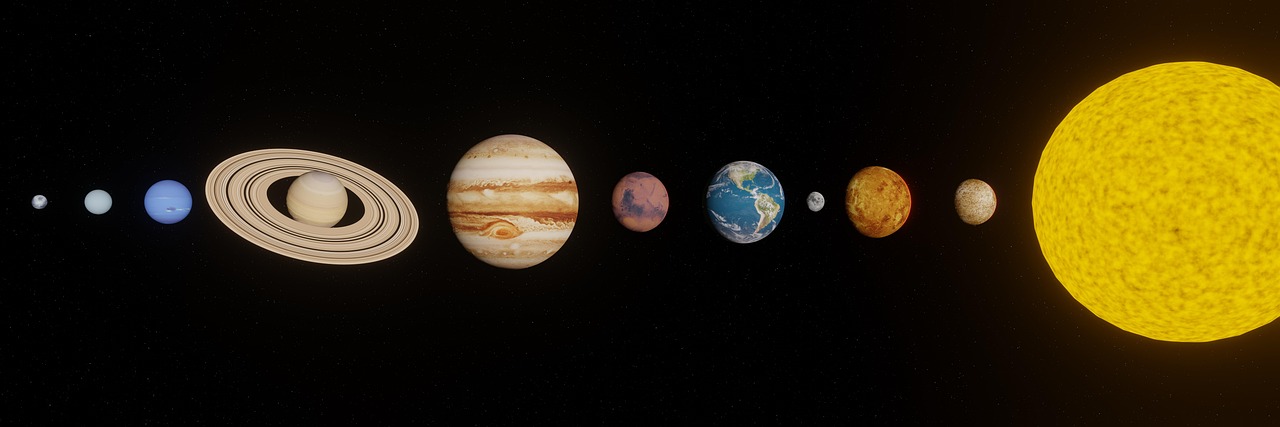
Few moments in modern science have triggered as much public outrage as the day Pluto got demoted. People who grew up memorizing nine planets suddenly found themselves correcting textbooks, ripping up solar system posters, and debating the rules of science at dinner tables across the world. It was August 24, 2006, and nothing in astronomy has been quite so controversial since.
The story of Pluto’s fall from planetary grace is actually a story about how science evolves. New telescopes revealed new worlds, old definitions no longer held up, and a vote in Prague changed everything. As of 2026, the debate is very much alive again, and this time NASA’s own leadership is pushing back.
76 Years as the Ninth Planet
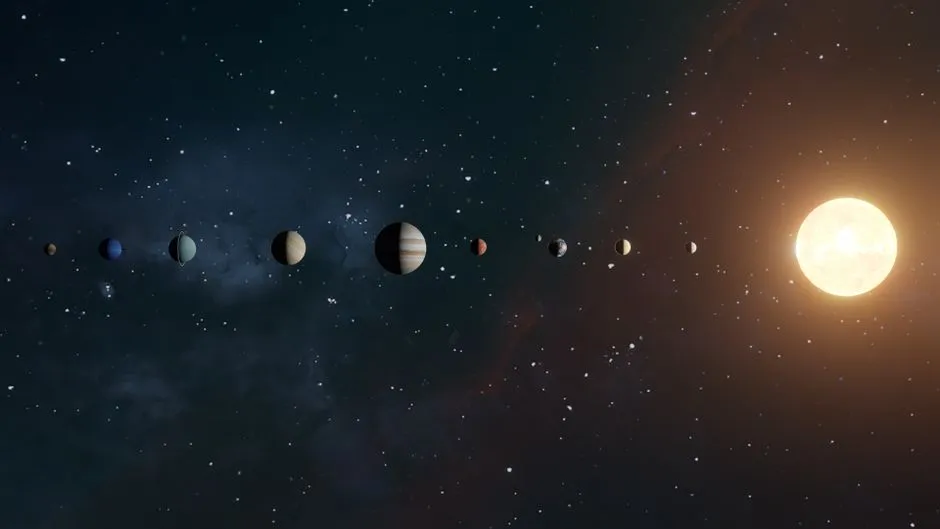
Discovered in 1930, Pluto was long considered our solar system’s ninth planet. For generations of students, teachers, and scientists, that was simply a fact. It sat at the edge of the known solar system, cold and distant, and nobody seriously questioned its place in the lineup.
Pluto was discovered by American astronomer Clyde Tombaugh in 1930 at an observatory in Flagstaff, Arizona. The discovery was celebrated widely, and the world moved on assuming the solar system had nine members. That assumption held for nearly eight decades.
From 1930 until 2006, Pluto had been considered a normal planet and the outermost planet of the solar system. As technology advanced, though, astronomers could see fainter objects. They began to recognize Pluto as the largest of multiple small bodies in the outer solar system. That shift in perspective would prove fatal to its status.
The Discovery That Started Everything
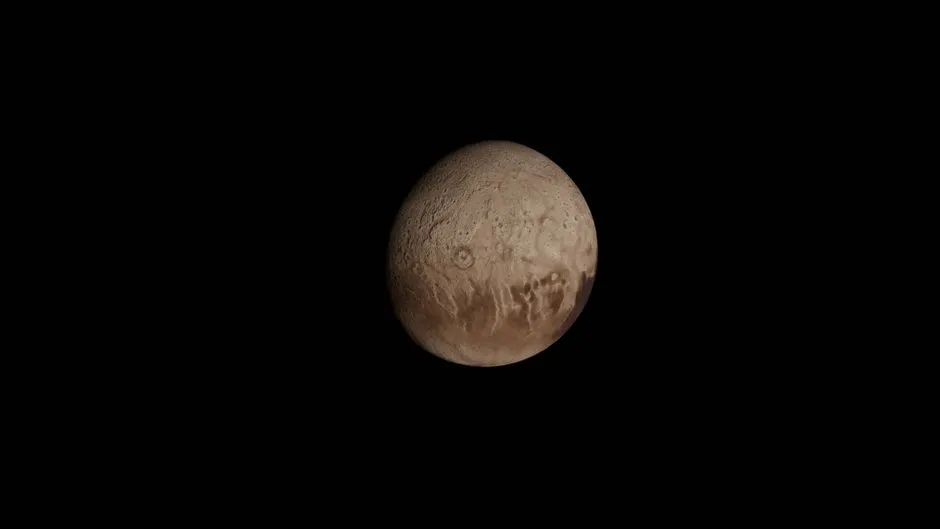
Doubts about Pluto’s planetary nature increased following the discovery of additional objects in the Kuiper Belt starting in the 1990s, particularly the more massive scattered disk object Eris in 2005. Eris posed a genuine problem for astronomers. If Pluto was a planet, Eris seemed to be one too.
Eris, discovered in 2005, is estimated to have around a third more mass than Pluto. Astronomers faced an awkward question: if Pluto was a planet, shouldn’t Eris be one too? And if Eris was included, where exactly would the list end? That question forced the scientific community’s hand.
The naming process for Eris stalled after the announcement of its discovery in 2005, because its size was comparable to that of Pluto. The IAU sought to resolve the naming of Eris by seeking a taxonomical definition to distinguish planets from minor planets. What started as a naming dispute became the biggest reclassification debate in modern astronomy.
The Vote in Prague

After much discussion and debate, an International Astronomical Union (IAU) vote on Aug. 24, 2006, reclassified Pluto as a dwarf planet. The vote took place at the IAU’s General Assembly in Prague, and it was far from a smooth or unanimous process.
Some influential astronomers were caught off guard by the procedure, questioning the final proposal’s logic and pointing to the low turnout of voters – 424 astronomers out of about 10,000 professional astronomers worldwide – at the IAU conference. That’s a striking fraction. Fewer than one in twenty professional astronomers worldwide cast a vote on one of the most consequential decisions in modern planetary science.
As the IAU was approaching their 2006 General Assembly in Prague, they decided something must be done and would officially address the definition of a planet. The process wasn’t as smooth as they would have liked. Much of the problem stemmed from a split between two opposing viewpoints. The debate inside the assembly hall was heated, and even after the vote, many attendees felt the outcome was premature.
The Three Criteria That Sealed Pluto’s Fate

The International Astronomical Union (IAU) downgraded the status of Pluto to that of a dwarf planet because it did not meet the three criteria the IAU uses to define a full-sized planet. These criteria were brand new, formally written for the first time as part of the 2006 resolution.
The three criteria of the IAU for a full-sized planet are: it is in orbit around the Sun; it has sufficient mass to assume hydrostatic equilibrium, meaning a nearly round shape; and it has “cleared the neighborhood” around its orbit. Pluto passed the first two without difficulty.
Pluto meets only two of these criteria, losing out on the third. In all the billions of years it has lived there, it has not managed to clear its neighborhood. That single failing was enough to cost Pluto its place among the planets.
What “Clearing the Neighborhood” Actually Means

The phrase refers to an orbiting body “sweeping out” its orbital region over time by gravitationally interacting with smaller bodies nearby. Over many orbital cycles, a large body will tend to cause small bodies either to accrete with it, be disturbed to another orbit, or be captured either as a satellite or into a resonant orbit. Think of it as gravitational housekeeping on a cosmic scale.
Pluto’s orbit is partly inside Neptune’s and shares its orbital neighbourhood with many Kuiper Belt objects. This crowded environment is essentially the opposite of what the IAU definition requires. Pluto resides in the crowded Kuiper Belt, sharing its orbital zone with thousands of other icy bodies, including some nearly as large as itself, the so-called “plutinos.”
Dwarf planet Pluto is a member of a group of objects that orbit in a disc-like zone beyond the orbit of Neptune called the Kuiper Belt. This distant realm is populated with thousands of miniature icy worlds, which formed early in the history of our solar system about 4.5 billion years ago. Pluto isn’t a lone wanderer out there. It’s one of thousands.
Pluto’s Size and Physical Reality
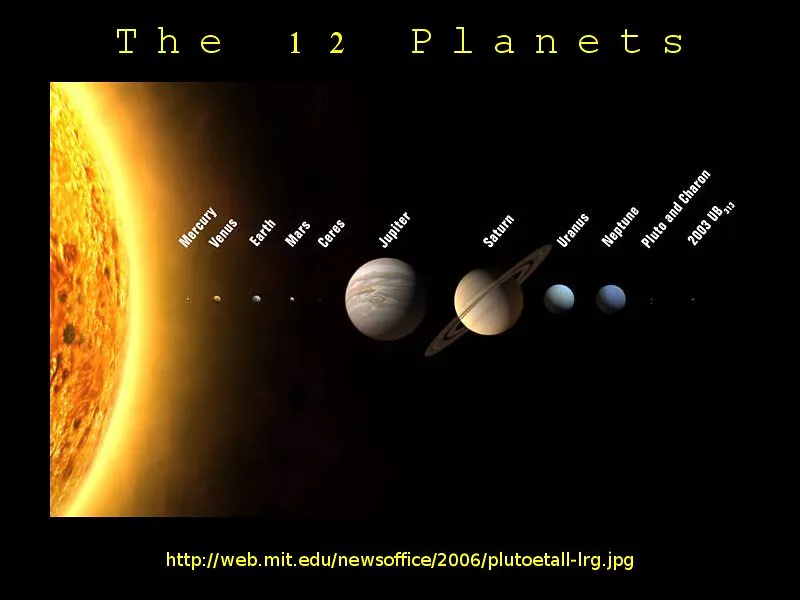
Pluto is only about 1,400 miles wide. At that small size, Pluto is only about half the width of the United States. That puts it well below Earth’s Moon in terms of diameter. Size wasn’t the official reason for demotion, but it’s relevant context.
Pluto has roughly one-sixth the mass of the Moon and one-third of its volume. Even so, Pluto is a genuinely complex world. It is a complex and mysterious world with mountains, valleys, plains, craters, and glaciers.
Pluto’s orbit around the Sun is unusual compared to the planets: it’s both elliptical and tilted. Pluto’s 248-year-long, oval-shaped orbit can take it as far as 49.3 astronomical units from the Sun, and as close as 30 AU. That odd, stretched orbit takes it closer to the Sun than Neptune for portions of each cycle, reinforcing its very different character compared to the eight major planets.
The Scientific Objections to the Demotion

Just five days after the announcement, over 300 professional planetary scientists signed a petition protesting the decision – a striking number considering only 411 people voted on the definition in the first place. That comparison says something uncomfortable about the process. A decision made by roughly four hundred people was immediately contested by nearly as many scientists who weren’t even in the room.
The researchers argue the IAU definition contradicted a definition of a planet that had stood for centuries. Objects similar to Pluto, such as Eris and Makemake, had been found by 2006, and so the IAU engineered its definition to exclude them. Critics saw the definition as backwards, designed to reach a desired conclusion rather than emerging from first principles.
Philip Metzger led a review of scientific literature published over the past 200 years and found just one publication that included the orbit-clearing requirement when categorizing planets. That finding weakens the claim that “clearing the neighborhood” was ever a scientifically accepted standard before 2006.
What New Horizons Revealed About Pluto
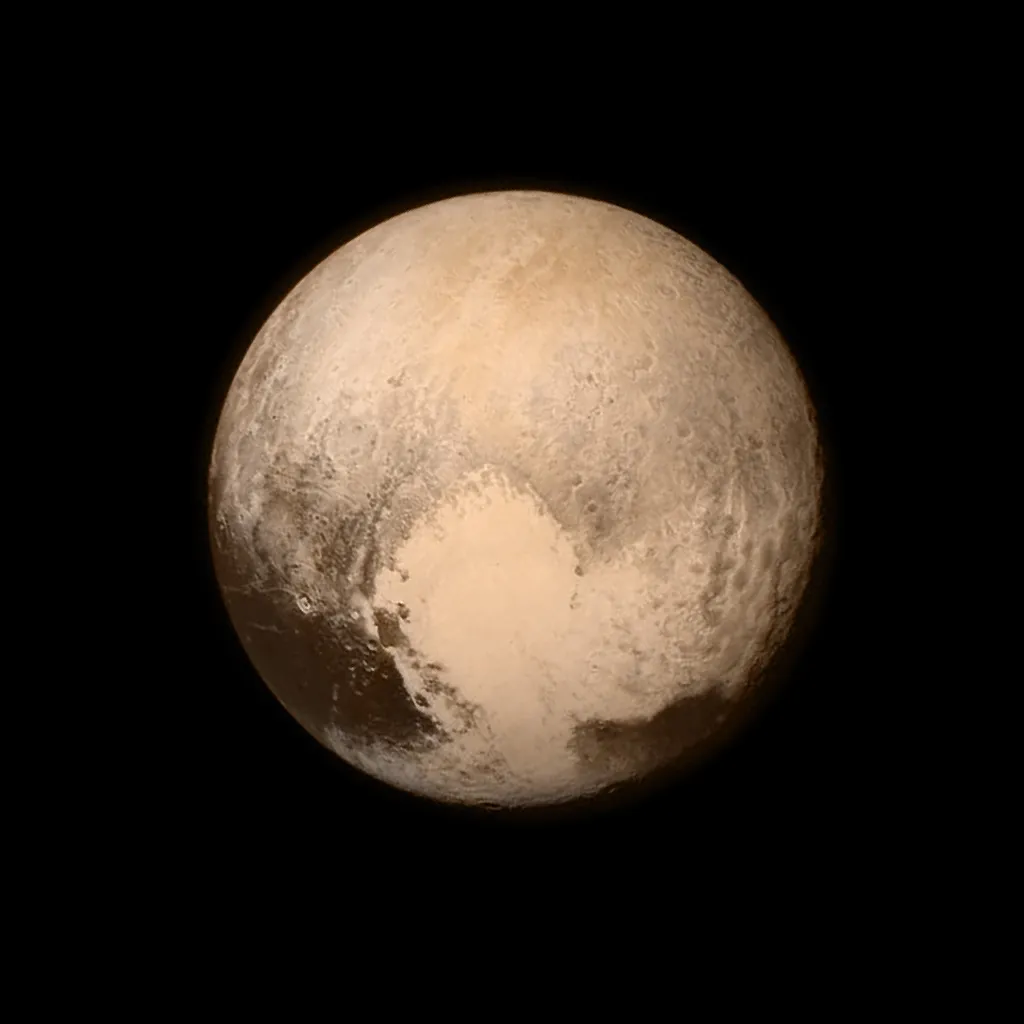
On July 14, 2015, NASA’s New Horizons spacecraft made its historic flight through the Pluto system, providing the first close-up images of Pluto and its moons and collecting other data that has transformed our understanding of these mysterious worlds on the solar system’s outer frontier. The flyby was a turning point in how scientists and the public viewed Pluto.
New Horizons found Pluto to have blue skies and water ice. The spacecraft also revealed towering ice mountains, vast nitrogen plains, and signs of active geological processes. It reached the distant celestial body nearly ten years later and collected a trove of data about the icy world. It’s the only probe ever to study the dwarf planet, and it’s now hurtling toward interstellar space.
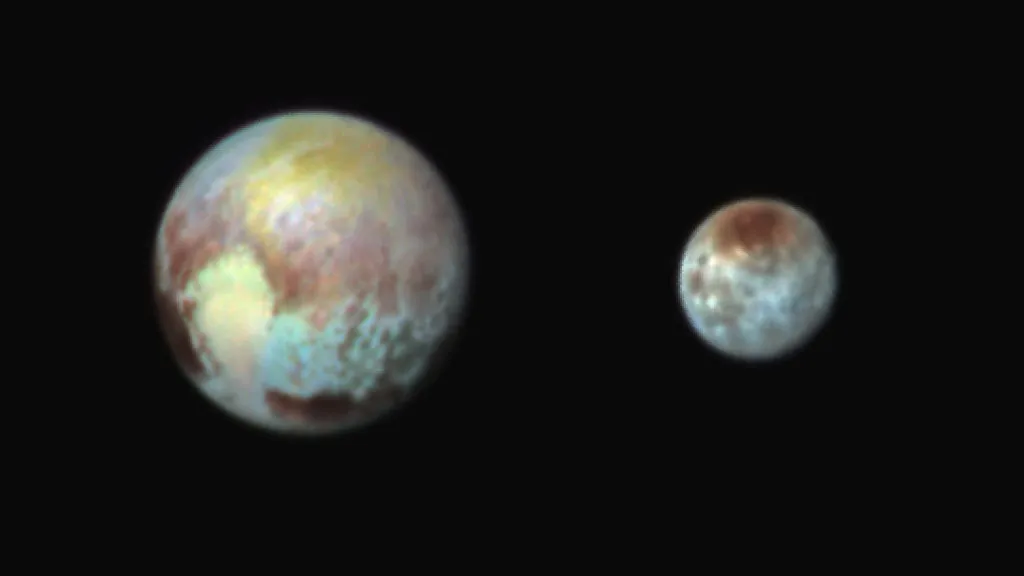
Pluto is orbited by five known moons, the largest of which is Charon. Charon is about half the size of Pluto itself, making it the largest satellite relative to the body it orbits in our solar system. Pluto and Charon are often referred to as a “double planet.” That relationship is genuinely unusual and adds to the sense that Pluto is more complex than its “dwarf” label suggests.
The Cultural and Political Fallout
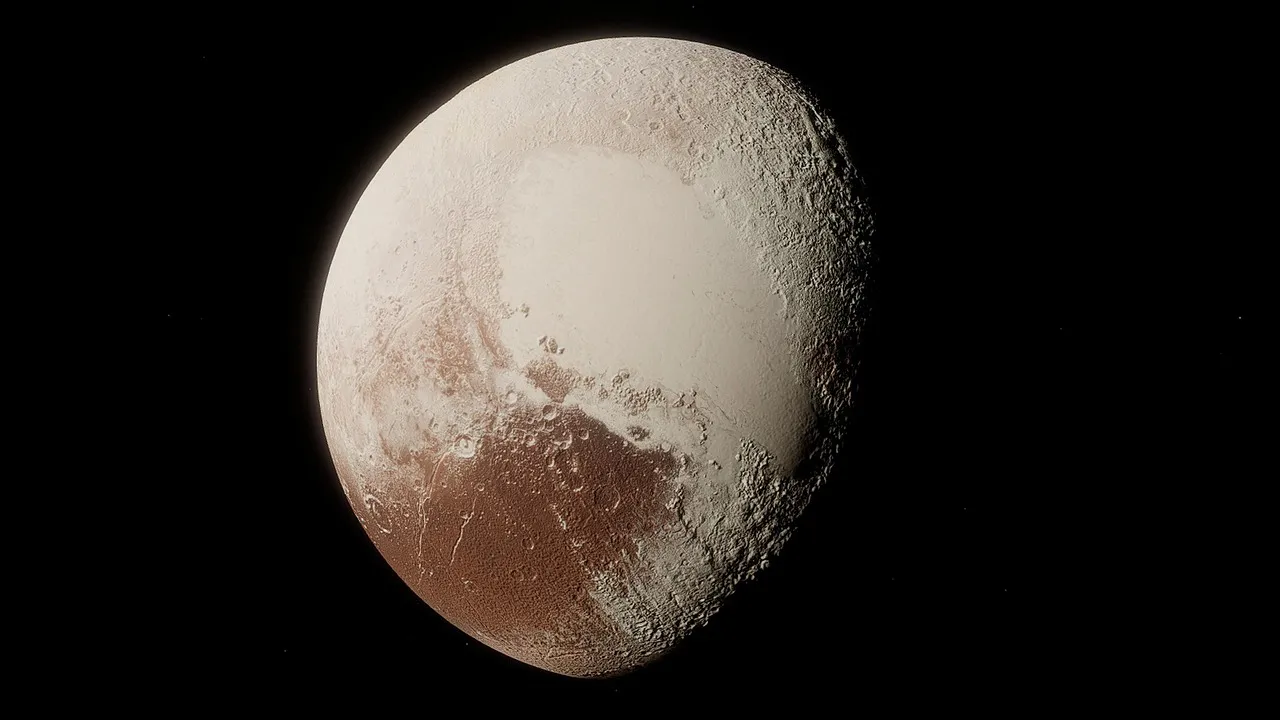
In 2006 the IAU demoted the much-loved Pluto from its position as the ninth planet from the Sun to one of five “dwarf planets.” The IAU had likely not anticipated the widespread outrage that followed the change in the solar system’s lineup. When the announcement was made, people around the world objected to the planet’s demotion on principle, saying that it altered tradition and history.
In 2006, in its 17th annual words-of-the-year vote, the American Dialect Society voted “plutoed” as the word of the year. To “pluto” is to “demote or devalue someone or something.” The word entered casual language almost immediately, which says something about how personally people took the news.
In April 2024, Arizona, where Pluto was first discovered in 1930, passed a law naming Pluto as the official state planet. It’s a symbolic gesture, but a telling one. Even two decades after the IAU vote, state governments were still pushing back.
Where the Debate Stands in 2026

In a surprising twist nearly two decades after Pluto was stripped of its planetary title, during an April 28, 2026, Senate Appropriations Committee hearing on NASA’s 2027 budget, Administrator Jared Isaacman revealed that NASA is already preparing scientific papers to push the scientific community to revisit the 2006 demotion. This marks the most official challenge to Pluto’s classification since the original vote.
In 2024, three planetary scientists proposed making the definition of “planet” more quantifiable, arguing that a body is a planet if it orbits one or more stars, stellar remnants or brown dwarfs, and has a mass within a specific range. The push for a cleaner, more measurable definition continues to gain traction in the research community.
For now, Pluto remains officially classified as a dwarf planet. Whether that status will change depends on the strength of the scientific arguments NASA may soon put forward. The IAU still has the final word, and no formal vote on reclassification has been scheduled. The debate, however, is no longer just sentimental – it’s scientific, institutional, and very much ongoing.
The Bigger Picture
What the Pluto saga ultimately reveals is that science is not a fixed set of facts but an evolving system of understanding. Categories change when knowledge grows, and Pluto’s story is a vivid example of that process at work. The fact that the debate is still alive twenty years later suggests the 2006 definition may not have been the final word.
For many researchers, Pluto’s case symbolizes not only a dispute over astronomical definitions, but also a broader debate over how science evolves in the face of new discoveries. That framing is perhaps the most honest way to hold the whole story. It’s less about one frozen world and more about what we mean when we say we understand the universe.
The IAU says there may be many more dwarf planets, perhaps more than a hundred, waiting to be discovered. If that’s true, the question of how we classify these worlds is only going to get more pressing. Pluto may have been demoted, but its story is far from over.
AI Disclaimer: This article was created with the assistance of AI tools and reviewed by a human editor.