

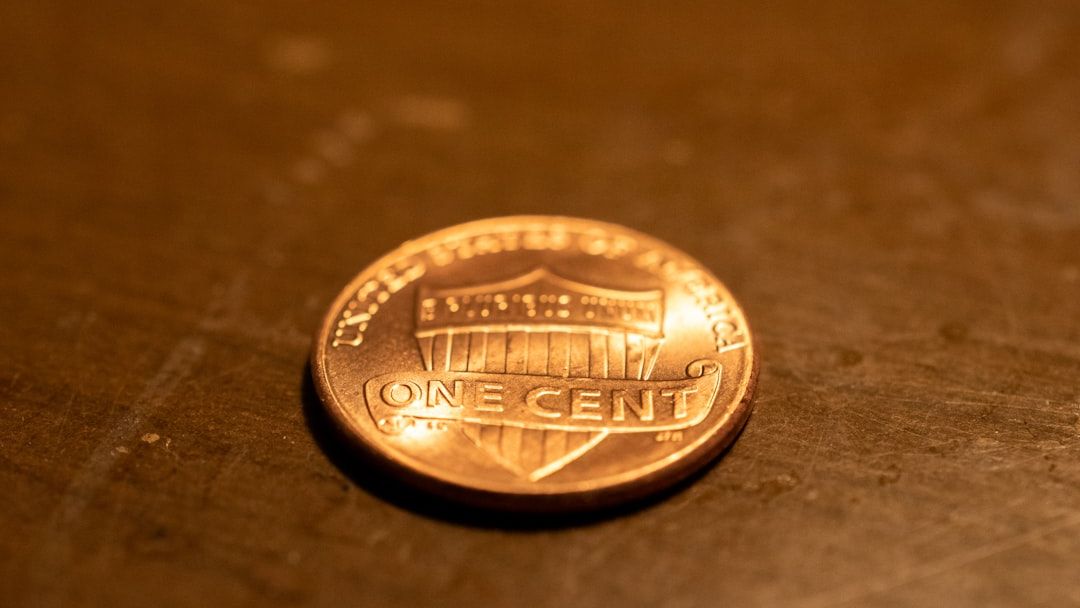
Why does NASA’s Curiosity rover have a ‘lucky penny’ on Mars? | Space photo of the day for May 6, 2026 – Image for illustrative purposes only (Image credits: Unsplash)
A 1909 Lincoln penny sits affixed to NASA’s Curiosity rover, serving as a precise scale reference amid the dusty plains of Gale Crater on Mars.[1][2] Engineers mounted the coin on the Mars Hand Lens Imager calibration target before launch in 2011, drawing from a long-standing geological practice. Recent images from the rover reveal the penny coated in fine Martian dust after more than 13 years of exposure to harsh conditions.[3]
The Coin Chosen for a Cosmic Role
Ken Edgett, principal investigator for the Mars Hand Lens Imager, or MAHLI, selected the specific penny himself. He purchased a rare 1909 “VDB” Lincoln cent – the first year these coins entered circulation, marking the centennial of Abraham Lincoln’s birth – with his own funds.[4] The “VDB” denotes the initials of designer Victor David Brenner on the reverse side. This particular coin traveled from Earth, enduring a seven-month journey aboard the Mars Science Laboratory spacecraft before Curiosity touched down in August 2012.
Edgett envisioned the penny as more than a mere tool. It embodied a tradition among geologists who place familiar objects in field photos to convey scale instantly. “Everyone in the United States can recognize the penny and immediately know how big it is,” he explained.[4] On Mars, where no human stands nearby for reference, the coin fills that role perfectly for MAHLI’s close-up inspections.
Calibrating Close-Ups on an Alien World
The MAHLI camera, mounted on the rover’s robotic arm, captures images with details finer than a human hair – down to 14 micrometers per pixel in its highest resolution.[1] The calibration target, including the penny, ensures accurate focus, color balance, and depth perception. Alongside the coin, it features pigmented silicone patches for color and brightness checks, a metric scale bar, and a stair-step pattern for three-dimensional modeling.
Scientists use these elements to verify the camera’s performance post-landing. The penny provides an unchanging size benchmark: 19.05 millimeters in diameter. Without it, gauging the dimensions of Martian pebbles or soil grains would prove far more challenging. This setup allows reliable comparisons between Mars data and Earth-based analyses.[4]
| Calibration Feature | Purpose |
|---|---|
| Lincoln Penny | Scale reference (known diameter) |
| Stair-step pattern | 3D focus and shape calibration |
| Pigmented patches | Color and brightness accuracy |
| Metric bar | Precise linear measurements |
A Tradition from Earthly Fieldwork
Geologists have long relied on pocket change for quick scale in photographs. For vast outcrops, they might pose a colleague nearby; for hand specimens, a coin suffices. The penny on Curiosity honors this informal ritual while adding formal precision through its fixed position.[2]
Edgett emphasized its dual role: practical for science and engaging for the public. “The public can watch for changes in the penny over the long term on Mars. Will it change color? Will it corrode?”[4] This curiosity invites global audiences to track the coin’s fate amid windblown sand and cosmic radiation. The target also bears “Joe the Martian,” a cartoon Edgett drew as a child during the Viking missions, blending personal history with outreach.
Dusted but Defiant After Years on Mars
Early images showed the penny pristine upon arrival. By October 2013, MAHLI captured it at maximum resolution, already gathering fine dust clumps.[1] Over the years, Mars’ thin atmosphere and frequent dust storms coated it thoroughly, yet Lincoln’s profile and inscriptions remain discernible.
A fresh close-up released recently underscores its endurance. The heads side, facing outward, bears the patina of 14 Martian years – testimony to the rover’s longevity in Gale Crater.[5] Curiosity has driven thousands of meters, analyzed diverse rocks, and survived global dust events, with the penny witnessing every milestone. This humble cent now symbolizes reliable engineering in extreme isolation.
Legacy of a Small Coin in Big Exploration
The penny’s presence extends beyond calibration. It humanizes a robotic mission, reminding viewers of shared heritage amid alien terrain. As Curiosity ascends Mount Sharp, probing for signs of ancient habitability, the coin persists as a steadfast marker.
Future rovers may adopt similar icons, but this 1909 artifact holds unique status – the first currency on another world. Its story prompts reflection: even one cent, placed thoughtfully, advances humanity’s reach across the solar system.