

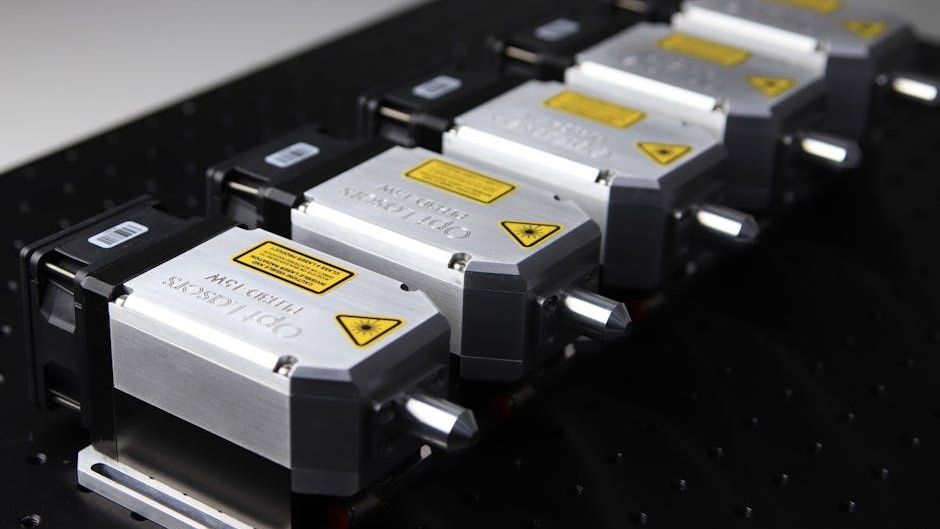
Quantum battery charges in a quadrillionth of a second with a laser – larger prototypes could last for years after charging for just a minute – Image for illustrative purposes only (Image credits: Pexels)
Melbourne, Australia — Scientists unveiled the world’s first proof-of-concept quantum battery, a device that harnesses laser light to charge in mere femtoseconds, or one quadrillionth of a second.[1][2] This miniature prototype, developed by teams from CSIRO, the University of Melbourne, and RMIT University, stores energy through quantum effects and discharges it as electrical current. The achievement, detailed in a March 2026 study, challenges conventional battery physics by charging faster as it grows larger.
How Quantum Coherence Powers Ultrafast Charging
The battery operates unlike traditional lithium-ion cells, which rely on slow chemical reactions between ions and electrodes. Instead, it captures energy as electromagnetic excitations among molecules locked in quantum coherence, a state where particles share synchronized internal properties like vibrations or electron spins.[3] Researchers sandwiched organic semiconductor layers, primarily copper phthalocyanine (CuPc), between silver mirrors to form a microcavity. This setup confines laser light, promoting collective behavior akin to the Dicke model in quantum optics.
Key to the speed lies superabsorption, where entangled molecules absorb photons in a single, massive event. Associate Professor James Hutchison of the University of Melbourne explained: “The advantage of quantum is that the system absorbs light in a single, giant ‘super absorption’ event and this charges the battery faster.”[1] A femtosecond laser pulse, tuned to 31 nanometers bandwidth, triggers this process almost instantly. The design includes hole-injection, electron-transport, and blocking layers to enable full charge-discharge cycles, converting stored excitations into usable current.
Experimental Proof and Scalable Performance
Tests at the University of Melbourne’s Ultrafast Laser Laboratory confirmed the battery’s prowess. Devices with varying molecule counts, from 2.8 × 10^14 to 7.9 × 10^14 CuPc units, underwent pump-probe spectroscopy using dual femtosecond lasers. Charging occurred within 34 femtoseconds full-width half-maximum, while excited states persisted for tens of nanoseconds via intersystem crossing to stable triplet states.[3]
Notably, performance scaled superextensively: charging power and energy density rose super-linearly with size, while charge time dropped subextensively. Steady-state discharge power reached levels proportional to the square of molecule count, yielding a threefold boost in external quantum efficiency over controls without mirrors. Professor Trevor Smith highlighted the lab’s role: “The unique capabilities of our Ultrafast Laser Lab… were critical in enabling us to record ultrafast signals over orders of magnitude in time.”[2]
Core Device Layers:
- ITO-coated glass substrate
- 75 nm silver bottom mirror
- 15 nm HAT-CN hole-injection
- 15 nm CuPc absorber
- Mixed CuPc:C60 and C60 layers
- 15 nm BPhen electron transport
- 1 nm LiF and 25 nm silver top mirror
Advantages That Break Energy Storage Rules
This quantum approach holds energy roughly a million times longer than it takes to charge in lab conditions, sparking speculation on endurance. CSIRO’s Dr. James Quach noted a hypothetical scale-up: a battery charged for one minute might sustain power for years, though real-world decoherence poses hurdles.[1] Wireless laser charging enables remote applications, free from cables.
Unlike classical batteries, where bigger packs charge slower, quantum versions accelerate with scale due to collective coupling strength growing as the square root of molecule number. Room-temperature operation further broadens viability. Early metrics show promise for high-density needs, though current storage remains fleeting at nanoseconds.
| Metric | Quantum Battery | Key Scaling |
|---|---|---|
| Charge Time | Femtoseconds | Decreases with size |
| Storage Duration | Tens of nanoseconds | Million-fold ratio |
| Discharge Power | Superextensive (~N²) | 3x efficiency gain |
Toward Real-World Energy Transformation
Dr. Quach emphasized next priorities: “The next step right now for quantum batteries is extending their energy storage time.”[2] Shielding from environmental noise could unlock uses in drones, electric vehicles, aircraft, and quantum computers. University of Queensland’s Andrew White suggested initial roles in low-energy quantum tech powering.
The prototype proves quantum batteries work, paving a path from lab to grid. As researchers refine stability, this femtosecond flash may redefine how devices stay powered.