

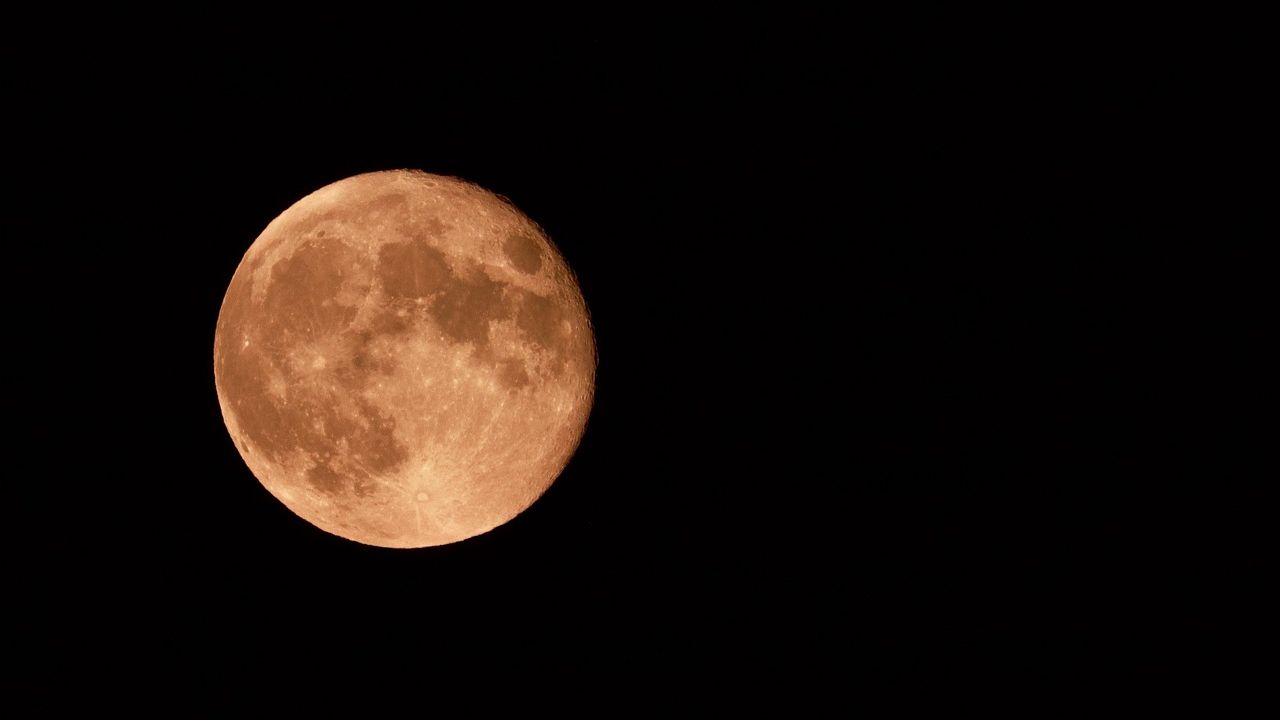
June full moon 2026: When, where and how to see the Strawberry Moon – Image for illustrative purposes only (Image credits: Pixabay)
As June evenings stretch longer and warmer, families and solo stargazers alike prepare to step outside for a reliable natural wonder. The Strawberry Moon will reach its peak on June 29, 2026, inviting viewers worldwide to witness a full moon that hangs low and glows with seasonal promise.[1] This event coincides with the heart of berry-picking season, turning a routine full moon into a marker of summer’s arrival.
Roots in Native Traditions
The Strawberry Moon earned its name from several Native American tribes, including the Algonquian peoples of the northeastern United States, Ojibwe, Dakota, and Lakota groups. They associated the June full moon with the short but bountiful strawberry harvest, when wild berries ripened across meadows and forests.[1] This designation highlighted a time of abundance, as early fruits and blooming flowers signaled the shift toward warmer months.
Other cultures offered their own labels, reflecting local rhythms. European settlers called it the Rose Moon or Honey Moon, linking it to floral blooms and mead-making traditions tied to June weddings. Tribes like the Cherokee named it the Green Corn Moon, while the Haida referred to it as the Berries Ripen Moon.[2] These names wove the lunar cycle into daily life, from tending crops to celebrating animal births.
Peak Illumination: Mark These Times
Officials tracked the moon’s full phase precisely for 2026. It hit maximum illumination on June 29 at 7:56 p.m. Eastern Daylight Time, or 23:56 UTC.[1][3] Viewers in the western U.S. saw it crest later into the evening, while those in Europe caught the height early on June 30.
Local calculators adjusted for precise moonrise, often aligning the spectacle shortly after sunset. The moon appeared fully round from late June 28 through early July 1, giving a wide window for observation. Astronomy sites recommended checking tools for exact rise times in specific locations to avoid missing the prime moments.[4]
Prime Viewing Tips for Clear Sights
Anyone with a clear eastern view could enjoy the show, no telescope required. The moon rose near sunset, climbing slowly due to its timing near the June solstice on June 21.[5] Horizon views amplified its size through the well-known moon illusion, making it seem grander against earthly backdrops like trees or buildings.
For the best experience, enthusiasts followed these steps:
- Head to open areas like fields, beaches, or hills with unobstructed eastern horizons.
- Watch just after sunset on June 29, when the moon emerged low and often tinged orange or red from atmospheric scattering.[1]
- Seek dark skies away from city lights to spot nearby stars in Sagittarius, the constellation hosting the moon.
- Bring binoculars for subtle craters, though the naked eye sufficed for the glow.
- Check weather forecasts, as clear nights enhanced the low-path drama in the Northern Hemisphere.
Southern Hemisphere observers noted a higher arc, contrasting the northern low ride.
Unique Traits of the 2026 Edition
This Strawberry Moon stood out for its proximity to the solstice, keeping it nearer the horizon than mid-year full moons. That path created vivid colors at rise and set, with light bending through thicker air layers.[5] At roughly 376,000 miles distant, it ranked closer than some earlier 2026 moons, appearing brighter against twilight.
No eclipses or rare alignments accompanied it, allowing focus on the moon itself. Folklore persisted, with traditions viewing full moons as prime for fishing or outdoor pursuits. Modern apps tracked its path precisely, blending ancient lore with technology for accessible wonder.[1]
Stepping out under the Strawberry Moon connects generations to the sky’s steady rhythm. In a busy world, this brief harvest glow reminds viewers of nature’s quiet cycles, ripe for shared evenings or quiet reflection as summer deepens.