

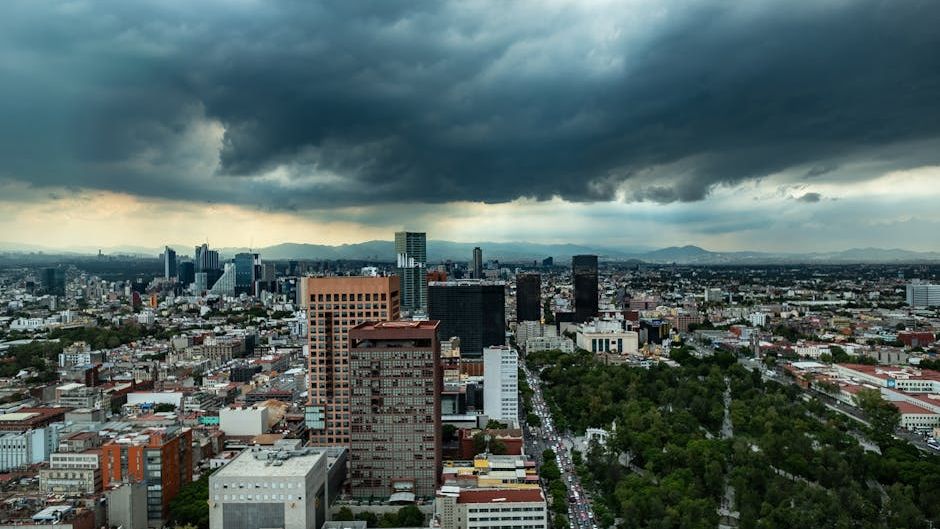
Up to 2cm a month: Nasa keeps track as Mexico City sinks into the ground – Image for illustrative purposes only (Image credits: Pexels)
The central Zócalo in Mexico City offers visitors an immediate sense of imbalance. The soaring spires of the metropolitan cathedral lean noticeably in one direction, while the attached Metropolitan Sanctuary tilts in another. Nearby, the National Palace stands with its own visible misalignment. These shifts mark the most striking evidence of a process that has reshaped the city for more than a century.
Centuries of Gradual Change Beneath the Streets
Mexico City rests on a former lake bed whose soft sediments compress over time under the weight of buildings and infrastructure. This compression produces steady downward movement across large sections of the urban area. The result appears most clearly in older structures whose foundations settle at different rates.
Engineers and geologists have documented the pattern for generations. Historic landmarks now display measurable tilts that require ongoing maintenance to preserve their stability. The phenomenon affects both colonial-era buildings and more recent construction, though the visible effects stand out most sharply in the city center.
How Satellite Radar Captures the Movement
A powerful radar system operated by NASA supplies fresh measurements of the city’s vertical displacement. The technology detects changes as small as a few centimeters per month across wide areas. These readings allow researchers to map subsidence patterns with greater precision than earlier ground-based surveys permitted.
The data confirm that parts of the capital continue to drop at rates reaching two centimeters monthly in some zones. Scientists use the information to identify which neighborhoods experience the fastest change and to track whether the pace remains consistent over time. The approach relies on repeated satellite passes that compare surface elevations without requiring physical access to every location.
Why the New Measurements Matter
Previous studies established the existence of subsidence, yet the radar observations add detail about its current speed and distribution. Experts expect the updated figures to increase public and official awareness of the challenge. Greater attention could support better planning for infrastructure repairs and future development decisions.
The radar findings also help separate natural settling from other factors such as groundwater extraction. This distinction matters because different causes call for different responses. Continued monitoring will show whether any recent policy changes have altered the overall trend.
Looking Ahead at an Ongoing Urban Reality
Mexico City’s subsidence represents a long-term condition rather than a sudden crisis. City planners already incorporate elevation adjustments into many projects, yet the radar data underscore the need for sustained vigilance. Historic sites in the Zócalo and beyond will likely require further stabilization work as the ground continues its slow descent.
The combination of visible architectural shifts and precise satellite records illustrates how a centuries-old geological process intersects with modern technology. Residents and visitors alike encounter the effects daily, even as researchers refine their understanding of how the city moves beneath their feet.