

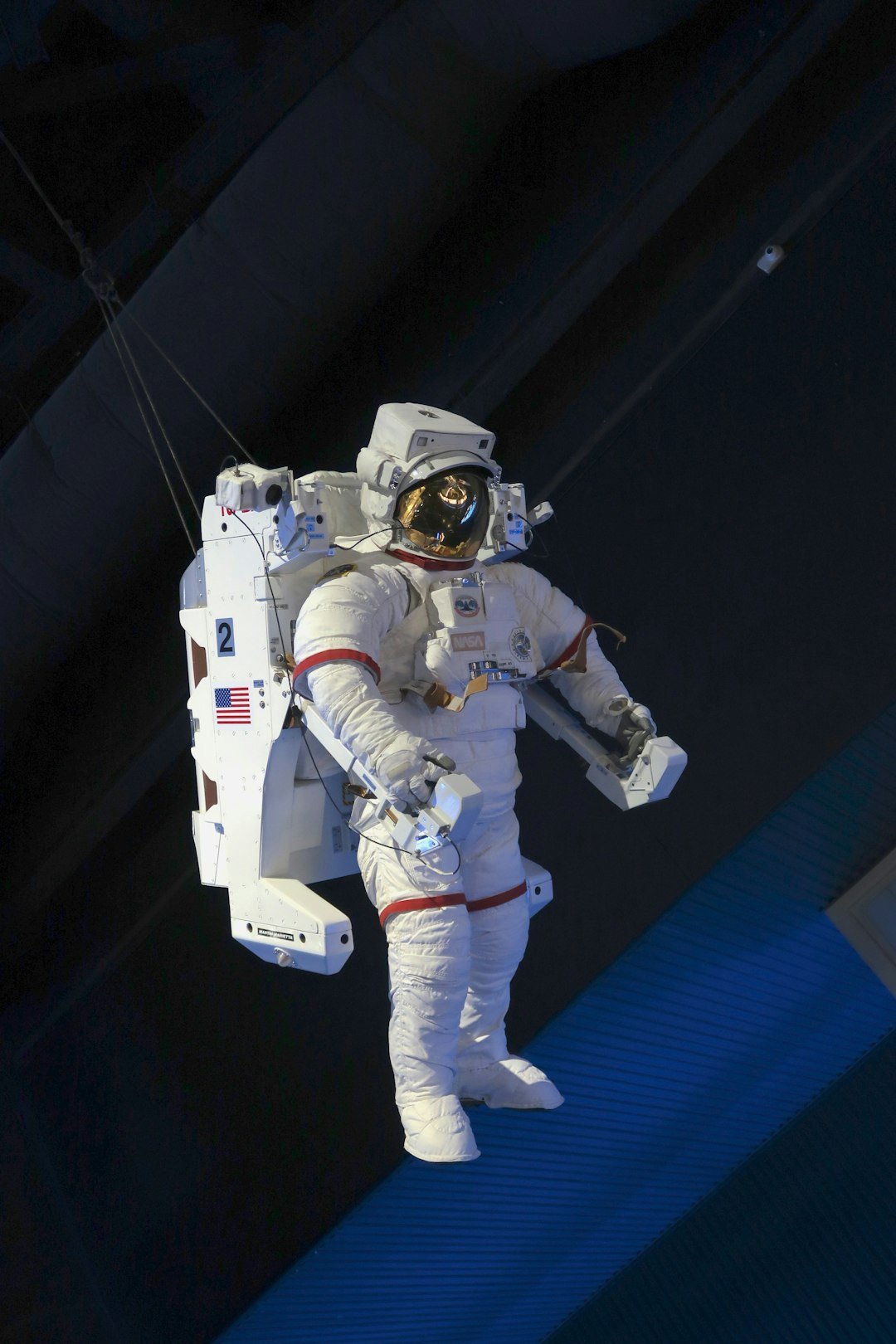
A Tiny Hero Floats into Space History (Image Credits: Unsplash)
NASA’s Artemis II mission concluded with a flawless splashdown in the Pacific Ocean on April 10, 2026, capping a 10-day odyssey that looped around the Moon for the first time with humans aboard since 1972. Commander Reid Wiseman led the crew through this landmark flight, emerging from the Orion spacecraft with uncontained elation. What caught widespread attention was Rise, the plush moon mascot and zero-gravity indicator, firmly attached to his water bottle as he celebrated on the recovery deck.[1][2]
A Tiny Hero Floats into Space History
Rise captured hearts from the moment the Orion spacecraft reached orbit on April 1, 2026. This small plush toy, shaped like the Moon with an Earth-hued hat dotted in stars, served a practical purpose: it floated freely to signal zero gravity inside the capsule. Crew members Reid Wiseman, Victor Glover, Christina Koch, and Jeremy Hansen watched it drift during early flight days, confirming their departure from Earth’s pull.[2]
The mascot quickly became a fixture in livestreams and NASA social media posts. It bobbed alongside the astronauts during lunar flyby broadcasts, endearing itself to viewers worldwide. Rise even carried an SD card etched with over 5 million names submitted by the public, symbolically ferrying humanity’s well-wishes to deep space.[3]
From Third-Grader’s Dream to Lunar Traveler
An 8-year-old from Mountain View, California, named Lucas Ye dreamed up Rise through a NASA-sponsored design contest. Thousands entered ideas for a zero-gravity indicator, but Ye’s plush Moon prototype stood out for its whimsy and functionality. NASA fabricators at Goddard Space Flight Center brought it to life, complete with the starry cap inspired by iconic space views.[1][4]
Ye’s creation joined the crew at Kennedy Space Center on March 27, 2026, ahead of launch. Photos showed Wiseman, Hansen, Koch, and Glover posing with it during media events, already treating it like a team member. Installed in Orion days before liftoff, Rise underwent final checks, ready for its stellar debut.[3]
- Contest entry: Simple sketch of a floating Moon toy.
- Production: Handcrafted by NASA technicians.
- Pre-launch: Photographed with full crew at Kennedy Space Center.
- In-flight: Floated during zero-G confirmation.
- Post-flyby: Featured in emotional lunar crater naming tribute.
The Emotional Inscription That Deepened the Bond
Hidden sentiment elevated Rise beyond a mere toy. Someone inscribed “Carroll” on the plush, honoring Wiseman’s wife who passed from cancer in 2020. During the April 6 lunar flyby livestream, Hansen movingly recounted her story, prompting the crew to propose naming a Moon crater after her. They shared a visible group embrace on camera, tears evident amid the milestone moment.[2]
Wiseman later reflected on his attachment. “It’s hard not to love this little guy. I can’t let Rise out of my sight,” he shared post-mission. The inscription transformed Rise into a personal emblem of loss and legacy for the commander.[2]
Wiseman’s Daring Rescue at Splashdown
Protocol called for leaving zero-gravity indicators behind in Orion after missions, preserving them for analysis. Wiseman had other plans. As recovery teams extracted the crew from the capsule – nicknamed Integrity – he tucked Rise into a survival kit dry bag and hooked it to his pressure suit.[1]
“I was supposed to leave Rise in Integrity… but that was not something I was going to do,” Wiseman posted on X the next day. From the recovery raft to a Navy helicopter bound for USS John P. Murtha, Rise stayed close. In Houston at Ellington Field, it dangled from his water bottle during astronaut corps welcomes, then appeared in family photos with his daughters, captioned “Mission complete.”[2]
Social Media Storm and Lasting Legacy
Fans quickly dubbed the duo “Rise Wiseman,” spawning memes and jokes on Reddit and Threads. Comments poured in: “Reid’s new child, Rise Wiseman” or pleas for joint custody. The plush’s post-mission tour amplified Artemis II’s triumph, blending science with human warmth.[2]
Rise symbolizes how space exploration unites generations – from a child’s creativity to veteran astronauts’ resolve. Its journey underscores the personal stakes in pushing humanity’s frontiers.[1]
Key Takeaways
- Rise, designed by 8-year-old Lucas Ye, flew as Artemis II’s zero-gravity indicator with 5 million names aboard.
- Commander Wiseman smuggled it home, nicknaming it amid tributes to his late wife Carroll.
- The mascot’s viral fame highlights the human element in NASA’s lunar revival.
Artemis II proved technical prowess, but Rise reminded everyone of exploration’s joyful core. As Wiseman carries his companion forward, it prompts reflection on what we hold dear amid cosmic achievements. What role do mascots play in your favorite space stories? Share in the comments.