

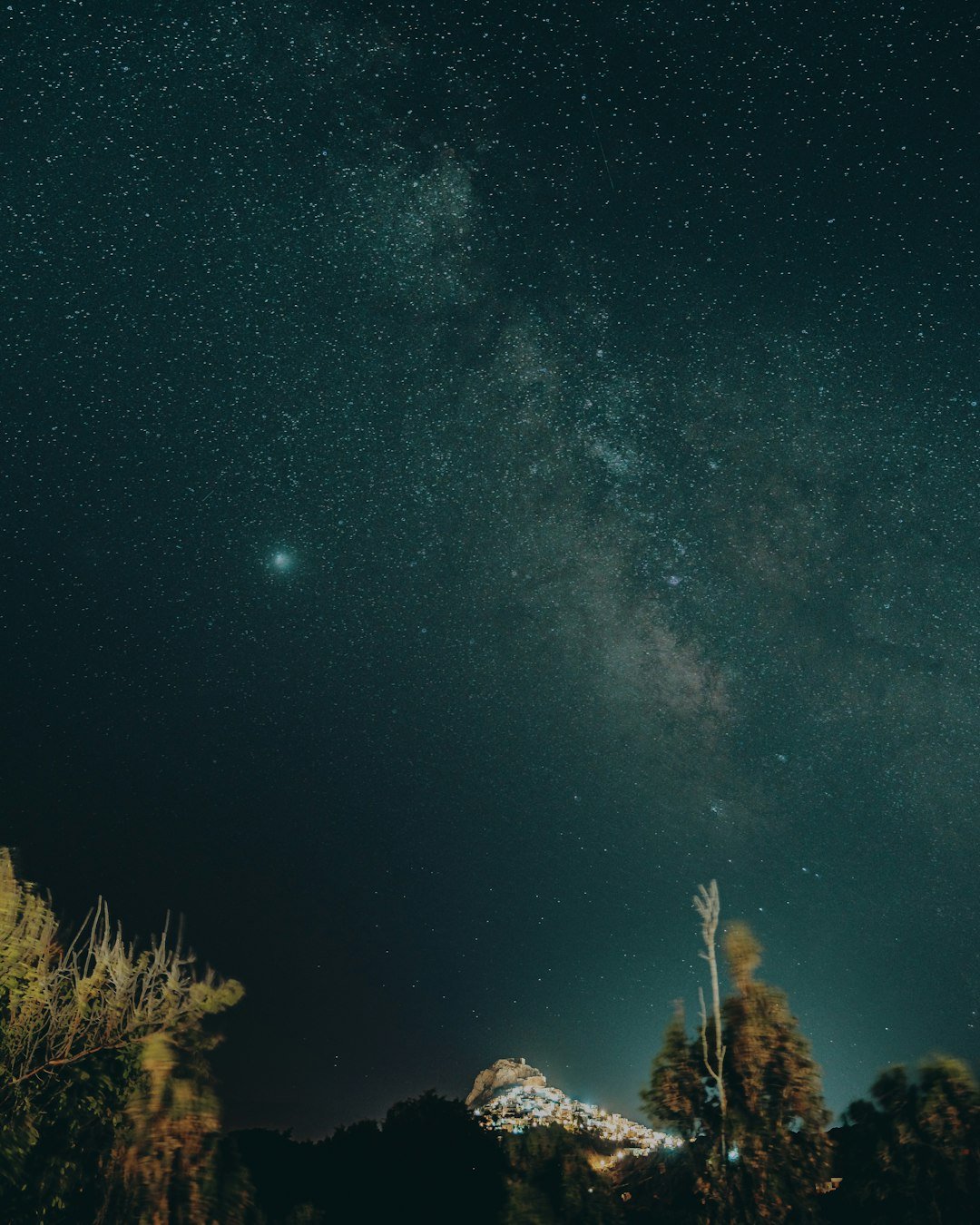
Stars Absent from Prehistoric Heavens (Image Credits: Unsplash)
Picture a vast, dark plain in the late Cretaceous period, where towering sauropods and swift theropods roamed under a canopy of stars. Approximately 100 million years ago, the night sky offered a spectacle utterly unlike the one visible today, shaped by the relentless motion of stars and the birth of new celestial lights. Dinosaurs experienced a cosmos in flux, with patterns that shifted over eons due to galactic dynamics and stellar lifecycles.[1]
Stars Absent from Prehistoric Heavens
Orion’s brilliant points failed to pierce the dinosaur-era darkness. Rigel, the blue supergiant anchoring the hunter’s foot, had not yet ignited, its formation occurring only about 8 million years ago. Similarly, Betelgeuse, the fiery shoulder star, emerged around 10 million years ago, long after the reign of these ancient reptiles ended 66 million years ago.[1]
These absences stemmed from the finite lifespans of stars. Massive ones burn brightly but briefly, while others like our Sun persist for billions of years. Dinosaurs thus missed out on the dramatic glow of these modern icons, which dominate winter evenings for contemporary observers.
Enduring Lights in Shifting Positions
Sirius, the sky’s brightest star today, already shone during the Cretaceous. Estimated at 200 to 300 million years old, it traced its path through space, though its precise location relative to Earth remains uncertain over such vast timescales. Vega, another enduring beacon at roughly 500 million years old, likewise graced prehistoric nights.[1]
Star clusters offered some continuity. The Pleiades, a loose gathering of hot blue stars about 100 million years old, were still coalescing, their youthful brilliance cutting through the dark. The older Hyades cluster, aged around 750 million years, existed but appeared in a distorted form, as individual stars drifted along independent orbits.
- Sirius: Existed, but position shifted due to proper motion.
- Vega: Present, contributing steady light from Lyra.
- Pleiades: Forming, visible as a nascent cluster.
- Hyades: Recognizable but rearranged.
- Rigel and Betelgeuse: Not yet born.
Galactic Journeys and the Milky Way’s Glow
Earth’s position within the Milky Way amplified these changes. Roughly 100 million years ago, the solar system occupied the galaxy’s opposite side, presenting a wholly different stellar backdrop. Stars move chaotically through the galactic disk, not in lockstep, scrambling familiar patterns over millions of years.[1]
Yet the Milky Way’s hazy band endured as a constant. Composed of countless distant stars, it arched across the sky much as it does now, its structure evolving too slowly for such intervals. Data from the Gaia spacecraft, which tracks motions of nearby stars, underscores this flux; simulations reveal how even modest timespans reshape local skies.
| Star/Feature | Age (Million Years) | Visible in Cretaceous? |
|---|---|---|
| Sirius | 200-300 | Yes |
| Vega | 500 | Yes |
| Pleiades | 100 | Forming |
| Rigel | 8 | No |
| Betelgeuse | 10 | No |
Celestial Neighbors and Pristine Views
Planets appeared as wandering dots, their positions dictated by orbital mechanics largely unchanged over 100 million years. Saturn, however, lacked its iconic rings, which formed between 10 and 100 million years ago. The Moon loomed larger, positioned closer to Earth, and bore active volcanoes, with eruptions persisting until at least 120 million years ago, as evidenced by lunar samples.
Dinosaurs enjoyed unrivaled clarity. Absent light pollution, satellites, or aircraft, their skies revealed meteor showers, auroras, and the Milky Way’s full splendor – potentially dim enough to cast shadows. Modern studies indicate up to 80% of Americans cannot see this band today, a stark contrast to prehistoric purity.[1]
Key Takeaways:
- Constellations dissolved due to stellar drift; no Big Dipper or Orion.
- Young stars like Rigel postdated dinosaurs by tens of millions of years.
- Milky Way persisted, but from a galactic vantage shifted 180 degrees.
The night sky’s transformation reminds us of the universe’s impermanence. While dinosaurs beheld alien stars, the core wonder of the cosmos linked their world to ours. What part of this ancient vista captivates you most? Tell us in the comments.