


There’s a quiet but significant shift happening inside the device you probably checked before reading this. Your smartphone is no longer just a tool you operate. Increasingly, it’s becoming an agent that operates on your behalf, negotiating subscriptions, booking appointments, and now, eyeing your W-2s.
The idea of fully autonomous tax filing used to sound like science fiction. In 2026, it’s closer to a product roadmap. Here’s what the evidence actually shows.
The AI Agent Market Is Growing at a Pace Few Industries Have Ever Seen

The numbers behind AI agent adoption are striking. The global AI agents market was estimated at roughly $7.63 billion in 2025 and is projected to reach nearly $183 billion by 2033, growing at a compound annual rate of nearly 50 percent. That kind of trajectory puts it among the fastest-growing technology categories in recorded market history.
The global agentic AI market alone is projected to reach $10.8 billion in 2026. About 93 percent of business leaders believe organizations that successfully scale AI agents over the next 12 months will gain a meaningful competitive advantage. The momentum is real, not just speculative.
What an AI Agent Actually Does – and Why It’s Different From a Chatbot

Most people still picture AI as a chatbot: you ask it something, it answers. Agentic AI is a different animal entirely. The integration of large language models is transforming AI agents from simple rule-based bots into autonomous, multi-step task performers that can interpret complex instructions, make contextual decisions, and execute workflows with minimal human intervention.
AI personal agents are now arriving in a form that companies have been chasing for years – and what we currently do manually and in piecemeal fashion through apps will increasingly be done automatically. For example, if a flight is cancelled, an AI agent could autonomously rebook the flight, reschedule meetings, and order food – all without being asked. This is very much within reach for current agentic capabilities.
Tax Firms Are Already Deep Into AI Adoption

The transformation isn’t just theoretical – it’s already restructuring entire professions. According to the 2025 Wolters Kluwer Future Ready Accountant report, AI adoption in accounting firms leapt from just 9 percent in 2024 to 41 percent in 2025. That kind of jump in a single year is unusual in any industry, let alone one as traditionally cautious as accounting.
In the same study, 77 percent of firms reported plans to increase their AI investment, and 35 percent are already utilizing AI tools daily. The Thomson Reuters Institute’s 2026 AI in Professional Services Report found that roughly one third of tax firms are already using generative AI, and many more plan to bring it in. The profession isn’t waiting to see how this plays out.
The IRS Itself Has Gone Agentic

While consumers debate whether to trust AI with their taxes, the government is already using it on the other side of the table. Tax season in 2026 finds the IRS relying less on human oversight and more on artificial intelligence, following a workforce reduction between January and May 2025 that cut staff from 103,000 to 77,000 employees. As a result, the IRS is leaning heavily on technology to fill the growing gap, with AI now powering audit selection, fraud detection, and taxpayer services.
In late 2025, the IRS rolled out a new AI program called Agentforce across the Office of Chief Counsel, Taxpayer Advocate Services, and the Office of Appeals. The system searches documents and provides case summaries, allowing personnel more time for complex casework. The IRS now operates 129 AI use cases, up from 54 in 2024. That’s a dramatic expansion in a very short window.
Your Phone Is Becoming the Primary Interface for Agentic Finance

The smartphone angle is where this gets personal. One of the significant trends of 2026 is the advancement of on-device generative AI capabilities, also known as edge AI, with Apple expected to deliver on its long-promised Siri revamp featuring AI-powered improvements. Running AI directly on the device, rather than routing through a server, changes both speed and privacy.
Apple’s on-device AI model, Apple Intelligence, is designed to handle many new tasks while ensuring data privacy, and may use a third-party model for less sensitive questions. Mastercard, PayPal, and Google have all launched protocols for AI agents to make purchases on behalf of users. The infrastructure for a phone that genuinely manages your financial life autonomously is being built right now.
Autonomous Tax Filing Is Already Partially Real for Businesses

Consumer tax automation gets the headlines, but business tax automation is already operational. Avalara has moved toward AI agents capable of autonomous execution, with a use case called Agentic Returns that automatically compiles transaction data, applies the correct forms and tax rules, and files returns after internal review. That’s a significant step beyond software that helps you file – this software files for you.
The system also supports direct interaction between different AI agents inside a company’s software stack, meaning an ecommerce platform can trigger a tax filing automatically by connecting with a compliance agent. According to Gartner research, by the end of 2026, over 40 percent of enterprise applications will feature embedded task-specific AI agents – a dramatic leap from less than 5 percent in early 2025.
Consumers Are Already Turning to AI Before They Open TurboTax
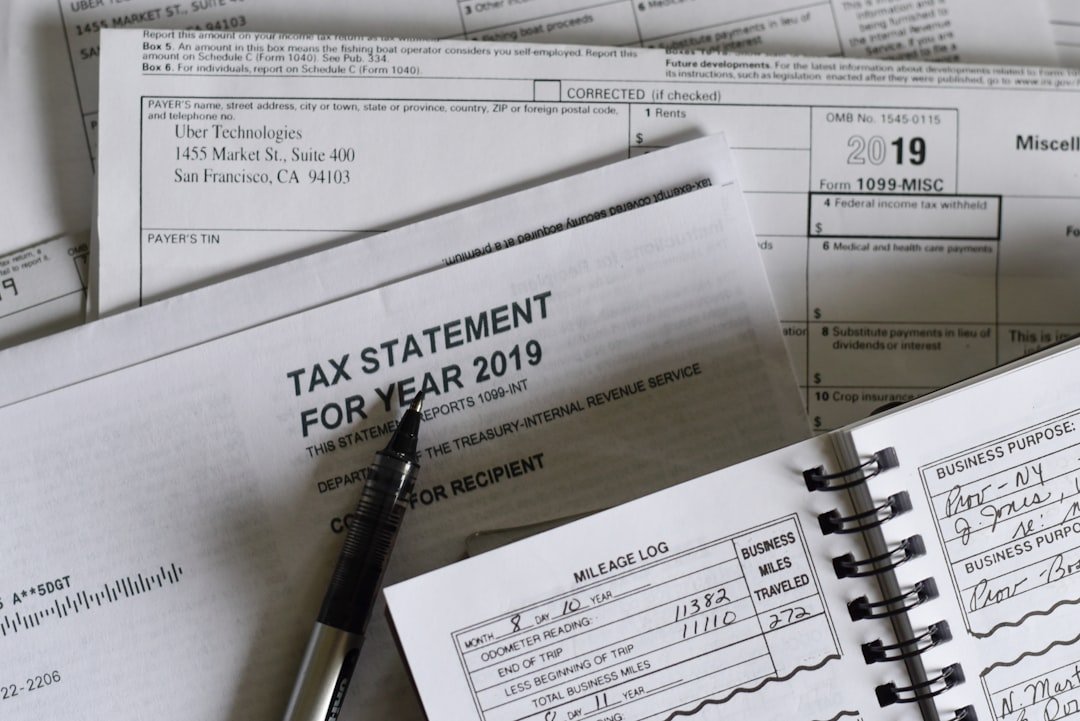
The behavioral shift at the consumer level is already measurable. According to the 2026 IPX1031 Tax Procrastinators Report, nearly half of Americans say they trust artificial intelligence for tax advice, while 21 percent plan to use it to help complete their taxes, intending to use the technology for answering filing questions, finding deductions, and proofreading returns.
One user in the Bay Area used Claude Code to organize his tax documents into a structured spreadsheet for his accountant, describing the output as substantially better than what he had produced manually in prior years. Tax professionals say AI can help consumers organize receipts, obtain plain-English explanations of tax concepts, and identify deductions worth raising with a professional. The usage pattern is real, even if full autonomy isn’t quite here yet.
The Risks Are Significant and Experts Are Not Quiet About Them

None of this progress comes without serious caveats. An accounting instructor from George Mason University stated that using AI for tax help presents a major data security and privacy risk, warning that uploading sensitive documents like W-2 or 1099 forms, or even typing the information into a public forum, effectively makes that information public.
Experts point out that outputs from AI tools can contain inaccuracies and hallucinations, and quality depends heavily on user prompts. Generative AI models often operate on outdated training data, while the IRS constantly issues updates that may not be reflected in those models. Bias is also a documented concern: independent studies show that Black taxpayers are audited at rates three to five times higher than others, and the Government Accountability Office has identified unintentional algorithmic bias as a potential cause, noting that when AI trains on historically biased data, it can perpetuate past discrimination through automated systems.
Regulation Is Catching Up, but the Gap Is Still Wide

Lawmakers on both sides of the Atlantic are trying to keep pace. By August 2026, the EU AI Act will become fully applicable, which has shifted agentic AI from a private corporate tool into a regulated financial product. Under these regulations, AI agents used for complex tax calculations are increasingly categorized as high-risk, mandating strict data lineage and reasoning protocols.
Colorado enacted the first comprehensive state AI law – the Colorado Artificial Intelligence Act – effective as of May 2024, to govern high-risk AI systems, requiring risk management for AI-driven decisions in employment, housing, and healthcare, with implementation scheduled for June 2026. Meanwhile, a Cisco benchmark study found that 64 percent of respondents worry about inadvertently sharing sensitive information with generative AI tools. Awareness is rising, but the legal frameworks are still taking shape.
The Future Role of Humans: Oversight, Not Execution

The most thoughtful framing coming from inside the industry is not replacement but redefinition. The most significant shift in 2026 is not the replacement of tax professionals but the redefinition of their roles – the position of “tax doer” is being replaced by the “agent orchestrator.” Someone still needs to understand what the agent is doing and whether it’s right.
Tax professionals say the safest move is to use AI as a helper, not the decision-maker – letting it organize documents or point toward relevant rules, while a qualified preparer reviews everything before signing. The bottom line has not changed: AI can speed up tax preparation, but it does not transfer legal responsibility. That gap – between automation and accountability – is where the most important conversations about AI agents are still happening.
Conclusion: Autonomy Is Arriving, and the Timeline Is Shorter Than Most Expect

The picture that emerges from 2025 and 2026 data is one of acceleration, not gradual progress. The big push of 2025 was getting agents to actually do work – not just generate outputs, but execute workflows end to end. This is the “services as software” thesis in action, and it’s where the gap between demonstration and real-world deployment becomes clear.
Thomson Reuters’ research suggests that firms failing to develop an AI plan now could fall irreparably behind within three years. For individuals, the equivalent pressure is softer but real: the people who understand what their AI agent is doing with their financial data will be in a fundamentally better position than those who simply trust the result.
The phone that does your taxes without asking isn’t a distant fantasy. It’s a product under active development by some of the largest companies in the world. The more interesting question – one worth sitting with – is not whether it’s coming, but whether you’ll actually want it to go that far.