

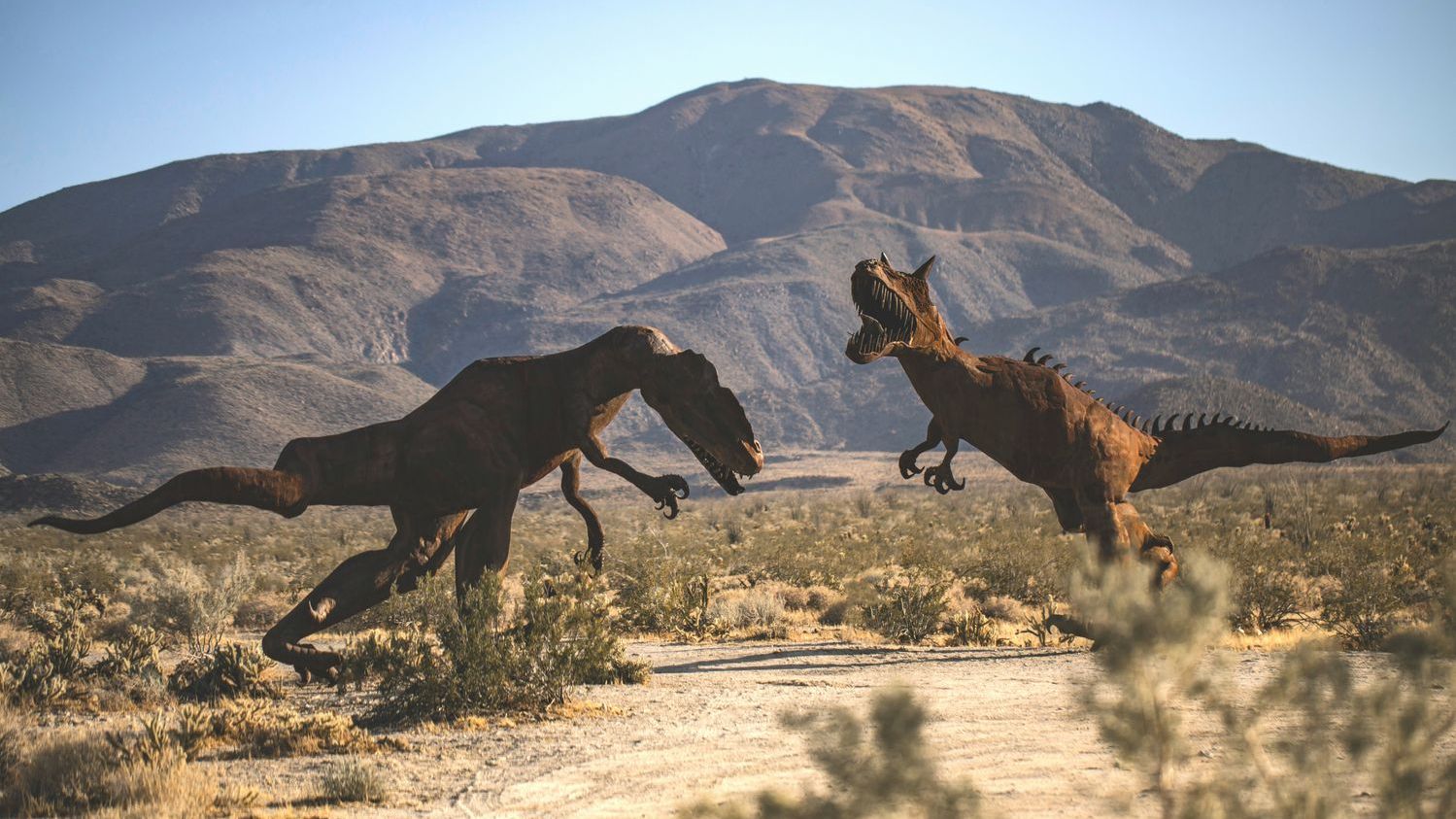
Dinosaurs may have originated 10 million years earlier than fossils show – Image for illustrative purposes only (Image credits: Unsplash)
Imagine a world 243 million years ago, where lush river valleys teemed with early life forms scrambling to fill niches left by a massive extinction. Paleontologists unearthed fossils in Tanzania that challenge long-held views on when dinosaurs first appeared. These remains belong to a creature so closely related to dinosaurs that scientists now believe the group’s true beginnings occurred at least a decade earlier than the oldest confirmed dinosaur bones suggested.[1][2]
A Breakthrough in Tanzania’s Ancient Beds
Teams of researchers first spotted bones in 2007 amid the arid grasslands of southern Tanzania’s Ruhuhu Valley, part of the Manda Beds formation. Excavations yielded fragments from at least a dozen individuals, enough to reconstruct much of the animal’s skeleton despite missing skull parts and hands. Dated to the middle Triassic period around 243 million years ago, these fossils predated the previous earliest dinosaur relatives by a significant margin.[3]
Sterling Nesbitt, a paleontologist then at the University of Texas at Austin, led the effort. His international team included experts from the University of Washington, the Utah Museum of Natural History, and institutions in Chicago, South Africa, and Germany. They published their findings in the journal Nature in March 2010, sparking widespread discussion in the field.[4]
The site once formed part of a vast river system on the supercontinent Pangaea, surrounded by woodlands, ferns, and early conifers. Such environments preserved a snapshot of rapid diversification among archosaurs, the broader group that includes dinosaurs, birds, and crocodiles.
Meet Asilisaurus kongwe: Not Quite a Dinosaur
Asilisaurus kongwe earned its name from Swahili words meaning “ancestor” and “ancient.” This quadrupedal creature stood about 1.5 to 3 feet tall at the hip and stretched 3 to 10 feet long, weighing between 22 and 66 pounds – roughly the size of a Labrador retriever. A long tail aided balance as it scurried on all fours through prehistoric undergrowth.[2]
Its beak-like lower jaw and leaf-shaped teeth pointed to a diet of soft plants, ferns, and fibrous vegetation, possibly mixed with some meat. These features marked a shift from the meat-eating habits expected in early dinosaur kin. “The crazy thing about this new dinosaur discovery is that it is so very different from what we all were expecting,” noted Randall Irmis, a curator at the Utah Museum of Natural History.[4]
- Quadrupedal build with slender limbs
- Peg-like or triangular teeth without sharp serrations for slicing flesh
- Over 20 shared skeletal traits with dinosaurs, but lacking the open hip socket defining true dinosaurs
- Part of silesaurs, a group now recognized as dinosaurs’ closest relatives
Christian Sidor, from the Burke Museum, emphasized the surprise: finding such a quadruped herbivore near the dinosaur line upended assumptions of bipedal carnivores dominating early stages.
Reshaping the Timeline of Dinosaur Dawn
Before this find, the oldest undisputed dinosaur fossils came from South America, dated to roughly 230 million years ago. Silesaurs like Asilisaurus, however, lived alongside primitive crocodilian kin, implying dinosaurs and their sisters split from a common ancestor earlier – by at least 243 million years ago. This gap of 10 million years meant the fossil record had missed the mark on origins.[1]
“This shows that the lineage leading to dinosaurs goes a lot further back in time than we thought,” Irmis explained. The discovery highlighted dietary flexibility: plant-eating evolved independently at least three times in under 10 million years among these groups, fueling their rise.[2]
Previously sparse evidence from the early-to-middle Triassic suggested slower diversification. Now, the picture shows a burst of forms – silesaurs, pterosaurs, lagerpetids – competing in a post-extinction world.
Key Shifts in Understanding:
- Divergence of dinosaurs and silesaurs: Before 243 million years ago
- Dietary evolution: Carnivores to herbivores/omnivores in rapid bursts
- Triassic diversity: More archosaur groups coexisting earlier
Broader Ripples for Prehistoric Life
The Asilisaurus fossils arrived from a bone bed rich in variety, underscoring Tanzania’s role as a hotspot for early archosaurs. Nesbitt observed, “Everyone loves dinosaurs. But this new evidence suggests that they were really only one of several large and distinct groups of animals that exploded in diversity in the Triassic.”[3]
This revelation murkies the “original dinosaur” blueprint, blending quadrupedal plant-munchers with later bipedal predators. It prompts searches for even older direct dinosaur traces, potentially filling gaps in the record. Pterosaurs and other kin may trace deeper roots too.
Ultimately, the find cements the Triassic as a pivotal era of experimentation, where flexible survivors like dinosaur precursors outpaced rivals to dominate for 165 million years.