

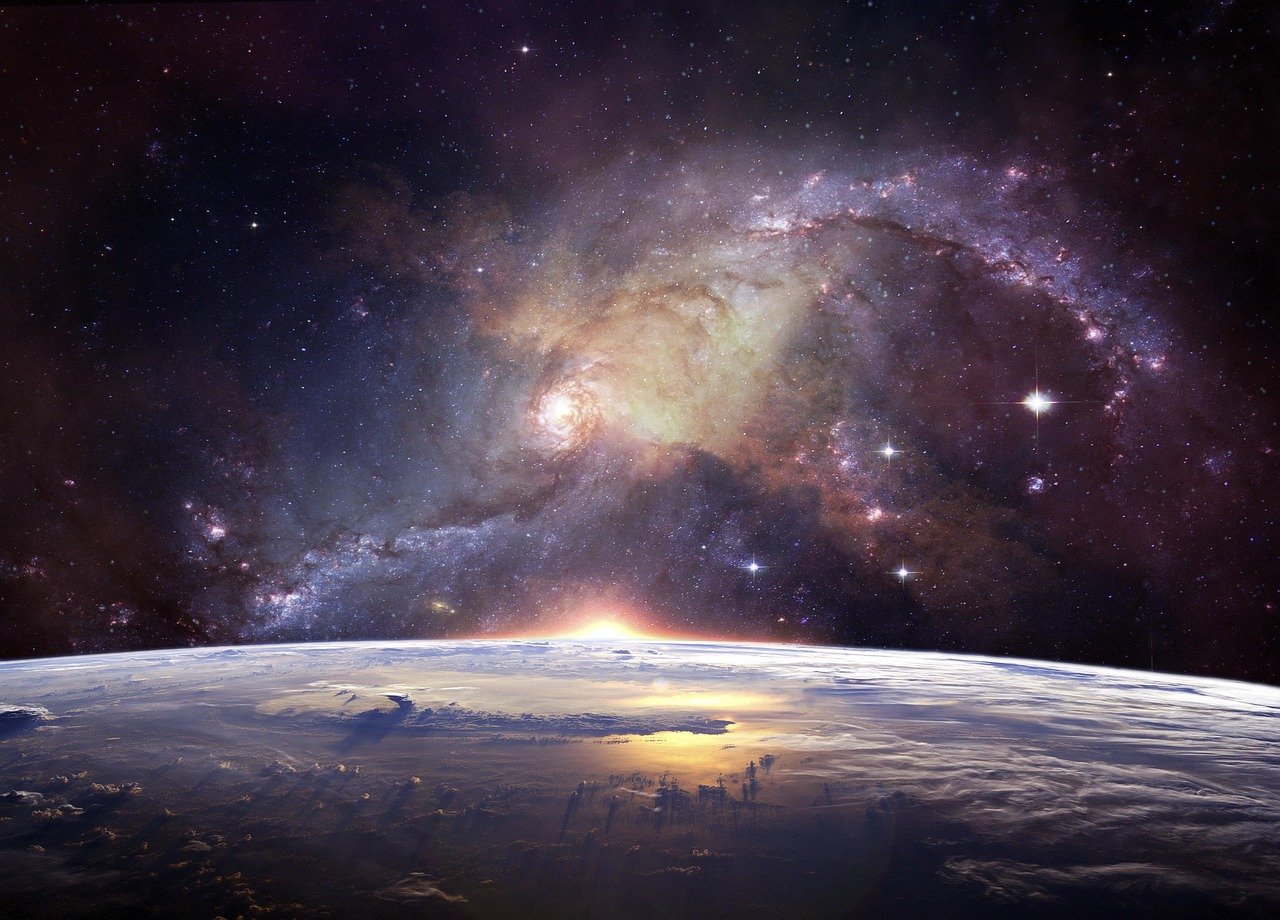
Dark Skies Transform the Night (Image Credits: Pixabay)
The new moon on April 17 ushered in several nights of exceptionally dark skies across the globe. This lunar phase positioned the moon between Earth and the sun, leaving the night free from its glow and ideal for unveiling faint celestial wonders. Stargazers now enjoy prime conditions to trace the sprawling form of Hydra, track brilliant Venus and Jupiter after sunset, and witness a rare gathering of planets before dawn.
Dark Skies Transform the Night
With the new moon arriving at 7:52 a.m. EDT on April 17, moonlight interference vanished, allowing subtle stars and distant galaxies to emerge.[1][2] Observers reported crisp views of spring constellations that often fade under brighter conditions. This brief window, spanning several evenings, offered backyard astronomers a rare chance to connect with the cosmos without urban light pollution overwhelming the scene.
Experienced skywatchers emphasized heading to rural spots for the full effect. Binoculars proved sufficient for many targets, while small telescopes revealed finer details. The absence of lunar light also heightened anticipation for upcoming events like the Lyrid meteor shower later in the month.[3]
Evening Sky Jewels: Venus, Jupiter, and Hydra’s Reach
Shortly after sunset on April 17, Venus blazed as a brilliant evening star low in the west, standing about 15 degrees above the horizon.[1] The planet’s dazzling light drew eyes upward, where the Pleiades star cluster shimmered roughly 10 degrees higher – spanning the width of a fist at arm’s length. Just below this cluster, Uranus awaited patient viewers with binoculars, appearing as a faint greenish dot against the twilight.
Jupiter commanded attention higher overhead, nestled beneath the twin stars Castor and Pollux in Gemini. Telescopes at 6-inch aperture or larger displayed the gas giant’s banded disk flanked by its four Galilean moons: Io, Europa, Ganymede, and Callisto. These icy worlds stretched in a line, offering a dynamic snapshot of our solar system’s largest planet.[1]
Southward, the constellation Leo dominated with its sickle-shaped head, marked by the bright star Regulus at the base. From there, eyes shifted lower right to Hydra’s circlet head and its serpentine body winding eastward toward the horizon. As the largest constellation, Hydra spanned a vast area, hosting compact neighbors Corvus the crow and Crater the cup along its back, with Virgo’s Spica gleaming to the east.[1][2]
Dawn Patrol: Four Planets Align East
An hour before sunrise on April 18, a striking planetary quartet rose in the eastern sky, framed by the glow of impending day. Mars held the highest position, with Saturn positioned below and Mercury to the right. Neptune lingered upper right of Mercury, challenging observers with its dimness but rewarding telescope users.[1]
This alignment spanned a tight field, visible to the naked eye for three of the planets under clear conditions. Saturn’s rings hinted at glory through modest optics, while Mercury’s proximity to the horizon demanded a clear view. Mars added a reddish hue, evoking the red planet’s familiar tint. Such gatherings underscored the dynamic orbits governing our solar neighborhood.[4]
| Planet | Sky Position | Best Viewing Tool |
|---|---|---|
| Mars | Highest in east | Naked eye |
| Saturn | Below Mars | Binoculars |
| Mercury | Right of Saturn | Binoculars |
| Neptune | Upper right of Mercury | Telescope |
Galaxies Beckon in the Void
Leo, Virgo, and Coma Berenices converged in a rich patch perfect for galaxy hunting. Starting from Leo’s tail star Denebola and Virgo’s Vindemiatrix, Markarian’s Chain appeared as a curving string of galaxies midway between. Modest telescopes unveiled these ancient lights, traveling millions of years to reach our eyes.[1]
Dark-sky sites amplified the experience, where Virgo’s cluster revealed multiple fuzzy patches. Spring’s “galaxy season” peaked here, inviting sweeps across this cosmic metropolis. Binoculars sufficed for brighter members, while larger scopes dissected intricate structures.
- Locate Regulus in Leo first for orientation.
- Star-hop to Hydra’s head using apps if needed.
- Allow 20 minutes for night vision adaptation.
- Seek horizons free of trees or buildings.
- Bundle up – spring nights chill quickly.
- Log sightings to track personal progress.
Key Takeaways
- New moon darkens skies for faint Hydra and galaxies.
- Venus and Jupiter shine post-sunset; quartet rises pre-dawn.
- Binoculars unlock moons, planets, and deep-sky chains.
April’s new moon reminded sky enthusiasts of the universe’s quiet grandeur, where ancient serpents coil and planets parade in silence. These fleeting alignments foster a deeper bond with the stars overhead. What celestial sight captivated you this week? Share in the comments below.