

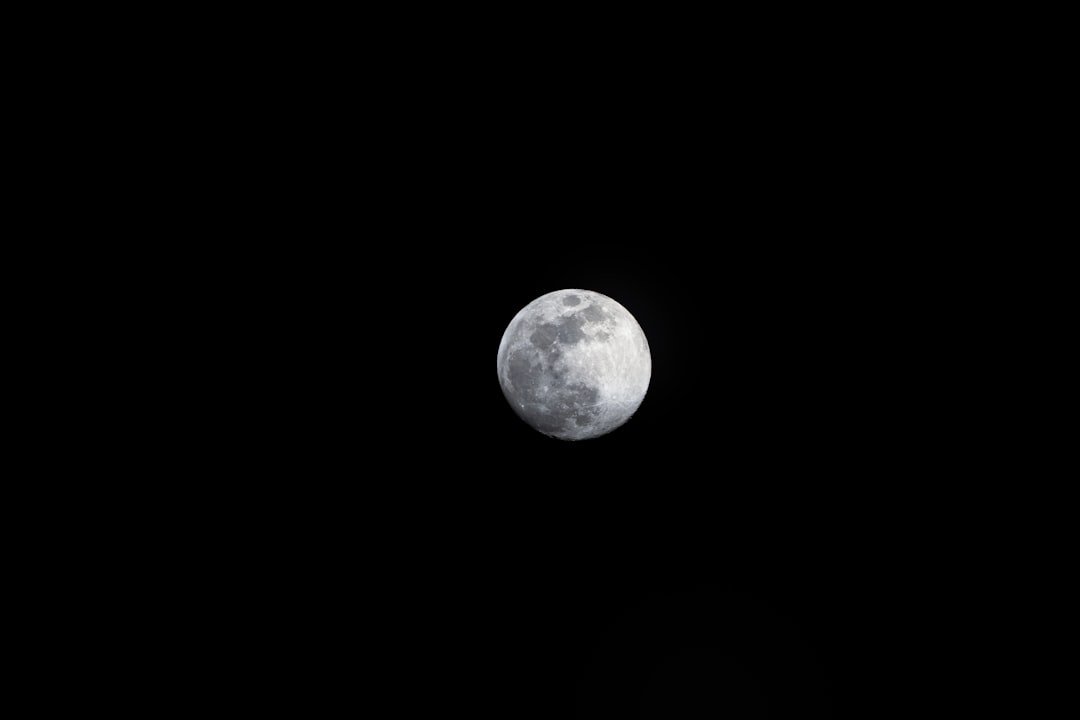
Shadows of Doubt Give Way to Exhilaration (Image Credits: Unsplash)
NASA’s Artemis 2 mission marked a pivotal return to deep space last month, sending four astronauts on a daring loop around the Moon. The crew’s encounters with Earthrise and a prolonged solar eclipse evoked the awe of Apollo 8 nearly six decades earlier. Space historian Andrew Chaikin, author of the definitive Apollo chronicle “A Man on the Moon,” watched the events unfold with renewed wonder, bridging past triumphs with this modern endeavor.[1][2]
Shadows of Doubt Give Way to Exhilaration
Chaikin approached the April 1 launch with mixed emotions. Decades after chronicling the Apollo voyages, he questioned whether Orion’s flight could recapture the raw excitement of those pioneering days. The spacecraft Integrity carried commander Reid Wiseman, pilot Victor Glover, mission specialist Christina Koch, and mission specialist Jeremy Hansen toward a seven-hour lunar flyby.[1]
Those reservations dissolved quickly. Live broadcasts from inside the capsule offered unprecedented intimacy, far surpassing the grainy Apollo 8 transmissions. Chaikin tuned in for every moment, feeling dormant neural pathways from 1972 stir back to life as the crew described the lunar landscape in vivid detail.[1]
Capturing a Fresh Perspective on the Moon
The astronauts marveled at fresh craters during the flyby. Koch likened the smallest ones to a lampshade pierced with pinprick holes, their brightness piercing the Moon’s dull regolith. Glover peered through a telephoto lens at the terminator’s long shadows, evoking visions of rugged peaks in the airless void.[1]
Modern tools amplified these observations. Equipped with Nikon D5 cameras and iPhones, the crew trained extensively to identify landing sites and geological features. Their real-time commentary, broadcast to global audiences, contrasted sharply with Apollo’s more reserved style, immersing viewers in the scene.[3]
Unparalleled Eclipse and Earth Views
The mission’s pinnacle arrived as Integrity entered the Moon’s shadow for nearly an hour-long total solar eclipse – over ten times longer than typical Earth-based events. Video feeds captured the solar corona fading behind the lunar limb, with the crew’s eyes adjusting to the night side aglow in Earthshine.[1]
Glover captured the surreal shift: “We’ve just gone sci-fi.” Wiseman struggled for words: “It’s just indescribable… No matter how long we look at this, our brains are not processing this image… Absolutely spectacular. Surreal.” High-resolution images soon followed, depicting a brilliant crescent Earth setting and rising against the far side’s barren expanse – the farthest vantage humans had ever reached.[1]
| Mission | Altitude | Earth View Type | Duration |
|---|---|---|---|
| Apollo 8 (1968) | ~60 miles | Earthrise (orbit) | 10 orbits |
| Artemis 2 (2026) | ~4,300 miles | Earthset/Rise (flyby) | Single pass |
This table highlights key differences in trajectory and observation windows.[4]
Legacy of Iconic Imagery Renewed
Artemis 2’s Earthset echoed Apollo 8’s famed Earthrise, snapped by William Anders on Christmas Eve 1968. Though farther from the surface, the crew’s digital captures offered crisp detail, instantly shared worldwide. Koch later messaged regions visible below: “To Asia, Africa and Oceania: We are looking back at you.”[2]
- Pre-planned imaging sessions spanned three hours, balancing photos with system checks.
- Orion’s five windows provided broader vistas than Apollo command modules.
- Memory cards enabled thousands of shots, dwarfing Apollo 17’s film limits.
- Crew descriptions aided scientists in spotting subtle color variations and prospective sites.
- Social media amplified the visuals, fostering instant global connection.
These elements transformed the flyby into a visual triumph, updating Apollo classics for a new generation.[3]
Key Takeaways
- Artemis 2 proved Orion’s capabilities, paving the way for lunar landings.
- Live immersion outshone historical broadcasts, drawing millions online.
- New images reinforce Earth’s fragility, echoing Apollo’s environmental awakening.
Chaikin’s journey mirrored broader sentiments: excitement tempered by history’s weight, yielding to unbridled optimism. Artemis 2 not only tested technology but reignited humanity’s lunar passion, setting sights on sustained presence beyond low Earth orbit. What moments from this mission lingered most with you? Share in the comments.